

Could an Albuquerque Crash Lawyer Assess Civil Fault?
An intersection collision can appear obvious at first: one vehicle is turned across another driver’s path, a rear bumper is damaged, or someone says the traffic light was red. But fault in an Albuquerque intersection crash may depend on details that are easy to miss, including the signal phase, each vehicle’s lane position, visibility, speed, and when a driver entered the intersection.
An apparent traffic citation is not necessarily the final word on civil responsibility. Insurance adjusters, attorneys, and fact-finders may compare photographs, witness accounts, dashcam footage, vehicle damage, police reports, and medical documentation. Readers looking for Albuquerque auto accident lawyers may want a professional evaluation when those sources conflict, particularly if an injury claim is involved. The Crecca Law Firm can help explain how the available evidence may fit together.
This guide describes where fault often turns in signalized intersections, left-turn crashes, rear-end impacts, lane changes, and confusing traffic patterns. It also explains why preserving the scene and keeping organized records can matter.
Where Does Fault Turn in an Albuquerque Intersection Accident?
The central question is often not simply who received a ticket. It is what each driver could see, what each driver did, and whether physical evidence supports the account. In Albuquerque, NM, a collision may involve several overlapping issues: a driver entering on a stale yellow, a left-turning vehicle misjudging an approaching car, or a through driver traveling too fast to stop safely.
Signal phases and right-of-way questions
A green light does not automatically resolve every dispute. Drivers may still need to yield while turning, remain in the proper lane, and proceed with reasonable caution. A driver who enters legally may also face questions about speed, visibility, or whether another vehicle was already occupying the intersection.
Signal timing can be especially important when drivers give different accounts. A witness may remember one light, while a dashcam recording shows the sequence from another angle. Nearby construction, sun glare, obstructed signal heads, or unusual lane markings may also affect what a driver could reasonably observe. These facts can shape an Albuquerque traffic light accident claim without proving any conclusion by themselves.
Common intersection collision patterns
Fault analysis may differ depending on the impact:
- In a left-turn collision, investigators may examine the turn arrow, the opposing vehicle’s approach, the turning path, and whether either driver entered late.
- In a rear-end impact, following distance is relevant, but so are sudden lane changes, stopped traffic, mechanical problems, and the position of the vehicles before contact.
- In a lane-change crash, the evidence may focus on blind spots, turn signals, lane markings, and whether the vehicle was fully established in the lane.
These patterns show why an intersection accident lawyer in Albuquerque may focus on timing and physical evidence rather than relying on a single statement.
What Intersection Crash Evidence Can Show About Fault
The scene can change quickly. Vehicles are moved, debris is cleared, traffic resumes, and nearby video may not remain available indefinitely. When it is safe and lawful to do so, photographs and notes can preserve context that a later inspection may not show. A detailed resource on preserving Albuquerque intersection crash evidence discusses this process in greater depth.
Useful scene information may include:
- The approach lanes, stop lines, turn pockets, crosswalks, and signal heads.
- Vehicle resting positions, debris fields, skid marks, tire marks, and visible damage.
- Sight obstructions such as trees, construction equipment, parked vehicles, or bright sunlight.
- Nearby businesses, residences, or traffic cameras that may have captured the approach.
- Contact information for independent witnesses and a brief description of what each person observed.
Dashcam footage and witness accounts
Dashcam footage can help show signal color, vehicle movement, relative speed, and the moments immediately before impact. Its value may depend on the camera’s angle, whether the timestamp is reliable, and whether the recording includes enough surrounding context. A short clip may not answer every question, but it can test an important part of a driver’s account.
Witnesses can add perspective, especially when they were positioned to see the signal or the approach lanes. However, memories may differ after a sudden event. A witness statement is generally stronger when it identifies what the person actually saw rather than repeating what someone else said after the crash.
Vehicle positions and damage patterns
Photographs, repair estimates, tow records, paint transfer, and impact points may help compare competing accounts. For example, damage concentrated at a corner may be consistent with an angled contact, while damage across a rear bumper may support a different sequence. These observations are not a substitute for a qualified investigation, and damage alone may not establish legal fault.
Organized records can make this evidence easier to evaluate. Information about reviewing Albuquerque vehicle damage records may help readers understand how property-damage documentation fits into a broader injury claim.
Why a Citation or Police Report May Not Settle Fault
A responding officer may document statements, road conditions, visible damage, and a citation. That report can be important, but the officer may have arrived after the vehicles moved, the signal cycle changed, or witnesses left. The report may also record each driver’s account without resolving which version is accurate.
A citation addresses an alleged traffic violation. Civil fault in an injury or property-damage claim may involve additional questions, including causation, comparative responsibility, and the extent of the claimed harm. In New Mexico, fault may be allocated among parties based on the evidence; the applicable rules can vary by situation and may change over time. A reader reviewing an Albuquerque police report that may contain errors can compare it with photographs, independent witnesses, dashcam footage, signal-phase evidence, and vehicle damage.
When more than one driver may share fault
Intersection crashes do not always fit a simple all-or-nothing explanation. A turning driver may misjudge a gap, while an approaching driver may be traveling too quickly or fail to react. A driver changing lanes may overlook a vehicle in a blind area, while the other vehicle may also have contributed through speed or position.
The potential for shared responsibility is why New Mexico comparative fault after an Albuquerque crash can be relevant. Any percentage depends on the facts and evidence of the particular case. Readers should avoid assuming that a traffic ticket, an insurance company’s initial position, or one driver’s confidence automatically determines the final civil analysis.
Medical documentation adds a separate layer
Physical evidence may explain how a collision happened, while medical records help document what injuries were reported, evaluated, and treated afterward. Emergency records, follow-up visits, diagnostic testing, prescriptions, bills, and communications with health insurers may all provide useful context.
Symptoms do not always appear immediately, and a person may describe the timing differently as the situation develops. Information about delayed pain after an Albuquerque car crash explains why later symptoms should be documented accurately rather than assumed to be unrelated. Keeping records about medical bills after an Albuquerque car accident can also help organize the financial side of an injury claim.
Frequently Asked Questions
Does a red-light citation prove civil fault in Albuquerque?
Not necessarily. A citation may be relevant evidence, but it does not always establish every issue in a civil claim. The analysis may also consider signal timing, vehicle positions, witness accounts, video, road conditions, speed, and whether another driver contributed. In Albuquerque, NM, the effect of a citation can depend on the facts, the applicable New Mexico rules, and how the evidence is presented.
What if no witness saw the Albuquerque intersection crash?
A claim may still be evaluated without an independent witness. Photographs, dashcam recordings, traffic or business video, vehicle damage, debris, skid marks, repair records, and the parties’ statements may provide useful information. The absence of a witness can make some disputes more difficult, but it does not automatically determine fault. Evidence should be considered as a whole rather than relying on one missing source.
Can a confusing intersection affect a traffic accident claim?
It can be relevant. Unusual lane markings, blocked visibility, construction, signal placement, or an unclear turn arrangement may help explain why drivers acted differently. These conditions do not automatically excuse a traffic violation or establish liability. They are facts that may be compared with the drivers’ speed, attention, positioning, and ability to see other vehicles under the circumstances.
Should medical records be kept if symptoms develop later?
Generally, keeping records of later symptoms, medical visits, testing, prescriptions, bills, and communications can help document the timeline. Descriptions should be accurate and should not exaggerate or minimize what occurred. Medical documentation does not by itself prove how a collision happened, but it may help evaluate the injury and causation portions of a claim. Laws and claim procedures vary by location and circumstances.
How The Crecca Law Firm Can Help
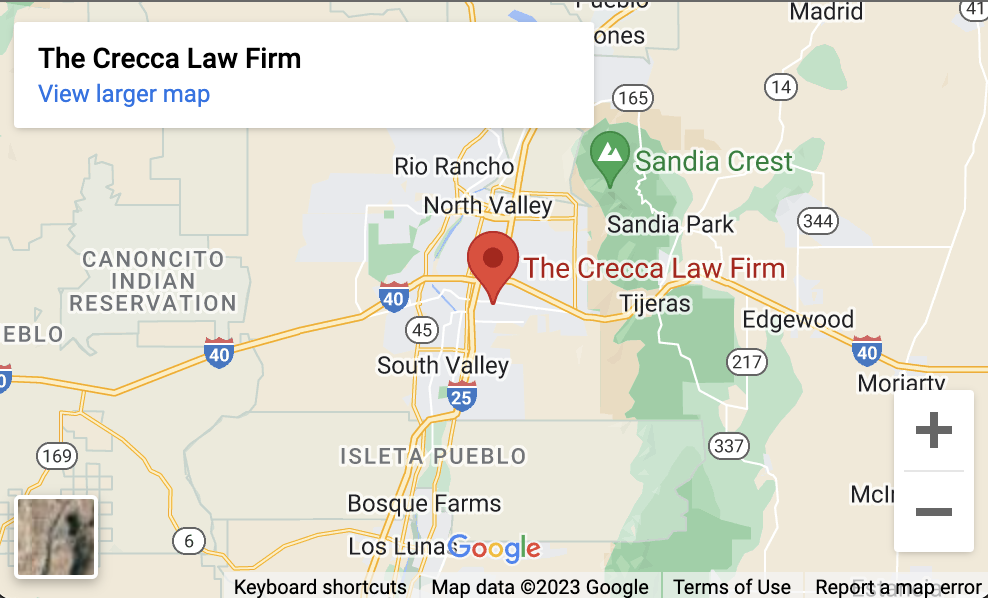
The Crecca Law Firm is dedicated to helping Albuquerque, NM, drivers and passengers understand the evidence involved in disputed intersection collisions. The firm can review available photographs, signal and lane information, witness accounts, dashcam footage, police reports, vehicle damage records, and medical documentation to help evaluate the situation.
Because no two crashes are identical, the firm is committed to fighting for clients’ rights while explaining potential issues in clear terms. If you have questions about an intersection collision, contact The Crecca Law Firm for a free consultation or case evaluation. An attorney can discuss your circumstances and help you explore your legal options.
The information in this article is for educational purposes only and does not constitute legal advice. Contact a qualified attorney licensed in Albuquerque, NM for advice specific to your situation.


Leave a Reply
Want to join the discussion?Feel free to contribute!