The Crecca Law Firm
  • Home
  • About Us
  • Practice Areas
    • Asbestos Cases
    • Bad Faith Insurance
    • Bicycle Accidents
    • Brain and Head Injuries
    • Burn Injuries
    • Business Litigation
    • Car Accident
    • Medication & Drug Liability
    • Dog Bite
    • Drunk Driving Accidents
    • Motorcycle Accidents
    • Nursing Home Negligence
    • Pedestrian Injuries
    • Personal Injury
    • Slip & Fall Accidents
    • Trucking Accidents
    • Uninsured Motorist
    • Wrongful Death
  • Blog
  • News
  • Contact Us
  • (505) 766-9999
  • Menu Menu
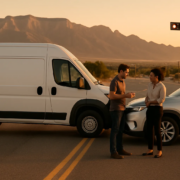
Albuquerque car accident claim denied response guide with vehicles and blank insurance letter

Evidence to Gather After an Albuquerque Crash Claim Denial

August 18, 2026

Receiving a denial letter or a settlement offer that seems far below your losses can be confusing, especially while you are managing vehicle damage, medical appointments, missed work, and calls from an insurance adjuster. If your Albuquerque car accident claim was denied or reduced, the insurer’s explanation and supporting records deserve careful review before you respond.

Insurance decisions can turn on disputed fault, questions about whether the crash caused an injury, policy exclusions, notice issues, or the documentation supporting your losses. The Crecca Law Firm helps Albuquerque-area residents understand the issues that may affect an injury claim. This guide explains what to read first, which records may help, what to avoid signing or saying, and when discussing the situation with a New Mexico injury attorney may be useful.

Why Was My Albuquerque Car Accident Claim Denied or Reduced?

An insurer’s letter may use broad language, but the reason for the decision usually fits into one or more identifiable categories. A denial is not necessarily a final determination of legal responsibility; it is the insurer’s stated position based on the information it reviewed. Likewise, a low offer may reflect disagreements about fault, damages, or available coverage rather than the full value of the claim.

Common explanations in a denial or low-offer letter

Look for language addressing:

  • Liability: The insurer may contend that its policyholder was not responsible, or that another driver, road condition, or factor contributed to the collision.
  • Comparative fault: New Mexico generally recognizes that more than one person may share responsibility, which can affect compensation depending on the facts and applicable law.
  • Causation: The insurer may question whether the crash caused a reported injury, particularly where symptoms appeared later or there was prior treatment.
  • Policy coverage: Exclusions, policy limits, late notice, or questions about who was covered may be raised.
  • Damages: The carrier may challenge medical charges, future care, lost income, vehicle losses, or other claimed expenses.

Read the entire letter, including attachments and deadlines. Identify the accident date, claim number, policy language cited, factual assumptions, and records the insurer says it considered. In Albuquerque, NM, the decision may also involve information from a crash report, repair estimate, medical records, or statements given during the claim process.

Organizing records after an Albuquerque car accident claim denial
Organizing claim records can help clarify the insurer’s stated position.

Records That May Help Evaluate a Denied or Reduced Claim

A careful response starts with a reliable file. The goal is not to overwhelm the insurer with unrelated material or make unsupported arguments. It is to organize documents that help address the specific reason given for the denial or reduction.

Consider gathering copies of:

  1. The denial or offer letter. Keep the envelope or electronic transmission if it shows when the decision was sent, and preserve all attachments.
  2. Crash information. This may include the police or crash report, photographs, videos, witness contact information, vehicle damage images, and insurance details exchanged after the collision.
  3. Medical records and bills. Records can help show dates of care, reported symptoms, diagnoses made by medical professionals, treatment, and charges. They should be reviewed for accuracy rather than selectively edited.
  4. Employment and income records. Pay information, work schedules, employer communications, or other documents may help evaluate a claimed period of missed work.
  5. Property-damage records. Repair estimates, invoices, towing records, rental-car receipts, and photographs may be relevant to vehicle losses.
  6. Communications. Save emails, letters, text messages, claim notes provided to you, and a dated log of calls with adjusters.

For a crash in Albuquerque or elsewhere in Bernalillo County, photographs may capture traffic signals, lane markings, sight distances, vehicle positions, or nearby businesses with potentially relevant camera footage. Conditions can change, so preserving what already exists may be important. Depending on the circumstances, an attorney may also assess whether additional investigation or expert analysis is appropriate.

Laws and insurance procedures in New Mexico can vary by situation and may change over time. Records should be evaluated in the context of the applicable coverage, liability rules, and any deadlines that may affect the claim.

How to Respond Without Weakening Your Position

After receiving a denial or low offer, many people feel pressure to answer immediately. A measured response can help keep the discussion focused on the insurer’s stated reasons instead of creating new disputes.

Practical communication precautions

  • Do not guess. If you do not remember a detail, say that you need to check your records rather than estimating.
  • Separate facts from conclusions. Describe what you observed, where vehicles were located, and what happened afterward without declaring a legal result you cannot support.
  • Avoid minimizing symptoms or losses. Casual comments such as “I am fine” or “it is only a small injury” may later be interpreted out of context.
  • Be cautious with recorded statements. An adjuster may request one, but the purpose and scope of the statement can matter. Depending on the circumstances, an attorney may advise on how to handle the request.
  • Do not sign a release casually. A settlement release may affect claims connected to the collision. Reviewing its language before signing can help you understand what rights you may be giving up.
  • Do not discard evidence. Keep damaged parts, photographs, bills, messages, and other potentially relevant records unless advised otherwise.

A written response may address each reason in the denial, identify supporting documents, and ask the insurer to clarify missing information. It is generally better to avoid unsupported accusations, inflated figures, or statements about medical conditions that only a qualified medical professional can evaluate.

If informal discussions do not resolve the disagreement, possible next steps can depend on the policy, facts, coverage, and procedural posture. A car accident lawyer for a denied claim may review the letter, investigate disputed issues, and explain potential options. In Albuquerque, NM, a lawyer may also consider how New Mexico rules on fault and damages apply to the available evidence. No attorney can promise a particular result.

Frequently Asked Questions

Can an insurer deny my claim because the police report does not support me?

A police or crash report may influence an insurer, but it is not always the only evidence considered. Reports can contain limited observations, statements from others, or information recorded before all facts were available. Photographs, witness accounts, vehicle damage, traffic-camera footage, and other records may provide additional context. The significance of a report depends on the facts and applicable New Mexico law.

What if the other driver’s insurance policy does not cover all of my losses?

Available coverage may be affected by policy limits, exclusions, the number of injured people, and other circumstances. Your own policy may contain coverage that is relevant, depending on its terms and the facts. Because insurance contracts and New Mexico requirements can be technical, reviewing the policies and the insurer’s position with a licensed attorney may help identify possible issues without assuming coverage exists.

Can I challenge a low settlement offer after accepting payment for vehicle damage?

It depends on what documents you signed, what the payment was intended to resolve, and whether separate releases or claim components were involved. Property damage and bodily injury issues may be handled separately, but the paperwork controls the analysis. Before accepting or signing anything further, consider preserving the offer, payment correspondence, and release language for review by a qualified attorney.

How long do I have to pursue a denied car accident claim in New Mexico?

Potential filing deadlines can depend on the claim type, parties involved, governmental entities, and other facts. Insurance negotiations do not necessarily stop every legal deadline. Since laws vary by location and may change, an Albuquerque claimant should avoid relying on a general online timeframe and may wish to discuss the accident promptly with a New Mexico attorney.

How The Crecca Law Firm Can Help

The Crecca Law Firm is dedicated to helping injured people understand the insurance-response process after an Albuquerque collision. The firm can review a denial letter or low offer, organize relevant records, examine disputed liability or causation issues, and explain legal options based on the available facts. Its team is committed to fighting for clients’ rights while communicating in a clear, practical manner.

If an insurer has denied or reduced your claim, contact The Crecca Law Firm for a free consultation or case evaluation. The firm is ready to evaluate your situation and discuss possible next steps without promising a particular outcome.

The information in this article is for educational purposes only and does not constitute legal advice. Contact a qualified attorney licensed in Albuquerque, NM for advice specific to your situation.
https://thecreccalawfirm.com/wp-content/uploads/2026/08/evidence-to-gather-after-an-albuquerque-crash-claim-denial-506-featured-publisher.webp 1024 1536 publisher https://thecreccalawfirm.com/wp-content/uploads/2023/03/logo-300x87.png publisher2026-08-18 09:02:162026-08-18 09:08:36Evidence to Gather After an Albuquerque Crash Claim Denial
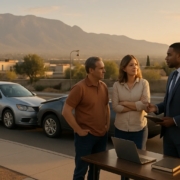
Albuquerque work vehicle accident lawyer article showing a delivery van and car near an intersection

Albuquerque Work Crash Lawyer: What Evidence Matters

August 18, 2026

A work vehicle may look like any other car or van after a collision, but the insurance and responsibility questions can be different. If you were hurt in a crash involving a delivery van, company car, utility vehicle, or contractor’s vehicle, you may reasonably ask: Who is responsible when an Albuquerque crash involves a work vehicle? An Albuquerque work vehicle accident lawyer can help explain how the driver’s work status, vehicle ownership, and available insurance may affect the analysis.

In Albuquerque, identifying the correct parties early can matter. The driver may not be the only person or entity involved. Depending on the facts, a claim may also involve an employer, vehicle owner, contractor, maintenance provider, or commercial insurer. The Crecca Law Firm provides guidance to people evaluating these issues after auto accidents. This article explains what responsibility may look like, what information to collect, and why the details of the work relationship matter.

Who May Be Responsible in an Albuquerque Work Vehicle Accident?

Responsibility usually depends on the specific conduct that caused the crash and the relationship between the driver and the business. A driver’s use of a vehicle for work does not automatically make the employer liable. However, the work connection may identify additional insurance policies or legal theories that would not be apparent from the driver’s personal information alone.

When an employer may be involved

Generally speaking, an employer may be considered responsible for an employee’s negligent driving when the employee was acting within the scope of assigned work. For example, the timing, route, destination, and purpose of the trip may matter. A driver making deliveries or traveling between work locations can present different facts from an employee using a vehicle entirely for a personal errand.

The employer’s potential responsibility is separate from the question of whether the driver personally caused the collision. In some cases, other issues may also be examined, such as negligent hiring, training, supervision, vehicle maintenance, or allowing an unsafe driver to use a company vehicle. These theories depend heavily on the available evidence and applicable New Mexico law.

When the vehicle owner or contractor matters

The business operating the vehicle may not own it. A fleet company, leasing company, individual owner, or separate contractor could hold title or control maintenance. Likewise, a delivery service may use independent contractors rather than traditional employees. Labels alone do not resolve the issue; the actual relationship, degree of control, contract terms, and work performed may be relevant.

Collecting vehicle and insurance details after an Albuquerque work vehicle crash
Preserving basic crash details can help identify the vehicle owner, employer, and insurer.

How Insurance and Local Claim Details Affect Responsibility

A company vehicle accident claim in New Mexico may involve more than one insurance policy. A commercial auto policy might cover a business-owned vehicle, while a contractor’s policy or the driver’s personal policy could also become relevant. Coverage depends on policy language, vehicle use, exclusions, insured status, and the facts of the collision. The existence of a commercial policy does not by itself establish fault.

After a crash in Albuquerque, information from the scene may help identify the responsible parties and insurers. When reasonably safe, consider collecting:

  • The driver’s name, contact information, and insurance details.
  • The business name shown on the vehicle, uniform, paperwork, or delivery materials, without putting yourself at risk.
  • The vehicle’s license plate, make, model, and any unit or fleet number.
  • Photographs of the vehicles, damage, roadway, traffic controls, and surrounding conditions.
  • Names and contact information for witnesses.
  • The approximate time, location, direction of travel, and apparent work purpose of the trip.
  • The responding agency and any incident or report information provided to you.

Do not assume that a logo or business name proves who employed the driver. It can be a useful lead, but ownership, employment, and insurance may need to be confirmed through records or investigation.

Albuquerque agencies and court considerations

The Albuquerque Police Department or another responding agency may document a collision, but a crash report is only one source of information. It may not identify every insurer, clarify whether the driver was working, or resolve disputed fault. Records from the vehicle owner, employer, contractor, leasing company, or commercial insurer may become important.

If a dispute cannot be resolved informally, a civil case may involve a New Mexico court serving Bernalillo County. Court procedures, filing requirements, and deadlines can vary by claim and location. Because New Mexico law and insurance rules may change, a licensed attorney can explain which procedures may apply to the circumstances.

What to Preserve After a Work Vehicle Crash

The first challenge is often party identification. A driver may provide only a personal insurance card even though the vehicle belongs to a business. A company may also use a contractor whose status is unclear. Promptly organizing the available facts can help prevent important details from being overlooked.

Build a focused evidence file

Keep copies or notes concerning:

  1. Photos and videos taken at the scene, including vehicle markings and the surrounding roadway.
  2. Medical and repair records you receive, while avoiding conclusions about diagnosis or future treatment.
  3. Communications from the driver, employer, insurer, or claims representative.
  4. Names of witnesses and a short description of what each person observed.
  5. The circumstances of the trip, such as a delivery, service call, commute, or personal detour, if known.
  6. Any available dashcam, doorbell-camera, business-camera, or mobile-device footage.

A commercial auto insurance injury claim may involve an adjuster seeking an early statement or requesting records. It is generally prudent to understand what is being requested before making statements about fault, injuries, or the value of a claim. Depending on the circumstances, an attorney may help evaluate communications and identify additional sources of evidence.

Common assumptions that can create confusion

Several assumptions may be incomplete. The person driving is not necessarily the vehicle owner. The vehicle owner is not necessarily the driver’s employer. A contractor is not automatically treated the same as an employee, and a company name on a van does not alone establish legal responsibility. These distinctions can affect who may be included in a claim and which insurance policy is available.

An Albuquerque work vehicle accident lawyer may investigate these questions by reviewing photographs, public business information, incident records, vehicle ownership details, employment or contractor documents, and insurance communications. That review does not guarantee a particular result, but it can help clarify the parties and issues that require attention.

Frequently Asked Questions

Does an employer always pay for an employee’s car accident?

No. Under general legal principles, an employer’s responsibility may depend on whether the driver was an employee, whether the driver was acting within the scope of work, and whether the employer’s conduct independently contributed to the crash. The facts may differ if the driver was on a personal trip, using a personal vehicle, or working as an independent contractor. New Mexico law may apply differently depending on the circumstances.

What if a delivery van driver was an independent contractor?

A contractor’s label is not always the end of the analysis. The parties’ actual relationship, the business’s control over the work, the vehicle’s ownership, contract terms, and the driver’s activities may all matter. A delivery van crash in Albuquerque may involve the driver, contracting business, vehicle owner, or one or more insurers. A fact-specific review is generally needed before responsibility can be assessed.

Can I make a claim against a commercial auto insurer?

Possibly, but an insurer is not automatically liable simply because it issued a policy. Coverage may depend on the policy, the insured parties, the vehicle’s use, and the facts of the collision. An insurer may investigate the claim and request information. A licensed attorney can explain how coverage questions and a potential commercial auto insurance injury claim may fit together under New Mexico law.

What if I do not know whether the other driver was working?

Start with the information available to you, such as photographs of the vehicle, the business name, the time and location of the collision, witness accounts, and what the driver said at the scene. A crash report may provide useful details but may not answer every employment or insurance question. Further investigation may be needed to determine whether the trip was work-related.

How The Crecca Law Firm Can Help

The Crecca Law Firm is dedicated to helping Albuquerque crash victims understand the parties, evidence, and insurance issues that may affect a work-vehicle claim. The firm is committed to fighting for clients’ rights while evaluating the facts carefully, including the driver’s work status, vehicle ownership, potential employer involvement, and available coverage.

If you were involved in a collision with a delivery van, company car, or contractor vehicle, the firm is ready to evaluate your situation and discuss your legal options. Contact The Crecca Law Firm for a free consultation or case evaluation.

The information in this article is for educational purposes only and does not constitute legal advice. Contact a qualified attorney licensed in Albuquerque, NM for advice specific to your situation.
https://thecreccalawfirm.com/wp-content/uploads/2026/08/albuquerque-work-crash-lawyer-what-evidence-matters-494-featured-publisher.webp 1024 1536 publisher https://thecreccalawfirm.com/wp-content/uploads/2023/03/logo-300x87.png publisher2026-08-18 08:15:482026-08-18 08:20:43Albuquerque Work Crash Lawyer: What Evidence Matters
Car accident lawyer cost discussion in Albuquerque, NM near a roadway

Understanding Car Accident Lawyer Costs in Albuquerque, NM

August 17, 2026

A crash can create expenses before you know whether an insurance claim will be accepted: vehicle repairs, medical appointments, missed work, and more. That makes it reasonable to ask, “What Does a Car Accident Lawyer Cost in Albuquerque, NM?”—especially if you are unsure whether hiring counsel requires money upfront.

In many personal injury matters, attorneys use a contingency-fee arrangement. That generally means the fee is tied to a recovery rather than an hourly invoice, but the percentage, expenses, and payment timing depend on the written agreement. A consultation may also be free, although readers should confirm that before scheduling.

The Crecca Law Firm helps Albuquerque-area readers understand the financial side of representation so they can ask informed questions. This guide explains how contingency fees work, what case expenses may arise, what contract language deserves attention, and how to compare written agreements without relying on assumptions about Albuquerque personal injury lawyer fees.

What Does a Car Accident Lawyer Cost in Albuquerque, NM?

There is no single price for every car accident claim. The cost may depend on the type of fee arrangement, the amount recovered, how disputed the claim becomes, and which expenses are needed to investigate and present it. A straightforward insurance claim may require different work from a case involving disputed fault, multiple insurers, serious injuries, or litigation.

How contingency fees generally work

A contingency fee is usually calculated as a percentage of money recovered for the client. If there is no recovery, the attorney may not receive a fee for legal services under the agreement, but that does not automatically mean the client owes nothing. Case expenses and contract language still matter.

The percentage may differ depending on whether the claim resolves before a lawsuit, after a lawsuit is filed, or at another stage. Some agreements also explain whether the percentage is calculated before or after certain expenses are deducted. These details can materially affect the amount the client receives.

Do accident lawyers charge upfront?

Many injury firms offer an initial consultation without charging a fee, and many handle qualifying car accident cases without requiring an upfront retainer. Neither practice should be assumed. Ask whether the consultation is free, whether any retainer is required, and what happens if the firm does not accept the case.

A written agreement should state the fee structure clearly. Comparing agreements from attorneys who handle New Mexico claims can help an injured person understand the practical difference between a percentage-based fee and other possible billing arrangements.

Reviewing a car accident representation agreement and legal fees in Albuquerque
A written representation agreement should explain fees, expenses, and payment timing.

Which Expenses Can Affect Albuquerque Personal Injury Lawyer Fees?

The attorney’s fee is only one part of the financial arrangement. A case can involve expenses paid to third parties or costs advanced during investigation. Depending on the circumstances, examples may include obtaining medical records, ordering an accident report, collecting photographs or video, using an investigator, obtaining expert opinions, or paying filing and service costs if litigation becomes necessary.

Not every case requires every expense. The important question is how the agreement treats them. It may explain whether the law firm advances costs, whether the client is responsible for repayment, and whether repayment comes from the recovery before or after the contingency fee is calculated.

Questions about expenses to ask before signing

  • Which expenses are likely in a claim like mine?
  • Does the firm advance those expenses, or do I pay them as the case progresses?
  • If there is no recovery, could I still owe case expenses?
  • Are outside professionals, records, postage, copying, or filing charges handled separately?
  • Will I receive an itemized accounting of deductions from any recovery?

The answers may differ among firms. An agreement that appears to have a lower percentage may handle expenses differently from one with a higher percentage. Looking at the complete financial arrangement is more useful than comparing one number in isolation.

For a crash investigated in Albuquerque, records may come from sources such as the Albuquerque Police Department, New Mexico agencies, medical providers, employers, or insurance companies. Gathering and reviewing those materials can require time and expense, particularly when the facts or damages are disputed.

How to Review a Car Accident Representation Agreement

A representation agreement is a contract. Before signing, read it carefully and ask for an explanation of any term you do not understand. The agreement should identify the scope of the representation and describe how fees and expenses are handled. Laws and professional requirements can vary by location and may change, so a New Mexico-licensed attorney should address questions about a specific contract.

Terms that deserve close attention

  1. The fee percentage: Confirm the percentage and whether it changes if a lawsuit is filed or the matter proceeds to trial.
  2. The calculation base: Determine whether the percentage is taken from the gross recovery or from the amount remaining after specified expenses.
  3. Case expenses: Identify which costs may be charged, who advances them, and when repayment is due.
  4. Responsibility at the end of representation: Ask what happens if you change attorneys, end the relationship, or reject a proposed resolution.
  5. Client decisions and communication: Understand who makes settlement decisions and how you will receive updates and documents.

A lawyer may also explain how settlement discussions, evidence review, and possible litigation affect the work involved. You generally remain the person who decides whether to accept a settlement, subject to the terms of your agreement and applicable professional rules.

Avoid choosing a lawyer based only on a broad statement such as “no fee unless we win.” That phrase may not explain case expenses, liens, reimbursement obligations, or how the fee is calculated. A useful comparison focuses on the complete written agreement and the firm’s explanation of it.

Frequently Asked Questions

Is a free consultation the same as free legal representation?

No. A free consultation usually means you can discuss the accident and possible representation without paying for that meeting. It does not necessarily mean all legal services will be free. If a firm accepts the case, fees and expenses are typically governed by a written representation agreement. Ask what the consultation includes and request a clear explanation of future costs before signing anything.

Can I hire a lawyer if the other driver’s insurer has not made an offer?

Possibly. A claim does not always need to have a settlement offer before an attorney evaluates it. The available insurance, accident evidence, injury documentation, and status of communications may all matter. An Albuquerque attorney can explain general options after reviewing the circumstances, but no lawyer can determine the value or likely resolution of a claim without case-specific information.

Will my lawyer’s fee be taken from my insurance payment?

It depends on the payment and the representation agreement. A contingency fee commonly applies to money recovered for the client in the claim the lawyer handles, but policies and agreements can address different sources of payment in different ways. Ask whether the agreement covers an uninsured or underinsured motorist claim and how any related recovery would be treated.

What if I already signed an agreement with another attorney?

The consequences of changing attorneys depend on the existing agreement, the work performed, and the stage of the matter. A new lawyer may need to review that contract before discussing representation. Because ending or transferring representation can affect fees and expenses, consider asking a qualified New Mexico attorney to explain the agreement and possible implications for your circumstances.

How The Crecca Law Firm Can Help

The Crecca Law Firm is dedicated to helping injured people understand their options after a motor vehicle collision. The firm is committed to fighting for clients’ rights while explaining the claims process, potential fee arrangements, case expenses, and important representation-agreement terms in understandable language.

If you are comparing Albuquerque personal injury lawyer fees or want to know whether a contingency arrangement may fit your situation, the team is ready to evaluate your circumstances. Contact The Crecca Law Firm for a free consultation or case evaluation and bring any fee agreement or insurance correspondence you want to discuss.

The information in this article is for educational purposes only and does not constitute legal advice. Contact a qualified attorney licensed in Albuquerque, NM for advice specific to your situation.

https://thecreccalawfirm.com/wp-content/uploads/2026/08/car-accident-lawyer-cost-albuquerque-nm-450-featured-publisher.webp 1024 1536 publisher https://thecreccalawfirm.com/wp-content/uploads/2023/03/logo-300x87.png publisher2026-08-17 09:01:502026-08-17 09:08:37Understanding Car Accident Lawyer Costs in Albuquerque, NM
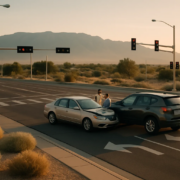
Albuquerque intersection accident evidence scene with vehicles, traffic signals, and roadway details

Albuquerque Intersection Accident Evidence: Preserve It

August 17, 2026

An intersection collision can leave two drivers with very different accounts of what happened. One may say the light was green; the other may remember a protected turn arrow, a sudden lane change, or poor visibility caused by weather or construction. If you are asking what evidence should you preserve from Albuquerque intersection crashes, the most useful information often shows where each vehicle was, what each driver could see, and how the signal or roadway changed over time.

Evidence can disappear quickly. Skid marks fade, vehicles are repaired, nearby video may be overwritten, and witnesses may forget details. The Crecca Law Firm can help Albuquerque drivers understand which information may matter and how it may fit into an injury or property-damage claim. This guide covers scene photographs, signal phases, lane positions, witnesses, nearby businesses, traffic-camera footage, signage, visibility, and changing road conditions. It is general information, not a substitute for advice about a particular collision.

What Albuquerque Intersection Accident Evidence Can Show

Intersection disputes are rarely limited to the question of who had the right of way. A careful review may also consider whether a driver entered from a turn lane, whether a signal had changed, whether a stop line was visible, and whether road design or visibility affected what a person could reasonably observe.

Photograph the scene from more than one angle

If it is safe and you are physically able to do so, take photographs soon after the crash. Try to capture:

  • The overall intersection and approaches from each direction
  • Vehicle positions, debris, skid marks, and visible fluid or tire marks
  • Stop lines, crosswalks, turn arrows, lane dividers, and traffic signs
  • Obstructions such as trees, construction equipment, parked vehicles, or sun glare
  • Damage to each vehicle, including close views and wider views showing location

Do not enter moving traffic or put yourself at risk to obtain a photograph. If injuries or unsafe conditions prevent scene documentation, photographs taken later may still help show roadway layout, although the scene may have changed.

In Albuquerque, NM, intersections along busy corridors such as Central Avenue, Coors Boulevard, or Montgomery Boulevard may have multiple through lanes and turn movements. A wide photograph can preserve context that a close-up image of vehicle damage cannot.

Photographing lane positions and traffic signals after an Albuquerque intersection crash
A wide scene photograph can preserve lane positions, signal placement, and roadway visibility.

Preserve location and timing information

Record the approximate time of the collision, direction of travel, intended movement, and the lane used by each vehicle. A simple hand-drawn diagram can help, even if it is not to scale. Note whether the light was steady, flashing, or changing, and whether a protected turn arrow appeared to be operating.

Signal Phases, Roadway Design, and Outside Records

A traffic-light accident claim in Albuquerque may involve more than the drivers’ memories. Signal timing, turn phases, roadway markings, and visibility can all affect how a collision occurred. However, the availability and retention period for any public or private record can vary. An attorney may help identify potentially relevant sources and evaluate whether a formal preservation request is appropriate under the circumstances.

Potential sources may include:

  1. Traffic signal or roadway records. Depending on the intersection and record custodian, information may be held by the City of Albuquerque, Bernalillo County, or another transportation agency. The existence, format, and retention of signal data are not the same at every location.
  2. Traffic-camera or business video. A camera may show vehicle movement, signal color, or lane use, but many systems automatically overwrite footage. Ask nearby businesses, property managers, or public agencies whether relevant video exists, without assuming that a camera captured the collision or that access is guaranteed.
  3. Crash and emergency records. Reports or dispatch-related information may help establish time, location, and responding agencies. These records may contain observations, but they are not necessarily a complete account of every disputed fact.
  4. Roadwork and maintenance information. Construction plans, temporary traffic controls, signal outages, or maintenance activity may help explain unusual lane markings or visibility conditions.

When requesting or preserving video, identify the date, approximate time, direction of view, and intersection. Do not edit the original file. Keep the original format when possible and make a separate working copy for review. If a business cannot provide a copy, note whom you contacted and what you were told. Depending on the circumstances, a lawyer may consider additional steps to preserve evidence.

Local context matters. A collision investigated by the Albuquerque Police Department may involve different records from one investigated by another agency, and a roadway near a city boundary may involve different custodians. New Mexico legal procedures and deadlines can also affect how evidence is obtained and used, so location-specific guidance is important.

Common Preservation Mistakes After an Intersection Crash

Even well-intentioned drivers can lose useful information without realizing it. The following practices may reduce confusion when organizing evidence, although they do not replace advice from a qualified New Mexico attorney.

Avoid relying only on memory

Write down what you recall as soon as practical, including the signal you observed, your lane, your speed estimate, weather, lighting, and what happened immediately before impact. Distinguish what you personally saw from what another person told you. Do not guess about facts you cannot remember.

Keep original files and related records

Preserve unedited photographs, videos, dashcam files, text messages, and emails relating to the crash. Keep copies of towing, repair, rental, and insurance communications. Avoid posting detailed statements or photographs about the collision on social media, because a post may not reflect the full context and can complicate later discussions.

Gather witness details promptly

Intersection crash witnesses may leave before law enforcement finishes its investigation. When possible, record a witness’s name, phone number, email address, and a brief description of where the person was located. Ask open-ended questions rather than suggesting an answer. A passenger, pedestrian, cyclist, delivery worker, or employee in a nearby business may have observed a different part of the event.

Track changing conditions

Road conditions can change quickly after an Albuquerque collision. Photograph or describe rain, dust, standing water, glare, darkness, temporary barriers, missing signs, lane closures, or fresh pavement. Note when the condition was observed. A later visit may show a repaired signal, removed construction equipment, or repainted markings that were not present at the time of impact.

Preserving evidence does not mean altering the scene, confronting another driver, or attempting to investigate while unsafe. Generally, the priority is safety, medical attention, required reporting, and careful documentation when it can be done safely.

Frequently Asked Questions

Can I preserve traffic light evidence if I do not know which agency controls the intersection?

Yes, you can begin by documenting the exact intersection, travel direction, lane, date, and approximate time. The City of Albuquerque, Bernalillo County, the New Mexico Department of Transportation, or another entity may be involved depending on the roadway. Because record custodians and retention practices vary, an attorney may help identify the appropriate source and discuss preservation options under New Mexico law.

What if a nearby business refuses to give me its security video?

A business may have privacy, policy, or technical reasons for not releasing footage directly. You can still record the business name, location, the person contacted, and the approximate camera direction if known. Avoid arguing with employees or trespassing to obtain video. Depending on the circumstances, a lawyer may evaluate whether another lawful method could be used to seek or preserve potentially relevant footage.

Are photographs taken days after an Albuquerque crash still useful?

They may be useful for showing intersection layout, signage, sight lines, or permanent roadway features. They may not accurately show temporary conditions that existed on the collision date, such as debris, weather, construction controls, or a signal malfunction. Label later photographs with the date taken and explain what they are intended to show. Keeping both immediate and later documentation can help distinguish changing conditions.

What should I do if witnesses do not want to become involved?

Respect a person’s decision and avoid pressuring the witness. If the person is willing, obtain accurate contact information and record only what the witness volunteers. Do not coach the witness or ask for a statement that favors one driver. An attorney can later explain how witness information may be evaluated, while the witness—not another participant—should describe what they personally observed.

How The Crecca Law Firm Can Help

The Crecca Law Firm is dedicated to helping Albuquerque, NM, drivers understand the evidence that may matter after an intersection collision. The firm can review available photographs, diagrams, witness information, vehicle records, and communications, while considering disputed signal phases, turn lanes, visibility, and roadway conditions. It is committed to fighting for clients’ rights through a careful, fact-based process and is ready to evaluate your situation. Contact The Crecca Law Firm for a free consultation or case evaluation to discuss your legal options.

The information in this article is for educational purposes only and does not constitute legal advice. Contact a qualified attorney licensed in Albuquerque, NM for advice specific to your situation.
https://thecreccalawfirm.com/wp-content/uploads/2026/08/albuquerque-intersection-accident-evidence-preserve-438-featured-publisher.webp 1024 1536 publisher https://thecreccalawfirm.com/wp-content/uploads/2023/03/logo-300x87.png publisher2026-08-17 08:13:492026-08-17 08:20:34Albuquerque Intersection Accident Evidence: Preserve It
Comparative fault car accident Albuquerque multi-vehicle crash scene

How Comparative Fault Works After an Albuquerque Car Crash

August 16, 2026

A multi-car crash can leave more than damaged vehicles behind. It can also leave several different explanations of what happened. One driver may say traffic stopped suddenly, another may say a signal changed, and a third may believe a vehicle entered the lane without warning. For an injured person, understanding comparative fault car accident Albuquerque issues can be important because responsibility may be divided among multiple drivers rather than assigned to only one.

New Mexico generally follows a comparative negligence approach. In broad terms, an injured person’s recovery may be reduced by that person’s share of responsibility, if any. But an insurance company’s early opinion is not necessarily a final legal determination. The Crecca Law Firm helps Albuquerque residents understand how evidence may be evaluated in these complicated situations.

This article explains how fault is investigated, what evidence can help when accounts conflict, how medical documentation fits into the analysis, and what common mistakes may make a claim harder to evaluate. Laws and procedures can vary by location and may change over time, so case-specific advice requires review by a licensed New Mexico attorney.

How Comparative Fault Works After a Multi-Car Crash in Albuquerque

Imagine a three-vehicle collision near a busy Albuquerque intersection. Vehicle A is stopped or slowing for traffic. Vehicle B approaches from behind, while Vehicle C is changing lanes nearby. The impact sequence may involve more than one event: following distance, speed, lane movement, braking, visibility, and traffic signals may all matter.

Investigating fault is not the same as assigning a percentage

At the beginning of a claim, an attorney, insurer, or investigator may ask which actions could have contributed to the collision. That is an investigation. Assigning a final percentage—such as 20%, 40%, or another figure—is a separate decision based on the available evidence and the applicable New Mexico legal process.

New Mexico’s comparative negligence principles generally allow responsibility to be assessed among the people or entities whose conduct contributed to an injury. A person’s compensation may be adjusted to reflect that assigned share. The exact analysis depends on the facts, the claims being made, and the evidence available.

A police report, insurance conclusion, or driver statement may be relevant, but none automatically resolves every disputed issue. In Albuquerque, NM, a careful review may need to account for the sequence of impacts rather than simply identifying the vehicle with the most visible damage.

Organizing evidence for a comparative fault car accident claim in Albuquerque
Organized photographs and vehicle-position notes may help clarify competing accounts after a multi-car crash.

Evidence to Gather for a Comparative Fault Car Accident in Albuquerque

When each driver gives a different account, organized evidence can help establish what happened before, during, and after the collision. A person involved in a crash may be able to preserve or collect the following information, depending on safety, medical needs, and the circumstances:

  • Photographs and video: Capture vehicle damage, debris, skid marks, lane markings, weather or lighting conditions, traffic signals, nearby signs, and the overall intersection when it is safe and lawful to do so.
  • Witness information: Record names and reliable contact information for people who saw the collision or its immediate aftermath. Ask witnesses to describe what they personally observed rather than what someone else told them.
  • Traffic-signal details: Note which direction each vehicle was traveling and what each driver says about the signal. Nearby businesses, residences, or traffic systems may have recordings, but availability and retention periods can vary.
  • Vehicle positions: Document where vehicles came to rest, the lanes involved, the direction of travel, and whether any vehicle moved before photographs or official measurements were taken.
  • Crash and incident records: Keep copies of available reports and information exchanged at the scene. Depending on where the collision occurred, records may involve the Albuquerque Police Department, New Mexico State Police, or another responding agency.
  • Medical records: Preserve bills, appointment information, diagnostic records, work restrictions, and other documentation connecting treatment to the crash. Medical professionals—not a legal writer—should address diagnosis and treatment.

In a multiple-driver accident claim in Albuquerque, these details may help compare the physical evidence with each person’s account. They may also reveal unanswered questions rather than prove liability by themselves.

How Claims Are Evaluated When Drivers Disagree

Insurance carriers often investigate a multi-vehicle crash by reviewing statements, photographs, reports, vehicle damage, witness accounts, and available video. They may ask an injured person to explain the collision or provide a recorded statement. A person may wish to understand the purpose and potential effect of any statement before giving one, because wording about speed, braking, visibility, or pain may later be examined closely.

A practical review often considers:

  1. The timeline: What happened first, and how much time passed between impacts?
  2. The traffic conditions: Were vehicles stopping, merging, turning, or traveling through an intersection?
  3. The physical evidence: Does the damage pattern support or conflict with the reported sequence?
  4. Each driver’s opportunity to react: Could a driver see the hazard, slow down, or change course based on the conditions?
  5. The injury evidence: Do medical records document the nature, timing, and progression of claimed injuries?

The goal is not to label someone responsible before the evidence is developed. It is to distinguish possible contributing conduct from a final car accident liability percentage. In New Mexico, the ultimate resolution may depend on negotiations, the court process, or a fact finder’s assessment. Claims involving Albuquerque, NM, may proceed in the appropriate New Mexico court based on the parties, claims, and amount at issue; Bernalillo County location alone does not determine the result.

Avoiding assumptions about the “first” or “last” impact

The first vehicle struck is not automatically the only responsible driver, and the last impact is not automatically the cause of every injury. A chain reaction can involve separate decisions and impacts. Accident reconstruction or other expert analysis may be considered in some cases, but whether it is useful depends on the disputed facts and available evidence.

Common Mistakes After a Shared-Fault Car Crash

People often focus on obtaining a report and contacting an insurer, but multi-car claims can require more detailed organization. Common problems include:

  • Waiting too long to write down a personal account while memories are fresh.
  • Posting photographs, opinions, or accusations about the crash on social media.
  • Assuming a traffic citation or police narrative decides the civil injury claim.
  • Describing medical symptoms in absolute terms without considering how symptoms may change.
  • Failing to identify every vehicle, witness, insurer, or possible video source.
  • Throwing away damaged property or repairing a vehicle before it can be documented.
  • Signing a release without understanding what claims or parties it may address.

These issues do not automatically defeat a claim. They can, however, create questions about timing, credibility, causation, or the scope of damages. Generally speaking, preserving original photographs, messages, records, and receipts is more useful than relying on memory alone.

An attorney evaluating a New Mexico comparative negligence car accident may also examine whether the injured person’s own conduct is being overstated. The analysis should be based on evidence, not simply on the number of drivers involved. If fault is disputed, a lawyer may help organize the timeline, identify missing records, and communicate with insurers while assessing available legal options.

Frequently Asked Questions

Does having several drivers mean everyone automatically shares fault?

No. A multi-car collision does not automatically make every driver legally responsible. Investigators may examine each driver’s speed, lane position, following distance, turn, braking, visibility, and response to changing traffic conditions. Some drivers may have contributed to the crash, while others may not. The available evidence and applicable New Mexico law determine how responsibility is evaluated.

Can I bring a claim if another driver says I caused the crash?

Possibly. One driver’s statement is only one piece of evidence. Photographs, witness observations, vehicle positions, signal timing, video, medical records, and other information may support or challenge that account. Depending on the circumstances, an attorney may evaluate whether comparative fault applies and whether a claim can proceed despite a dispute about your share of responsibility.

How do medical records affect a shared-fault car crash claim?

Medical records can help document when symptoms were reported, what providers observed, and what treatment was provided. They may also help distinguish crash-related complaints from earlier conditions, although medical causation should be addressed by qualified medical professionals. Keeping appointment records, bills, and work-related documentation can help an attorney evaluate the injury portion of a claim.

What if a traffic camera or business video may show the collision?

Potential video can be valuable, but recordings may be overwritten, unavailable, or limited by camera angle and image quality. A person may want to identify possible sources promptly and preserve information about where the cameras were located. Whether a recording can be obtained and used depends on ownership, availability, privacy considerations, and the circumstances of the claim.

How The Crecca Law Firm Can Help

The Crecca Law Firm is dedicated to helping injured people understand the evidence and legal issues that can arise after a multi-car crash. The firm is committed to fighting for clients’ rights while carefully evaluating competing driver accounts, vehicle positions, traffic conditions, available records, and medical documentation.

A case assessment may help clarify what information is missing, how insurers are framing comparative fault, and which legal options may be available under New Mexico law. The firm is ready to evaluate your situation and explain the potential next steps. Contact The Crecca Law Firm for a free consultation or case evaluation regarding your Albuquerque car accident.

The information in this article is for educational purposes only and does not constitute legal advice. Contact a qualified attorney licensed in Albuquerque, NM for advice specific to your situation.

https://thecreccalawfirm.com/wp-content/uploads/2026/08/how-comparative-fault-works-after-an-albuquerque-car-crash-404-featured-publisher.webp 1024 1536 publisher https://thecreccalawfirm.com/wp-content/uploads/2023/03/logo-300x87.png publisher2026-08-16 09:02:022026-08-16 09:10:39How Comparative Fault Works After an Albuquerque Car Crash
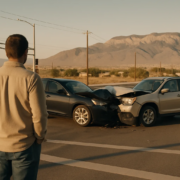
Uber Lyft accident lawyer Albuquerque insurance coverage scene near the Sandia Mountains

Documenting Uber Lyft Crashes: Albuquerque Lawyer Steps

August 16, 2026

A rideshare collision can involve more than two drivers and more than one insurance policy. A passenger may be looking to the rideshare company’s coverage, a pedestrian may need to evaluate the driver’s policy, and another motorist may face questions about fault and available benefits. The answer to “What Insurance Covers an Uber or Lyft Crash in Albuquerque?” often begins with one detail: what the driver was doing in the app at the time of the crash.

Insurance questions can become complicated when a personal auto policy, a rideshare endorsement, and a transportation network company’s commercial policy overlap. The Crecca Law Firm helps Albuquerque residents understand the issues that may affect a claim without assuming that every crash follows the same path. This article explains the basic coverage stages, how different crash scenarios may be handled, and practical steps for identifying potentially relevant policies in New Mexico.

What Insurance Covers an Uber or Lyft Crash in Albuquerque?

Uber and Lyft generally structure coverage around the driver’s app status and activity. The exact policy language, exclusions, deductibles, and available limits can vary, so a policy investigation matters. In broad terms, there are three common stages.

When the rideshare driver is offline

If the driver is not logged into the app and is using the vehicle for personal purposes, the driver’s personal auto insurance is usually the first policy to examine. A rideshare company policy may not apply during this period. If another driver caused the collision, that driver’s liability insurance may be central instead.

When the driver is available but has no accepted ride

When a driver is logged in and waiting for a request, contingent coverage may be available through the rideshare platform, subject to the platform’s policy terms and the facts of the crash. The driver’s personal policy may also matter, particularly if the driver purchased rideshare coverage or if the platform policy does not apply.

When a ride is accepted or a passenger is onboard

After a driver accepts a trip, and generally while transporting a passenger, the rideshare company’s commercial liability coverage may become more significant. This does not automatically establish fault or guarantee payment. Investigators may still need to determine which driver caused the collision, whether another vehicle contributed, and which policy provisions apply.

Preserving rideshare trip information after an Uber or Lyft crash in Albuquerque
Trip details and crash records may help identify potentially applicable insurance policies.

How Fault and App Status Affect Rideshare Accident Insurance in New Mexico

The person injured in a rideshare crash may be a passenger, pedestrian, rideshare driver, or occupant of another vehicle. Each position can create a different insurance path. In Albuquerque, NM, a claim may require reviewing the collision report, app records, trip information, vehicle ownership, medical documentation, and every available insurance policy.

Consider these common scenarios:

  • Rideshare passenger: If an Uber or Lyft driver caused the crash while transporting a passenger, the platform’s applicable liability coverage may be relevant. If another motorist caused the collision, that driver’s policy may be pursued first, with other coverage considered depending on the circumstances.
  • Pedestrian or bicyclist: A person outside the rideshare vehicle may have a claim against the driver who caused the impact. The driver’s app status can affect which insurance policy is investigated.
  • Rideshare driver: A driver injured while working may need to examine the driver’s own policy, any rideshare endorsement, platform coverage, and the at-fault motorist’s insurance. A personal auto policy may contain exclusions for commercial or rideshare use.
  • Occupant of another vehicle: If an Uber or Lyft driver caused the crash, the injured occupants may investigate the applicable rideshare coverage. If the other vehicle’s driver caused it, that driver’s liability policy may be the starting point.

New Mexico is an at-fault state for ordinary vehicle collision claims, meaning responsibility for causing the crash generally affects liability. New Mexico also has rules concerning comparative fault and uninsured or underinsured motorist coverage. Because these rules and policy terms can interact, an Albuquerque, NM attorney may review whether more than one insurer or source of coverage should be notified.

Practical Steps After a Crash Involving Uber or Lyft

Coverage disputes often arise because the available information is incomplete. A careful record of the incident can help identify the policies and parties that may need review. Depending on the circumstances, an injured person may consider taking these general steps:

  1. Obtain immediate medical attention as appropriate. Keep records of evaluations, invoices, work restrictions, and other documents. These records may help show the nature and timing of reported injuries, but an attorney—not an online article—must assess their legal significance.
  2. Preserve rideshare information. Save the trip receipt, driver’s name as shown in the app, pickup and drop-off details, screenshots, and any communications with Uber or Lyft. If the app was open but no ride had been accepted, that detail may be especially important.
  3. Identify all vehicles and insurers. Photograph vehicle damage and the scene when safe. Gather the other driver’s insurance information and note whether the rideshare vehicle belonged to the driver or another owner.
  4. Be cautious with recorded statements. Insurers may request a statement or broad authorization. A person may wish to understand what is being requested and consider obtaining legal guidance before making statements about fault, injuries, or coverage.
  5. Avoid assuming the first policy is the only policy. A denial under one policy does not necessarily answer whether another policy, uninsured motorist coverage, or a different liability theory may be relevant.

The Crecca Law Firm can evaluate these coverage questions for people in Albuquerque, NM. A lawyer may also assess filing deadlines, which depend on the claim and the applicable New Mexico law. Laws and policy forms can change, so current jurisdiction-specific advice is important.

Frequently Asked Questions

Does Uber or Lyft insurance cover every passenger injury?

Not automatically. Coverage may depend on whether the driver was logged into the app, had accepted a trip, or had a passenger onboard. Fault, policy conditions, and the availability of other insurance can also matter. A passenger may have an Uber passenger injury claim in Albuquerque against the responsible driver’s policy, but the specific route to recovery requires a review of the crash facts and applicable policies.

What if the rideshare driver was not at fault?

If another motorist caused the collision, that driver’s liability insurance may be the primary source considered for an injured passenger or rideshare driver. Depending on the facts, rideshare coverage or uninsured and underinsured motorist coverage may also require review. Liability is not determined solely by the driver’s Uber or Lyft status; evidence about how the crash occurred remains important.

Can a rideshare driver use a personal auto policy after a crash?

A personal auto policy may apply in some circumstances, but many policies address or limit coverage for business or rideshare activity. Some drivers purchase a rideshare endorsement, while platform insurance may apply during particular app-status periods. The policy language and timing of the trip matter. A coverage review can help clarify which insurer should receive notice and what questions remain unresolved.

What information should I give an attorney about the crash?

Useful information may include the rideshare receipt, screenshots showing trip status, the driver’s and vehicle’s details, photographs, witness contacts, the crash report, medical records, and insurer communications. Keep copies of messages and claim numbers. Do not alter or discard relevant records. An attorney licensed in New Mexico can explain which facts may be important to evaluating a potential claim.

How The Crecca Law Firm Can Help

The Crecca Law Firm is dedicated to helping injured people understand the insurance and liability issues that can follow an Uber or Lyft collision. The firm can review the driver’s app status, passenger status, collision evidence, vehicle ownership, and potentially applicable policies. It is committed to fighting for clients’ rights while explaining the legal process in clear terms and without promising a particular result.

If you were injured as a passenger, pedestrian, rideshare driver, or occupant of another vehicle, contact The Crecca Law Firm for a free consultation or case evaluation. The team is ready to evaluate your situation and discuss your legal options.

The information in this article is for educational purposes only and does not constitute legal advice. Contact a qualified attorney licensed in Albuquerque, NM for advice specific to your situation.
https://thecreccalawfirm.com/wp-content/uploads/2026/08/documenting-uber-lyft-crashes-albuquerque-lawyer-steps-392-featured-publisher.webp 1024 1536 publisher https://thecreccalawfirm.com/wp-content/uploads/2023/03/logo-300x87.png publisher2026-08-16 08:11:432026-08-16 08:18:41Documenting Uber Lyft Crashes: Albuquerque Lawyer Steps
Albuquerque car accident police report error review near a desert roadway

Police Report Error After an Albuquerque Car Accident

August 15, 2026

If you are searching for an Albuquerque car accident police report error, you may be concerned that an officer’s narrative, diagram, or fault indication does not match what actually happened. A report can influence an insurance investigation, but it is generally one piece of evidence—not a final civil-court ruling on liability.

In the confusion after a collision, drivers may not notice an incorrect lane description, a missing witness, or a misunderstanding about the direction of travel. Memories can also differ, and a report may rely on information available at the scene. Ignoring a meaningful error can make it harder to present a clear account later. The Crecca Law Firm can help people understand how the report fits with photographs, vehicle damage, medical records, and other evidence.

This article explains practical ways to identify possible inaccuracies, preserve supporting information, request an available amendment or supplemental report, and provide additional evidence to an insurer. It is general information for Albuquerque, NM crashes, not advice about any individual claim.

How to Identify an Albuquerque Car Accident Police Report Error

Start by obtaining and reading the complete report, rather than relying on a summary from an adjuster or memory of what was said at the scene. Depending on which agency investigated the collision, the report may contain an incident narrative, diagram, driver and witness statements, roadway observations, and an officer’s assessment.

Compare the report with objective details

Review each material fact against evidence created close to the time of the crash. Potential issues may include:

  • The wrong intersection, lane, direction of travel, or vehicle description
  • A diagram that does not match the roadway or points of impact
  • A witness omitted from the report or quoted inaccurately
  • Damage or photographs that conflict with the stated sequence
  • A conclusion that appears to overlook traffic signals, signs, weather, or visibility

An inconsistency does not automatically prove that the report is wrong. It identifies an issue that may need clarification and corroboration. In Albuquerque, NM, local roadway design, construction, lighting, and traffic patterns may also matter when assessing whether a diagram accurately depicts the scene.

Separate observations from conclusions

A report may record what an officer observed, what drivers or witnesses said, and an opinion about contributing factors. Those categories are not identical. An officer’s conclusion can be considered by an insurer or later decision-maker, but it does not necessarily resolve every disputed fact in a personal injury claim. A careful review should ask which statements are firsthand observations and which depend on accounts provided by others.

Preserving photographs and evidence for an Albuquerque car accident report dispute
Organized photographs and digital records can help clarify disputed crash facts.

Ways to Challenge or Supplement the Report in New Mexico

There is usually an important difference between challenging a report and proving that every part of it must be rewritten. The investigating agency controls its records and may have a process for correcting clerical information or adding a supplemental explanation. The exact process can depend on the agency, such as the Albuquerque Police Department or another law-enforcement office that responded to the crash.

Generally, a person seeking clarification may consider these steps:

  1. Document the specific issue. Identify the page, diagram, statement, or conclusion that appears inaccurate. Explain the difference in neutral, factual terms.
  2. Gather supporting material. Organize original photographs, video, vehicle-damage images, repair estimates, GPS or phone records that are lawfully available, and contact information for witnesses.
  3. Ask the investigating agency about its procedure. A records unit or crash-investigation contact may explain whether the agency accepts a correction request, supplemental statement, or other submission. An agency may not change an officer’s judgment simply because a driver disagrees with it.
  4. Preserve proof of the request. Keep copies of correspondence and any response. Do not alter original files or discard earlier versions.
  5. Provide the complete context to the insurer. An adjuster may consider evidence beyond the report, including photographs, witness accounts, intersection video, and vehicle damage.

If the crash involved a citation or traffic proceeding, that matter may be separate from an insurance or civil claim. Depending on the facts and jurisdiction, a related civil case may be handled in Bernalillo County District Court or another appropriate court. The existence of a citation, however, does not by itself answer every question about injury, causation, or damages.

Building the Evidence When the Report Says You Caused the Crash

A report that indicates you caused the collision can feel decisive, but the practical question is whether the available evidence supports that conclusion. A dispute is stronger when it is specific, timely, and supported by independent information rather than only a general statement that the report is unfair.

Useful evidence may include:

  • Wide and close photographs showing vehicle positions, road markings, signals, debris, and property damage
  • Dash-camera, nearby-business, residential, or traffic-camera footage, when available and lawfully obtained
  • Names and reliable contact information for people who saw the collision or its immediate aftermath
  • Repair or inspection records that help explain the direction and force of impact
  • Messages, photographs, or other records showing roadway conditions soon after the crash
  • A written timeline identifying what happened before, during, and after the impact

Preserve original digital files with their metadata when possible. Avoid editing, cropping, or adding annotations to the only copy. Also avoid arguing with witnesses, posting a detailed account on social media, or giving inconsistent explanations to different insurers. Those actions can create additional disputes even when the original report contains an error.

An attorney evaluating a car accident evidence dispute in Albuquerque may compare the report with the physical evidence, medical documentation, statements, and applicable New Mexico rules. The goal is not necessarily to obtain a favorable wording change; it is to present a reliable record of the collision and its consequences.

Frequently Asked Questions

Can an officer be required to change an accident report?

Not necessarily. A person may ask the investigating agency whether it accepts requests for clerical corrections, supplemental statements, or other review. Whether a change is made depends on the agency’s practices and the nature of the alleged error. Even if the original report remains unchanged, additional evidence and an explanation may still be provided to an insurer or considered in a later legal proceeding.

What if the other driver’s insurance company relies only on the report?

You may be able to submit organized evidence that addresses the report’s disputed points, such as photographs, witness information, video, or damage records. An insurer’s evaluation is not the same as a court’s final decision. Because statements to an insurer can affect a claim, an attorney may help evaluate how to communicate the factual disagreement without making unsupported or inconsistent assertions.

Does a police report determine fault in a New Mexico injury claim?

A police report can be relevant evidence, but it generally does not by itself establish every issue in a civil injury claim. The parties may also dispute how the crash happened, whether a condition caused an injury, and the extent of damages. The weight given to the report can depend on its contents, the available evidence, and the forum handling the matter in New Mexico.

How long should I keep crash photographs and witness information?

Keep the original photographs, videos, repair documents, medical records, insurance correspondence, and witness details for as long as the claim or related legal matter may remain active. Do not assume that an insurer or agency will preserve every item for you. If evidence is stored on a device or online account, maintain a secure backup and note when and how it was collected.

How The Crecca Law Firm Can Help

The Crecca Law Firm is dedicated to helping Albuquerque crash victims understand how a police report fits into the larger evidence picture. The firm can review the report alongside photographs, witness information, vehicle damage, medical documentation, and insurance communications, then explain potential options for addressing disputed facts.

The team is committed to fighting for clients’ rights while developing a clear, well-supported presentation of the claim. If you believe an accident report contains a significant error, contact The Crecca Law Firm for a free consultation or case evaluation. The firm is ready to evaluate your situation and discuss possible next steps.

The information in this article is for educational purposes only and does not constitute legal advice. Contact a qualified attorney licensed in Albuquerque, NM for advice specific to your situation.

https://thecreccalawfirm.com/wp-content/uploads/2026/08/albuquerque-car-accident-police-report-error-358-featured-publisher.webp 1024 1536 publisher https://thecreccalawfirm.com/wp-content/uploads/2023/03/logo-300x87.png publisher2026-08-15 09:01:272026-08-15 09:05:36Police Report Error After an Albuquerque Car Accident
Medical bill guidance after a car accident in Albuquerque

Paying Medical Bills After an Albuquerque Car Accident

August 15, 2026

After a car crash, the first bills may arrive before anyone has decided who was legally responsible. Emergency transportation, hospital care, imaging, follow-up visits, medication, and rehabilitation can create financial pressure while an injury claim is still being investigated. Understanding how payment may be coordinated can help you communicate with providers and insurers without assuming that one party will immediately cover everything.

If you are asking, “Who pays my medical bills after an Albuquerque car accident?” the answer depends on several factors, including your health insurance, available medical payments coverage, the other driver’s insurance, and whether a provider or insurer asserts a right to repayment. The Crecca Law Firm can help injured people in Albuquerque understand the issues that may affect their claims. This article explains common payment sources, provider requests, liens, and practical steps to consider while treatment continues.

Who Pays Medical Bills After an Albuquerque Car Accident?

New Mexico generally follows a fault-based approach to motor-vehicle injury claims. In broad terms, the driver or other party legally responsible for a crash may ultimately be responsible for qualifying losses, but that does not necessarily mean the at-fault insurer pays each bill as soon as it is issued. Liability may be disputed, damages may still be developing, and insurers often investigate before making a payment decision.

Health insurance may pay first

Many injured people use their existing health insurance for medically necessary care, subject to the plan’s terms, deductibles, copayments, coinsurance, and network rules. A health insurer may initially process treatment as it would for another injury. The insurer may later seek reimbursement from a recovery, depending on the policy, plan documents, and applicable law.

When submitting claims, it is important to give providers accurate accident information. A hospital or clinic may ask whether another insurance policy could be involved. That question does not necessarily mean the provider will wait for a settlement. It is usually part of coordinating billing and identifying potential sources of payment.

Medical payments coverage may be available

Some auto policies include medical payments coverage, often called MedPay. If available, it may help pay certain accident-related medical expenses regardless of who caused the crash, subject to policy limits and exclusions. Coverage differs by policy, so reviewing the declarations page and policy language may be important.

In Albuquerque, NM, the practical question is often not simply who was at fault, but which coverage can address bills during the period before fault and damages are resolved.

Organizing health insurance and medical payment records after an Albuquerque car accident
Organizing medical payment records can help clarify outstanding accident-related expenses.

How Insurance, Providers, and Medical Liens Can Interact

A car accident claim may involve several payment relationships at once. Your health insurer may process a claim, an auto insurer may investigate liability, and a provider may request payment or ask you to sign an agreement concerning any future recovery. These relationships should not be treated as interchangeable.

Provider balances and payment requests

A medical provider may send bills to you, your health insurer, or another potentially responsible insurer. Some providers may discuss payment plans, prompt-pay arrangements, or other billing options. The availability and terms of those options depend on the provider and the account.

Keep copies of bills, explanation-of-benefits statements, receipts, and correspondence. An explanation of benefits is not always a bill, and the amount billed may differ from the amount an insurer allows or pays. Comparing these records can help identify duplicate charges, balances, or unpaid services.

Liens and subrogation claims

A medical lien is generally an assertion that a provider or other entity should be paid from proceeds recovered in an injury claim. Subrogation is a related concept involving an insurer or benefit plan seeking reimbursement for amounts it paid. The enforceability, amount, and priority of such claims can depend on the agreement, insurance plan language, applicable New Mexico law, and the facts of the case.

Before resolving an injury claim, an attorney may review:

  • Which bills remain outstanding and which have been paid;
  • Whether a provider signed a payment agreement or lien document;
  • Whether a health plan or auto insurer has asserted reimbursement rights;
  • Whether the claimed amount is supported by records; and
  • How payment obligations could affect the net recovery.

Do not assume that a lien automatically equals the full amount shown on a bill, or that it disappears because an insurer paid the provider. The documents and circumstances matter. In Albuquerque, NM, communicating about these claims early may help avoid surprises near the end of a case.

Managing Albuquerque Car Accident Medical Bills While Treatment Continues

Medical care should be coordinated with qualified healthcare professionals. From a claim-management perspective, however, injured drivers can take steps to keep payment information organized and reduce confusion.

Practical records to preserve

Create a file—digital or paper—for:

  1. Hospital, emergency-service, pharmacy, therapy, and physician bills;
  2. Health-insurance statements showing what was billed, allowed, paid, or denied;
  3. Auto-policy documents, including any medical payments or uninsured-motorist provisions;
  4. Receipts for copayments, deductibles, transportation, or other accident-related expenses; and
  5. Letters, emails, and forms from providers, insurers, or collection departments.

Notify providers and insurers if contact information changes. If a bill is disputed, asking for an itemized statement may clarify what services and dates are included. Depending on the circumstances, an attorney may also help communicate with insurance representatives and providers while preserving the claim.

Common payment mistakes

Several problems arise when people ignore bills because they expect a settlement, pay a disputed balance without reviewing it, or sign a lien or release without understanding its terms. Another common issue is failing to tell a health insurer that treatment relates to a motor-vehicle crash. That can create billing delays or later reimbursement questions.

A claim can also include more than hospital charges. Depending on the facts and available evidence, recoverable accident-related expenses may include follow-up care, medication, medical equipment, travel for treatment, and related losses. Not every expense is automatically compensable, and documentation is important. New Mexico rules and policy language may affect what can be claimed, so an Albuquerque attorney may evaluate the records and circumstances before advising on strategy.

Frequently Asked Questions

Can I receive medical treatment if I cannot pay the bill immediately?

Emergency departments generally evaluate and stabilize emergency medical conditions under federal requirements that apply to participating hospitals, but those requirements do not mean all treatment is free or that every later bill will be waived. Nonemergency providers may have their own billing policies. Ask the provider about available payment arrangements and provide accurate insurance information. A lawyer can discuss how outstanding bills may relate to an injury claim.

What happens if the other driver has no insurance?

If the responsible driver lacks insurance or has insufficient coverage, an injured person may have potential claims under uninsured or underinsured motorist coverage, if included in an applicable auto policy. Health insurance or medical payments coverage may still help with bills while coverage questions are reviewed. The available options depend on policy terms, notice requirements, fault, damages, and the specific facts of the Albuquerque collision.

Can an ambulance bill be included in a car accident claim?

Ambulance charges may be part of accident-related medical expenses when they are connected to the injuries and supported by records. The bill may first be submitted to health insurance or another applicable coverage source. Whether the expense can ultimately be recovered from a responsible party depends on liability, medical evidence, applicable insurance, and other claim requirements. Keep the ambulance invoice and payment records with the rest of the claim file.

Should I sign a medical lien from a provider?

A lien document can create obligations concerning payment from a future recovery, and its language may address fees, interest, or priority. Before signing, a person may want to understand what services and balances it covers and how it interacts with health insurance or other claims. Depending on the situation, an attorney can review the proposed document and explain potential consequences under New Mexico law.

How The Crecca Law Firm Can Help

The Crecca Law Firm is dedicated to helping injured people understand the financial and legal issues that may follow a crash. The firm can review available insurance, medical records, provider balances, payment requests, and potential lien or reimbursement claims. Its team is committed to fighting for clients’ rights while keeping the process understandable and focused on the facts of each situation.

If you are dealing with Albuquerque car accident medical bills, contact The Crecca Law Firm for a free consultation or case evaluation. The firm is ready to evaluate your situation and discuss your legal options.

The information in this article is for educational purposes only and does not constitute legal advice. Contact a qualified attorney licensed in Albuquerque, NM for advice specific to your situation.

https://thecreccalawfirm.com/wp-content/uploads/2026/08/medical-bills-after-albuquerque-car-accident-346-featured-publisher.webp 1024 1536 publisher https://thecreccalawfirm.com/wp-content/uploads/2023/03/logo-300x87.png publisher2026-08-15 08:11:302026-08-15 08:18:34Paying Medical Bills After an Albuquerque Car Accident
Albuquerque car accident recorded statement discussion beside vehicles on a desert roadway

Documents and Steps for an Albuquerque Recorded Statement

August 14, 2026

A crash can leave you dealing with vehicle damage, medical appointments, and phone calls from insurance companies at the same time. One call that often causes uncertainty is the adjuster’s request to record your statement about what happened.

If you are searching for guidance about an Albuquerque car accident recorded statement, the key issue is not simply whether the adjuster sounds helpful or courteous. It is whether you understand who is requesting the statement, what topics may be covered, and how your words could be used when facts are disputed. The Crecca Law Firm can help Albuquerque injury victims understand the claims process and evaluate whether legal guidance may be appropriate.

This guide explains why an insurer may request a recorded statement, what questions may arise, which records can help you prepare, why guessing can create problems, and when speaking with an attorney before an insurance call may be useful.

Why an Insurance Adjuster May Request a Recorded Statement After an Albuquerque Crash

An insurance company may seek a recorded statement to gather information about the collision, assess coverage, and compare accounts from the drivers or witnesses. The request may come from your own insurer or from the other driver’s insurer. Those situations can involve different policy relationships and different practical concerns.

A recorded statement is not the same as an informal conversation. Your words may later be reviewed alongside the crash report, photographs, medical records, vehicle damage, witness accounts, and other evidence. A statement does not automatically decide fault or the value of a claim, but inconsistencies may become important if the facts are contested.

Questions an adjuster may ask

Depending on the circumstances, an adjuster may ask about:

  • Where and when the collision occurred;
  • The direction each vehicle was traveling and what you observed before impact;
  • Weather, lighting, traffic, signals, and road conditions;
  • Whether you used a phone, consumed medication, or had any distraction concerns;
  • What symptoms or injuries you noticed and when they began;
  • Prior accidents, injuries, or medical treatment; and
  • Vehicle damage, photographs, witnesses, and conversations at the scene.

In Albuquerque, NM, conditions can vary between busy arterials, neighborhood streets, and high-speed roads. If you do not remember a detail, it is generally safer to say that you do not remember than to fill in the gap with an assumption.

Preparing for an Albuquerque Car Accident Recorded Statement

Preparation does not mean rehearsing a version of events or trying to make your account sound stronger. It means organizing information you already know and separating clear memories from uncertainty. Depending on the claim, an attorney may recommend reviewing relevant documents before deciding how to respond to a request.

Documents and information that may help

Potentially useful materials can include:

  1. The incident or crash report, if available;
  2. Photographs or video taken at the scene and afterward;
  3. Contact information for witnesses;
  4. Insurance policy and claim information;
  5. Medical bills, appointment records, or work-loss documentation; and
  6. A personal timeline of symptoms, treatment, and major communications.

These materials may help you identify dates and preserve details, but they do not replace professional legal or medical guidance. Avoid altering photographs, deleting messages, or discarding damaged property before understanding whether it may be relevant.

Avoid guessing or adopting someone else’s version

People often feel pressure to answer every question immediately. However, crash scenes can be confusing, and pain, stress, medication, or time may affect recall. Statements such as “I must have been speeding,” “I was completely fine,” or “the other driver definitely saw me” can be risky if they are guesses rather than established facts.

Generally speaking, you may ask what the statement is for, who will receive it, whether participation is required under your policy, and whether the request concerns your own insurer or another carrier. An Albuquerque injury attorney can help explain the potential implications based on the policy and claim circumstances.

Preparing documents for an Albuquerque car accident recorded statement
Organizing available records can help someone prepare for an insurance call without guessing about disputed details.

How a Recorded Statement Can Affect a Disputed Injury Claim

A recorded statement may address more than the mechanics of the crash. It can also create an early record about symptoms, treatment, prior conditions, activity limits, and how the collision affected your daily life. Those subjects can be sensitive because injuries may develop over time, and medical histories can be complicated.

The existence of a prior injury does not automatically resolve whether a crash caused a new injury or worsened an earlier condition. Causation may depend on medical opinions, timing, records, examination findings, and the facts of the collision. For that reason, describing what you know without making a medical conclusion may be important.

Common mistakes during an adjuster call

A caller may unintentionally create confusion by:

  • Giving a definitive speed or distance estimate without a reliable basis;
  • Minimizing pain because symptoms were not immediate or because the person wants to appear cooperative;
  • Speculating about fault before reviewing available evidence;
  • Saying “yes” to a complicated question without asking for clarification;
  • Providing a broad medical history without understanding the request; or
  • Discussing settlement value before the extent of injuries and losses is known.

This does not mean every insurance request is improper, or that every statement harms a claim. It means the setting and timing matter. In New Mexico, liability and damages can involve disputed evidence, and claims may eventually be evaluated in relation to proceedings in Bernalillo County, including the Second Judicial District Court. Insurance handling and court procedures may differ, so local legal guidance can be useful when the claim is contested.

The New Mexico Office of the Superintendent of Insurance provides consumer and insurance information, but it does not evaluate every individual injury claim or provide personalized legal advice. Laws and procedures vary by location and may change since publication.

Frequently Asked Questions

Do I have to give a recorded statement to the other driver’s insurance company?

Not necessarily. Whether a statement is required can depend on the insurance policy, the type of claim, and the circumstances of the request. A third-party insurer generally does not have the same contractual relationship with you as your own carrier. Before answering, you may ask the adjuster to explain the purpose of the call and consider discussing the request with a licensed New Mexico attorney.

What if I already gave an adjuster a recorded statement?

Do not assume that one difficult answer ends your claim. Preserve any emails, letters, claim numbers, or other communications related to the call, and write down what you remember about when it occurred and who participated. An attorney may review the statement with other evidence, including medical records and photographs, and explain whether clarification or additional documentation may be appropriate.

Can an adjuster ask about my prior injuries?

An adjuster may ask about prior accidents, injuries, or treatment when evaluating causation and damages. The scope and relevance of those questions can depend on the claim. Answering accurately is important, but you do not have to diagnose yourself or guess about medical relationships. Medical questions are best addressed through qualified healthcare professionals, while a lawyer can discuss claim-related concerns.

When should I contact an Albuquerque accident lawyer about an insurance call?

Consider seeking legal guidance when the adjuster disputes fault, asks detailed questions about prior medical history, requests broad authorizations, pressures you to provide a statement quickly, or makes an early settlement proposal. Guidance may also be useful when injuries affect work or daily activities. The appropriate timing depends on the facts, available coverage, and your goals.

How The Crecca Law Firm Can Help

The Crecca Law Firm is dedicated to helping people understand the practical issues that can arise after a collision. The firm can review the circumstances of an Albuquerque crash, discuss communications from an insurance adjuster, and evaluate available documentation relating to liability, injuries, and losses.

The team is committed to fighting for clients’ rights while explaining the process in clear terms. If you received an insurance call or are uncertain about a requested recorded statement, contact The Crecca Law Firm for a free consultation or case evaluation. An attorney can discuss your situation and help you explore your legal options.

The information in this article is for educational purposes only and does not constitute legal advice. Contact a qualified attorney licensed in Albuquerque, NM for advice specific to your situation.

https://thecreccalawfirm.com/wp-content/uploads/2026/08/documents-and-steps-for-an-albuquerque-recorded-statement-314-featured-publisher.webp 1024 1536 publisher https://thecreccalawfirm.com/wp-content/uploads/2023/03/logo-300x87.png publisher2026-08-14 09:02:182026-08-14 09:08:33Documents and Steps for an Albuquerque Recorded Statement
Property damage and injury claims after an Albuquerque car accident

Reviewing Damage Records Before Injury Claims in Albuquerque

August 14, 2026

A crash can create two very different problems at once: getting a vehicle repaired or replaced and determining whether an injured person may have a bodily-injury claim. In Albuquerque, many people ask whether they can resolve vehicle damage quickly while keeping medical and injury issues open. In general, a property damage and injury claim after a car accident in Albuquerque may involve separate negotiations, but the documents used in one process can affect the other.

The distinction matters because property damage is usually easier to evaluate soon after a collision. A repair shop can inspect the vehicle, an insurer can assess visible damage, and transportation needs may arise immediately. Injuries, however, may require additional medical evaluation and documentation before their legal significance is clear. The Crecca Law Firm helps Albuquerque-area residents understand these issues and evaluate potential options. This article explains the difference between the two claim types, common vehicle-damage disputes, rental transportation, total-loss concerns, diminished value, and why a release deserves careful attention.

Can You Handle Property Damage and Injury Claims Separately After an Albuquerque Crash?

Generally speaking, vehicle damage and bodily injury are separate categories of loss. Property damage concerns the car and other physical items. A bodily-injury claim concerns physical harm, related medical care, lost income, pain, and other losses that may be legally recognized depending on the facts and applicable New Mexico law.

Separating the discussions can be practical. An insurer may be able to address towing, storage, repairs, or a vehicle valuation while questions about an injury remain unresolved. That does not mean every document is limited to property damage. The wording of a proposed agreement controls, and some releases may be drafted broadly.

What usually belongs in a vehicle-damage claim?

A property-damage discussion may include:

  • The cost of reasonable repairs based on inspection and estimates
  • Towing, storage, and related transportation expenses
  • The vehicle’s actual cash value if it is treated as a total loss
  • A replacement or rental vehicle while the claim is being evaluated
  • Possible diminished value, depending on the vehicle, damage, repairs, and applicable law

In Albuquerque, repair estimates may differ because shops identify different parts, labor needs, or hidden damage. A supplemental estimate may be needed after disassembly reveals additional repairs. Keeping photographs, invoices, estimates, and communications can help preserve a clear record.

Why injury issues may take longer

Bodily-injury claims can involve facts that are not apparent from vehicle photographs. Medical records, treatment history, work-related losses, and the relationship between the collision and claimed harm may all matter. The appropriate evaluation depends on the individual circumstances and New Mexico law, which can vary and may change over time.

Reviewing vehicle repair estimates in an Albuquerque car accident claim
Vehicle estimates and claim documents should be reviewed carefully.

Vehicle Damage, Rentals, and Total-Loss Disputes in New Mexico

Resolving the vehicle portion of a claim can involve more than accepting the first number offered. Insurance coverage, fault disputes, vehicle condition, available transportation, and the valuation method may all affect the discussion. A car accident vehicle damage claim in New Mexico may also involve separate insurers, such as the at-fault driver’s carrier and the injured driver’s own carrier, depending on the circumstances and available coverage.

Repair estimates and supplemental damage

An initial inspection may not reveal every issue. Modern vehicles can have sensors, structural components, or mechanical parts that require further evaluation. If a repair shop identifies additional damage, it may submit a supplemental estimate to the insurer. Readers generally benefit from reviewing whether the estimate identifies the parts and labor needed rather than focusing only on the total figure.

Other questions can include whether original-equipment or alternative parts are proposed, whether safety-related work is included, and who is responsible for storage charges while the vehicle awaits inspection. These are practical claim-management questions, but they can affect the amount and timing of a property settlement.

Total-loss valuations

When repair costs, salvage value, or other factors make repair impractical, an insurer may treat the vehicle as a total loss. The valuation may depend on comparable vehicles, mileage, condition, options, prior damage, and local market information. A disagreement over value does not automatically establish that an insurer acted improperly, but it may warrant careful review of the valuation materials.

A total loss can be especially complicated when the owner still has a loan, the vehicle has uncommon features, or comparable vehicles are difficult to locate in the Albuquerque market. The insurance payment and any remaining loan balance are separate financial issues. Readers should review the proposed paperwork and coverage terms before accepting a total-loss resolution.

Rental transportation and diminished value

A rental car after an accident in Albuquerque may be addressed differently depending on liability, insurance coverage, repair timing, and whether the vehicle is declared a total loss. Ask for the applicable limits, authorization period, daily rate, and return requirements in writing. If a rental is unavailable, other transportation expenses may raise separate documentation questions.

Diminished value refers generally to an alleged reduction in a vehicle’s market value after it has been damaged and repaired. Whether it is available, how it is measured, and what evidence supports it can depend on the facts and applicable New Mexico law. It should not be assumed that a repaired vehicle automatically qualifies for a separate payment.

Releases, Evidence, and Common Mistakes When Claims Overlap

The most important connection between property and injury claims may be the paperwork. An insurer may present a property-damage release, settlement agreement, check endorsement language, or other document. A document described informally as resolving vehicle damage may contain broader terms. The effect of a release depends on its exact wording, the surrounding communications, and applicable law.

Before signing or endorsing a settlement document, readers may wish to understand:

  1. What claims the document identifies
  2. Whether it releases only vehicle damage or also bodily injury
  3. Whether unknown or future claims are included
  4. Whether liens, storage charges, or other obligations remain
  5. Whether accepting payment affects claims against another potentially responsible party or insurer

This is particularly important when symptoms are developing, medical evaluation is incomplete, or the full extent of loss is not yet known. A property damage release in a car accident may have consequences beyond the check amount if it uses broad release language. Depending on the circumstances, an attorney may review the document and explain issues to consider under New Mexico law.

Common mistakes include discarding damaged parts before they are documented, failing to keep rental receipts, accepting a valuation without reviewing comparable vehicles, and describing an injury claim as fully resolved before understanding the paperwork. Another mistake is assuming that the insurer’s property adjuster is evaluating bodily-injury issues. Different adjusters, departments, or insurers may handle different portions of the incident.

Albuquerque residents should also preserve the crash report, photographs, witness information, insurance correspondence, repair records, medical bills, and wage-loss documentation where relevant. These materials do not prove every part of a claim by themselves, but organized records can make it easier to understand what has been offered and what remains disputed. Deadlines and legal standards can apply in New Mexico, so a licensed attorney can provide advice based on the particular facts.

Frequently Asked Questions

Can I accept payment for my damaged car while my injury claim remains open?

Possibly, but the answer depends on the payment documents and release language. Some property settlements may be limited to vehicle damage, while others may contain broader terms. Before accepting payment or signing, review what claims are being released and whether the document addresses bodily injury, unknown claims, or future claims. An Albuquerque attorney may help explain the potential effect under New Mexico law.

Who pays for a rental car after an accident in Albuquerque?

Responsibility for rental transportation may depend on fault, available insurance coverage, policy limits, repair timing, and whether the vehicle is a total loss. The insurer handling the property claim may set authorization limits or approve a particular daily rate. Keep written authorization, rental agreements, and receipts. If coverage or responsibility is disputed, the issue may require a fact-specific review.

Can I challenge an insurer’s total-loss valuation in New Mexico?

You may be able to question a valuation by reviewing the comparable vehicles, mileage, condition adjustments, options, and other information used to calculate it. Evidence from similar vehicles in the Albuquerque area may be relevant, although the appropriate valuation method depends on the circumstances and policy terms. A disagreement does not guarantee a higher payment, and an attorney can discuss possible options without promising a result.

Does a repaired vehicle have a diminished-value claim?

Not automatically. Diminished value generally refers to an alleged loss in market value after repairs, but its availability and proof can depend on the facts, insurance coverage, and New Mexico law. Factors may include the severity of damage, repair quality, vehicle age, mileage, and market evidence. A qualified professional can help assess whether the issue is worth pursuing in a particular claim.

How The Crecca Law Firm Can Help

The Crecca Law Firm is dedicated to helping Albuquerque-area clients understand the separate property and bodily-injury aspects of a crash. The firm can review claim communications, repair or total-loss documents, proposed releases, and records relating to injuries and other losses. Its approach is focused on identifying unanswered questions, explaining legal options, and committed to fighting for clients’ rights without promising a particular result.

If you are handling vehicle damage while injury questions remain unresolved, contact The Crecca Law Firm for a free consultation or case evaluation. The team is ready to evaluate your situation and discuss possible next steps under New Mexico law.

The information in this article is for educational purposes only and does not constitute legal advice. Contact a qualified attorney licensed in Albuquerque, NM for advice specific to your situation.
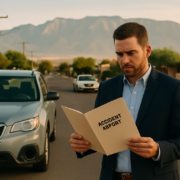
https://thecreccalawfirm.com/wp-content/uploads/2026/08/reviewing-damage-records-before-injury-claims-in-albuquerque-302-featured-publisher.webp 1024 1536 publisher https://thecreccalawfirm.com/wp-content/uploads/2023/03/logo-300x87.png publisher2026-08-14 08:12:382026-08-14 08:18:36Reviewing Damage Records Before Injury Claims in Albuquerque
Page 3 of 512345

Recent Posts

  • What Might Discovery Ask in an Albuquerque Lawsuit?
  • When Should Multiple Claimants Review Albuquerque Limits?
  • What Fees Does an Albuquerque Car Accident Lawyer Charge?
  • What Shapes an Albuquerque Car Accident Claim Timeline?
  • Can Albuquerque Freelancers Claim Lost Income After Crashes?

Contact Us

ADDRESS

3200 Monte Vista Blvd NE,
Albuquerque, NM 87106

PHONE

505-766-9999

EMAIL

info@thecreccalawfirm.com

Contact Us


    Please prove you are human by selecting the tree.


    Popular Links

    • Home
    • About Us
    • Blog

    Practice Areas

    • Asbestos Cases
    • Nursing Home Negligence
    • Wrongful Death
    • Phone

      505-766-9999

    • Email

      info@thecreccalawfirm.com

    • Address

      3200 Monte Vista Blvd NE,
      Albuquerque, NM 87106

    The Crecca Law Firm is located in Albuquerque and represents clients and takes injury claim cases throughout the entire state of New Mexico.
    The information on this Law Firm website is for general information purposes only. Nothing on this or associated pages, documents, comments, answers, emails, or other communications should be taken as legal advice for any individual case or situation. This information on this website is not intended to create, and receipt or viewing of this information does not constitute, an attorney-client relationship.
    Copyright 2023 The Crecca Law Firm | All Rights Reserved |
    Legal Marketing Solutions by USAttorneys.com
    • Facebook
    • Areas Served
    • Sitemap
    Scroll to top