
The Crecca Law Firm
  • Home
  • About Us
  • Practice Areas
    • Asbestos Cases
    • Bad Faith Insurance
    • Bicycle Accidents
    • Brain and Head Injuries
    • Burn Injuries
    • Business Litigation
    • Car Accident
    • Medication & Drug Liability
    • Dog Bite
    • Drunk Driving Accidents
    • Motorcycle Accidents
    • Nursing Home Negligence
    • Pedestrian Injuries
    • Personal Injury
    • Slip & Fall Accidents
    • Trucking Accidents
    • Uninsured Motorist
    • Wrongful Death
  • Blog
  • News
  • Contact Us
  • (505) 766-9999
  • Menu Menu
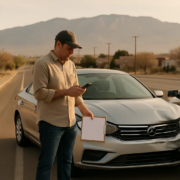
Albuquerque hit and run injury lawyer guidance beside a safely stopped vehicle

When Is an Albuquerque Hit-and-Run Injury Lawyer Useful?

October 2, 2026

A driver leaves after a collision, and suddenly you are dealing with pain, property damage, and no other driver available to exchange information. What can an Albuquerque driver do after a hit-and-run injury? The first hours and days can matter because video may be overwritten, witnesses may leave, and medical records can help document how the collision affected you.

For practical guidance on preserving hit-and-run evidence in Albuquerque, start with facts you can verify rather than assumptions about the unknown driver. The Crecca Law Firm can help readers understand the evidence and insurance issues that may arise. This article covers immediate safety and medical steps, reporting and insurance notice, witness and video development, and decisions to consider before accepting payment or signing documents.

What Should Albuquerque Drivers Do First After a Hit-and-Run Injury?

Safety and accurate documentation come before trying to investigate the other vehicle yourself. If anyone needs emergency help, call 911 or seek appropriate emergency care. When it is safe, photograph the vehicles, visible damage, roadway position, debris, traffic controls, lighting, and surrounding businesses. Do not follow or confront the departing driver.

Record Details Without Guessing

Write down everything you personally observed as soon as possible:

  • The approximate time and location of the collision
  • The direction the other vehicle traveled
  • Vehicle color, make, model, body style, damage, or partial plate information
  • Weather, lighting, traffic conditions, and road position
  • Names and contact information for witnesses

A partial description can be useful, but do not fill gaps with guesses. Ask nearby businesses, residences, or property managers whether exterior cameras may have captured the area. They may have retention policies that cause footage to disappear quickly. The goal is to identify possible evidence, not to accuse a person or vehicle without confirmation.

Medical documentation is also important. A prompt evaluation can create a record of reported symptoms and the collision history. Some pain, headaches, or cognitive symptoms may not be obvious immediately; recognizing delayed injury symptoms after an Albuquerque crash can help you understand why new or worsening symptoms should be reported to a medical professional. Keep bills, treatment instructions, appointment information, and notes about limitations. For related information, see handling medical bills after an Albuquerque crash.

How Should You Report an Albuquerque Hit-and-Run and Notify Insurers?

Reporting the collision creates an official record and may help investigators identify witnesses, nearby video, or the vehicle. Depending on the circumstances, contact the appropriate law-enforcement agency serving the crash location and provide factual information about the collision, injuries, vehicle description, and direction of travel. If you are transported for treatment, explain that the injury followed a hit-and-run collision and ask how the report will be completed or obtained.

When the report becomes available, consider checking an Albuquerque crash report for errors. Review the time, location, injury information, vehicle description, witness details, and hit-and-run narrative. If something is incomplete or inaccurate, ask the reporting agency how factual corrections or supplemental information may be documented. Do not assume an error automatically decides an insurance claim, but do not ignore a significant omission either.

Notify your own auto insurer promptly according to the policy’s notice requirements. In New Mexico, an unidentified hit-and-run driver may raise questions about uninsured motorist coverage, but whether coverage applies depends on the policy language, facts, required proof, and applicable law. Reviewing uninsured motorist coverage after a hit-and-run may help you identify documents to gather, including the policy, police report, photographs, witness information, and medical records.

An adjuster may request a recorded statement. Give accurate firsthand information and distinguish what you saw from what you inferred. Before providing one, consider preparing for an Albuquerque insurance recorded statement, particularly if injuries are serious, facts are disputed, or the request concerns coverage. Avoid speculating about the unknown driver’s identity, speed, intent, or insurance status.

What Mistakes Can Affect a Hit-and-Run Injury Claim?

A hit-and-run claim can involve two separate questions: what happened and what insurance, if any, may respond. The missing driver does not make those questions disappear, but it can make evidence and policy review especially important. Keep the original photographs, videos, witness messages, medical records, bills, and insurer correspondence in one secure place.

Common problems include:

  • Waiting to report the collision or notify a potentially applicable insurer
  • Posting theories about the unknown driver on social media
  • Repairing or discarding damaged property before it is documented
  • Describing symptoms inconsistently because treatment records were not reviewed
  • Accepting a quick payment without understanding what it resolves
  • Signing a release while treatment or coverage questions remain open

A payment for vehicle damage may not answer whether an injury claim is being resolved. Before reviewing an Albuquerque crash settlement release, determine whether it addresses bodily injury, property damage, future treatment, and all potentially applicable insurance. A check, email, or verbal discussion may have legal significance depending on the circumstances, so preserve communications and avoid treating any offer as routine without understanding its terms.

Depending on the facts, an attorney may help organize evidence, communicate with insurers, evaluate uninsured motorist issues, and identify gaps in the investigation. Serious injuries, disputed coverage, missing video, multiple policies, a recorded-statement request, or difficulty obtaining the report are practical reasons to seek advice sooner. Choosing an Albuquerque accident lawyer for a hit-and-run claim can involve asking about experience with injury documentation, evidence preservation, insurer communications, and the applicable New Mexico law. Laws and policy requirements can vary and may change, so a licensed attorney should review the specific situation.

Frequently Asked Questions

Should I try to find the hit-and-run driver myself?

Generally, no. Do not chase, confront, or make contact with a suspected driver. Instead, preserve what you personally observed, photograph the scene and damage when safe, identify witnesses, and tell law enforcement about nearby cameras or the direction of travel. Investigators or an attorney may evaluate information without placing you or others at unnecessary risk.

Can a hit-and-run injury claim use my own insurance?

Possibly. In New Mexico, your own uninsured motorist coverage may be relevant when the other driver is unidentified, but coverage depends on the policy, the facts, notice requirements, and applicable law. Notify the insurer as required, preserve the police and medical records, and avoid assuming that coverage applies or does not apply before the policy is reviewed.

What if I did not feel injured immediately after the crash?

Symptoms can develop or become more noticeable later. If new or worsening symptoms occur, report the collision history accurately to a medical professional and keep a dated record of symptoms and limitations. Delayed symptoms do not automatically establish or defeat a claim; medical records, the collision facts, and other evidence are considered together.

How long should I keep hit-and-run records?

Keep photographs, videos, witness information, police materials, medical records, bills, insurance letters, emails, and notes about communications until the claim and any related legal issues are fully resolved. Do not discard damaged items or original files merely because an insurer has received copies. A lawyer can explain which records may be important for your circumstances.

How The Crecca Law Firm Can Help

The Crecca Law Firm is dedicated to helping injured Albuquerque drivers understand the practical issues that follow a hit-and-run. The firm can evaluate available evidence, medical documentation, reporting concerns, insurance communications, and potential uninsured motorist coverage without assuming facts that have not been established. It is committed to fighting for clients’ rights while explaining the process and possible options clearly. If you have questions about a hit-and-run injury, contact The Crecca Law Firm for a free consultation or case evaluation.

The information in this article is for educational purposes only and does not constitute legal advice. Contact a qualified attorney licensed in Albuquerque for advice specific to your situation.
https://thecreccalawfirm.com/wp-content/uploads/2026/10/when-is-an-albuquerque-hit-and-run-injury-lawyer-useful-5008-featured-publisher.webp 1024 1536 publisher https://thecreccalawfirm.com/wp-content/uploads/2023/03/logo-300x87.png publisher2026-10-02 09:56:522026-10-02 09:56:52When Is an Albuquerque Hit-and-Run Injury Lawyer Useful?
Albuquerque rental car accident lawyer guide showing a rental vehicle after a crash

Which Records Help an Albuquerque Rental Crash Attorney?

October 2, 2026

A rental vehicle can make an already confusing collision more complicated. The driver may have purchased coverage at the counter, relied on a personal auto policy, used a credit-card benefit, or rented the vehicle for work. Meanwhile, the rental company may seek payment for damage while an injured person is pursuing a separate claim for medical expenses and other losses.

If you are asking what an Albuquerque rental car accident lawyer reviews after a crash, the answer usually begins with documents and facts—not assumptions about who automatically pays. The Albuquerque rental car insurance claim process can involve overlapping policies and different claim procedures. The Crecca Law Firm can help readers understand the issues to organize before discussing a potential claim.

This guide focuses on the evidence checklist that matters in Albuquerque: the rental agreement, vehicle identity, driver information, insurer details, photographs, police report, and communications with the rental company. It also explains how employer use, credit-card benefits, damage claims, medical records, and New Mexico deadlines may affect the analysis.

What an Albuquerque Rental Car Accident Lawyer Reviews First

A rental-car crash is not governed by the rental agreement alone. The agreement may identify authorized drivers, selected protection products, restrictions on use, and procedures for reporting damage. It may also show which company or affiliate rented the vehicle. Those details can help identify the potentially relevant policies and parties, but they do not by themselves resolve fault or an injured person’s right to compensation.

Start with a complete evidence checklist

Preserve copies or photographs of the following, when available:

  • The rental agreement, checkout documents, and any optional insurance or protection selections.
  • The rental vehicle’s make, model, license plate, vehicle identification number, and rental contract number.
  • The names and contact information of the driver, passengers, vehicle owner, and other involved drivers.
  • Insurance cards, claim numbers, policy information, and notices from any insurer.
  • Photographs or video of vehicle positions, damage, roadway conditions, traffic controls, and visible injuries, without placing anyone in danger.
  • The police or crash report, witness information, tow records, and scene-related communications.
  • Emails, text messages, app messages, letters, estimates, and calls involving the rental company or an insurer.

This checklist is useful whether you were driving the rental car, riding in it, or occupying another vehicle. In Albuquerque, a lawyer may also examine whether the crash report correctly identifies the rental vehicle and driver.

Who May Be Liable for a Rental Car Crash in Albuquerque?

The answer to who is liable for a rental car crash depends on facts such as who drove, whether the driver was authorized, how the collision occurred, and which coverage applies. A rental company is not automatically responsible simply because it owns the vehicle. Responsibility may instead involve the driver who allegedly caused the collision, an employer, an insurer, or another party whose conduct contributed to the event.

Coverage can also be layered. Depending on the contract and policy language, relevant sources may include:

  1. Optional protection purchased from the rental company.
  2. The renter’s personal auto insurance, subject to its terms, exclusions, and limits.
  3. Benefits connected to a credit card used for the rental, which may have conditions and may focus on vehicle damage rather than bodily injury.
  4. A commercial or employer policy when the vehicle was rented or used for business.
  5. Liability coverage connected to another driver or vehicle involved in the crash.

When an employee rented or operated the vehicle for work, preserve authorization emails, dispatch records, mileage information, delivery instructions, and explanations of the business purpose. The discussion of employer use of a rental vehicle may help explain why a company policy or employer relationship deserves attention. Additional guidance on evidence in an Albuquerque work-related crash can be relevant when employment duties are part of the facts.

New Mexico law governs many collisions occurring in Albuquerque, but the applicable rules can depend on the parties, policy language, and claim type. A case may involve records reviewed by insurers, law enforcement, and potentially the Second Judicial District Court in Bernalillo County. Laws and procedures can change, so location-specific legal advice requires review of current facts.

What Mistakes Can Complicate a Rental Vehicle Injury Claim in Albuquerque?

People often focus on returning the rental car or responding to a damage demand and overlook evidence related to injury. A rental company’s inspection may document property damage, but it does not necessarily establish the full nature, cause, or value of a bodily-injury claim. Keep the property and injury tracks organized separately.

Photograph and preserve damage records

Keep original photographs, inspection images, towing information, repair estimates, invoices, and correspondence about the vehicle. These records may help clarify how the collision occurred and whether later damage is being attributed to the event. The distinction between vehicle damage records and injury claims is important because a payment for vehicle damage may not address a person’s medical or other injury-related losses.

Document injury-related expenses and communications

Preserve medical bills, treatment dates, records supplied to you, health-insurance information, wage documentation, and messages describing symptoms or missed work. Do not assume that a rental-company representative or insurer has collected everything needed for an injury evaluation. Information about medical bills after an Albuquerque car accident may help with organizing those records.

Be cautious when giving recorded statements, accepting a check, or signing a release. Before reviewing an Albuquerque crash settlement release, readers generally benefit from understanding which claims the document resolves and whether treatment or other losses remain uncertain. Insurance communications do not necessarily extend legal deadlines. The applicable New Mexico crash claim deadlines can depend on the claim, parties, and circumstances.

Also obtain and review the police report. Check the vehicle description, driver identity, insurance information, roadway facts, and witness details. A report may contain errors and is not necessarily the final word on civil responsibility. If needed, information about correcting errors in an Albuquerque crash police report can help explain how factual inaccuracies may be addressed.

Frequently Asked Questions

Does the rental company pay for injuries after an Albuquerque crash?

Not automatically. The rental company may have obligations or coverage under particular circumstances, but ownership alone does not decide responsibility for a collision. The driver’s conduct, authorization, rental contract, applicable insurance, and involvement of other parties all matter. An Albuquerque rental car accident lawyer may review those facts along with the injured person’s medical and financial records before discussing possible claim sources.

Does credit-card rental insurance cover an injured person?

Credit-card rental benefits vary widely in eligibility, exclusions, notice requirements, and scope. Some benefits may focus primarily on damage to the rented vehicle and may not replace liability coverage or provide bodily-injury benefits. The cardholder may need to review the benefit terms and preserve required records. A lawyer can help distinguish credit-card protections from other insurance relevant to the collision.

What if the rental driver was uninsured or had insufficient coverage?

Possible options depend on the injured person’s policy, the other vehicles involved, the rental arrangement, and applicable New Mexico law. Uninsured or underinsured motorist coverage may be relevant in some situations, but policy language and notice requirements matter. Preserve all insurer correspondence and claim information rather than assuming no coverage exists or that one policy is responsible.

Can I be responsible for the rental car’s damage if I was injured?

A rental company may assert a separate claim for vehicle damage, and the amount or validity of that demand can depend on the rental agreement, collision facts, available protection, and documented loss. That property claim is distinct from an injury claim. Do not assume that paying or settling one automatically resolves the other; any proposed release should be reviewed carefully.

How The Crecca Law Firm Can Help

The Crecca Law Firm is dedicated to helping Albuquerque crash victims understand the records, insurance questions, and competing claims that can arise when a rental vehicle is involved. The firm is committed to fighting for clients’ rights while evaluating the rental agreement, driver information, coverage documents, photographs, police report, medical records, and communications with insurers or the rental company.

If you or a family member was injured in a rental-car collision, contact The Crecca Law Firm for a free consultation or case evaluation. The firm is ready to evaluate your situation and discuss potential legal options based on the available facts.

The information in this article is for educational purposes only and does not constitute legal advice. Contact a qualified attorney licensed in Albuquerque for advice specific to your situation.
https://thecreccalawfirm.com/wp-content/uploads/2026/10/which-records-help-albuquerque-rental-crash-attorney-4970-featured-publisher.webp 1024 1536 publisher https://thecreccalawfirm.com/wp-content/uploads/2023/03/logo-300x87.png publisher2026-10-02 08:10:252026-10-02 08:19:04Which Records Help an Albuquerque Rental Crash Attorney?
Independent medical examination after a car accident in Albuquerque

How Should You Prepare for an Albuquerque IME After a Crash?

October 1, 2026

A request for a medical examination after a collision can catch an injured driver off guard. The appointment may look like an ordinary doctor’s visit, but its purpose is different: an insurer may use the examiner’s observations and opinions when evaluating injury, causation, treatment, or claim value. For guidance about the claim as a whole, readers can speak with Albuquerque auto accident lawyers at The Crecca Law Firm.

An independent medical examination after a car accident in Albuquerque is not automatically proof that an insurer accepts or rejects the claim. It is one piece of the claim record. This article explains what the examination may involve, what appointment notices and forms can require, how to describe symptoms and medical history accurately, and why preserving records matters. New Mexico insurance and civil procedure rules may vary depending on the policy, the stage of the claim, and whether a lawsuit has been filed.

What Does an Independent Medical Examination After a Car Accident in Albuquerque Involve?

An insurer-requested examination is generally arranged to evaluate a claimed injury. Despite the word “independent,” the examination is usually requested or paid for by the insurer, rather than chosen as part of the claimant’s ongoing treatment. The examiner may review selected medical records, ask about the collision and symptoms, conduct a physical evaluation within the relevant specialty, and prepare a report.

For a closer discussion of what an Albuquerque crash medical examination may cover, consider the difference between a treating provider and an insurer’s examiner. A treating provider’s role is medical care. An insurer’s examiner may be asked to address questions such as whether the reported condition is consistent with the crash, whether additional care appears related, or whether another cause should be considered.

What may happen at the appointment?

The examiner may ask about:

  • How the collision occurred and when symptoms began
  • Pain, limitations, medications, and treatment received
  • Prior injuries, medical conditions, and similar complaints
  • Work, household, or daily activities affected by symptoms

The physical portion may include observation, range-of-motion testing, strength testing, or other assessments appropriate to the claimed condition. The scope should depend on the appointment notice and the issues being evaluated. An examination is not a substitute for emergency care or routine treatment.

How Should You Handle Notices, Medical History, and Records?

An appointment notice may identify the examiner, location, date, subject of the examination, and records or forms requested. Read the notice carefully and keep a copy. If the date, location, specialty, or requested information seems unclear, asking for clarification can help avoid an avoidable dispute about attendance or cooperation.

The paperwork deserves equal attention. Before signing, consider reviewing medical forms and authorizations after an Albuquerque crash. A broad authorization may seek information beyond the injuries or time period relevant to the claim. Whether a form is appropriate depends on the circumstances, and an attorney may help evaluate its scope before it is signed.

Be complete without guessing

A useful approach is to answer questions truthfully and in ordinary language. Do not exaggerate symptoms to make the claim appear more serious, but do not minimize them to appear tough or cooperative. If you do not remember an exact date or detail, it is generally better to say so than to guess.

Medical history can become important when an insurer disputes causation. Accurate disclosure of earlier injuries or conditions does not necessarily resolve whether the crash caused a new injury or worsened an existing one. Keeping the distinction clear may help explain baseline symptoms, changes after the collision, and the timing of treatment. Learn more about how a preexisting injury may affect an Albuquerque crash claim.

Symptoms do not always appear immediately, and their timing can be relevant. If pain, headaches, or other complaints developed later, describe when you first noticed them and how they changed. A consistent timeline supported by treatment notes and personal records is more useful than a polished or speculative account. Information about delayed pain and symptoms after an Albuquerque car crash may provide additional context.

What Are the Practical Consequences of an Insurer Medical Examination?

Attending an examination does not guarantee payment, approval of treatment, or agreement about the claim. Afterward, the insurer may compare the report with treating records, diagnostic findings, bills, employment information, and your account of the collision. The insurer might request clarification, seek additional records, question the relationship between treatment and the crash, or use the report in settlement discussions.

In an Albuquerque claim, disputed causation can affect more than a single appointment. It may influence whether the insurer recognizes ongoing treatment, challenges future care, or argues that some limitations existed before the collision. Opinions about evidence supporting future medical costs in Albuquerque can be relevant when continued care is part of the claim.

Preserve an examination and expense file

Keep copies of the following in one organized location:

  • The appointment notice, examiner information, and confirmation of attendance
  • Forms, authorizations, and correspondence exchanged with the insurer
  • Treatment records, provider instructions, and appointment dates
  • Bills, receipts, mileage information, and other out-of-pocket expenses
  • A factual symptom and activity log, without altering prior entries

Organizing medical bills after an Albuquerque car accident can make it easier to identify missing records and explain expenses. Do not discard cancellation notices, rescheduling messages, or proof that you attended. If you cannot attend as scheduled, promptly review the notice and communicate through the appropriate channel rather than simply failing to appear.

An examination request can also contribute to reasons an Albuquerque car accident insurance claim may stall, especially when records are incomplete or causation remains disputed. A lawyer may review the request, help identify the issues being examined, and explain how the report could fit into the broader claim or lawsuit. In New Mexico, the applicable process may differ when a case is already in litigation, so the stage of the matter matters.

Frequently Asked Questions

Can I refuse an insurance medical exam after a car accident in Albuquerque?

Whether refusal is permitted and what consequences may follow depends on the insurance policy, the claim’s status, the requested examination, and whether litigation has begun. An insurer may treat an unexplained refusal or missed appointment as a cooperation issue, but a request does not automatically answer every legal question. Before declining, postponing, or signing related paperwork, consider obtaining advice based on the specific New Mexico claim.

Is an insurer’s medical examiner my treating doctor?

Usually, no. A treating provider focuses on evaluating and caring for the patient, while an insurer-requested examiner is typically asked to assess claimed injuries for the insurer’s review. The examiner may not provide ongoing treatment or make decisions for your regular medical team. The appointment’s notice and scope should help identify its purpose, and you can accurately explain that you are attending an evaluation rather than a routine treatment visit.

What if the examiner says my injury was not caused by the crash?

An examiner’s opinion is not necessarily the only evidence considered. Treating records, diagnostic information, symptom timing, prior medical history, witness information, and provider opinions may also bear on causation. Do not argue with or threaten the examiner. Preserve the report if it is provided, keep communicating with treating providers about medical concerns, and consider having a New Mexico attorney review how the opinion affects the claim.

Should I bring my medical records to the examination?

Follow the appointment notice and instructions rather than assuming which records are expected. You may want to bring or organize the requested documents, a medication list, appointment dates, and factual notes about symptom timing. Avoid creating a coached narrative or changing records. If the request is broad or confusing, an attorney may help determine what information is relevant and whether additional documentation should be provided.

How The Crecca Law Firm Can Help

The Crecca Law Firm is dedicated to helping Albuquerque injury claimants understand insurer requests and the records used to evaluate car accident injuries. The firm can review an examination notice, discuss medical-history and causation issues, help organize claim documents, and explain how an examination may affect negotiations or a filed case. Because every claim has different policy, medical, and procedural facts, the firm evaluates the available information rather than promising a particular result. Contact The Crecca Law Firm for a free consultation or case evaluation.

The information in this article is for educational purposes only and does not constitute legal advice. Contact a qualified attorney licensed in Albuquerque for advice specific to your situation.

https://thecreccalawfirm.com/wp-content/uploads/2026/10/how-should-you-prepare-for-an-albuquerque-ime-after-a-crash-4886-featured-publisher.webp 1024 1536 publisher https://thecreccalawfirm.com/wp-content/uploads/2023/03/logo-300x87.png publisher2026-10-01 09:20:352026-10-01 09:25:12How Should You Prepare for an Albuquerque IME After a Crash?
Diminished value claim Albuquerque vehicle inspection after a crash

How Is an Albuquerque Vehicle’s Diminished Value Measured?

October 1, 2026

A vehicle can be repaired so well that an ordinary driver cannot see any remaining damage. Even so, a buyer reviewing the vehicle’s history may offer less because it was involved in a crash. That potential difference is the basic idea behind a diminished value claim Albuquerque drivers may consider after a collision.

The issue is separate from the cost of replacing a bumper, repairing a quarter panel, or correcting alignment. It asks whether the vehicle’s market value remains lower after repairs because of its accident history, prior damage, repair quality, or other documented concerns. The Crecca Law Firm helps Albuquerque crash victims understand the evidence that may matter before they evaluate this type of property-damage claim.

This article explains how diminished value is different from a total-loss valuation, what records may help establish pre-crash value and post-repair loss, how an insurer may review the request, and why deadlines should not be overlooked. New Mexico law and insurance procedures can vary depending on the facts and parties involved.

What Does a Diminished Value Claim in Albuquerque Address?

A diminished value claim generally concerns the loss in a vehicle’s market value after it has been repaired following a crash. The vehicle may be safe and functional, but its accident history can affect how dealerships, private buyers, and valuation services assess it. Some buyers may be less willing to pay the same price they would have paid for a comparable vehicle with no reported collision.

This is not automatically the same as a repair bill. Repair costs address the expense of restoring the vehicle. Diminished value concerns a possible difference between what the vehicle was worth before the crash and what it is worth after repairs, taking the accident history and condition into account.

Repair quality and hidden concerns

The potential loss may depend on the severity of the collision, the type of damage, the quality of repairs, replacement parts, paint matching, frame or structural work, and whether any alignment or handling concerns remain. A clean appearance alone may not answer every valuation question. For example, an inspection could identify repair issues that affect buyer confidence or resale value.

In Albuquerque, photographs, repair orders, parts information, and independent inspection findings may help show what happened to the vehicle and whether the completed repairs addressed the original damage. Alignment reports that document post-crash vehicle value loss may be especially relevant when the collision involved suspension, steering, or structural components.

Diminished value compared with a total loss

A total-loss analysis usually asks whether the expected repair cost and related factors justify treating the vehicle as a total loss based on its pre-crash value. A diminished value claim generally involves a vehicle that was repaired and returned to service. These are different valuation questions. Readers can review Albuquerque total-loss valuation and vehicle market evidence to better understand that distinction.

What Evidence Can Show Post-Repair Vehicle Value Loss?

A claim is more understandable when it is supported by evidence rather than a general belief that the vehicle is worth less. The relevant materials may help establish three points: what the vehicle was worth before the collision, what damage and repairs occurred, and how the accident history affected its value afterward.

Establishing pre-crash value

Useful information may include:

  • The vehicle’s make, model, trim, options, condition, and mileage before the crash
  • Pre-crash photographs, maintenance records, and service history
  • Title and registration information, when relevant
  • Comparable listings or completed sales for similar vehicles in the New Mexico market
  • Prior inspection or appraisal information
  • Evidence of the vehicle’s condition before the collision

Mileage matters because a lower-mileage vehicle may have a different market value from an otherwise similar vehicle with substantially more use. Location, equipment, maintenance, demand, and overall condition can also affect comparisons. A valuation should not rely on an unrelated vehicle simply because it has the same model name.

Documenting damage and repair quality

Keep the crash photographs, estimates, invoices, supplement records, repair orders, parts information, insurer communications, and inspection reports. Records showing whether original or replacement parts were used may be relevant, as may information about structural, paint, alignment, or calibration work. A post-repair inspection may provide additional information about condition, but readers should understand that an inspection does not automatically establish a particular dollar amount.

Before repairs change the physical evidence, readers may want to understand what to do before an insurer inspects crash damage. Preserving photographs and repair documentation can make it easier to compare the vehicle’s pre-repair condition with the completed work.

A complete file can be easier to evaluate when it is organized chronologically. Reviewing vehicle damage records after an Albuquerque crash can help readers identify the types of documents that may clarify the vehicle’s history, repairs, and claimed loss.

How Are Diminished Value Claims Evaluated and Challenged?

Insurance companies may examine repair records, photographs, vehicle history, mileage, comparable sales, inspection findings, and valuation reports. They may also question whether the claimed loss comes from the crash or from unrelated factors, such as prior damage, ordinary depreciation, high mileage, modifications, or changing market conditions.

An independent appraisal or valuation analysis may help identify a proposed pre-crash value, a post-repair value, and the reasoning behind the difference. The method matters. A report based on comparable vehicles should explain why those vehicles are similar in location, condition, mileage, options, and accident history. A reader may also need to consider whether the report addresses actual market evidence rather than relying only on a formula.

When an insurer’s offer does not address resale impact

An insurer may pay reasonable repair expenses without agreeing that the vehicle suffered a separate post-repair loss in market value. If an offer does not address diminished value, the available evidence can be compared with the insurer’s explanation. Why an insurer may undervalue crash-related vehicle loss offers related guidance for reviewing a property-damage valuation.

If a diminished-value request is denied, preserve the denial, the valuation materials, photographs, repair records, and communications. Evidence to gather after a denied Albuquerque crash claim may help organize the information needed to understand the insurer’s position and assess whether additional evidence is available.

Common mistakes to avoid

People sometimes make the process harder by relying on a single online estimate, discarding repair records, assuming a vehicle’s trade-in quote proves market value, or treating the repair bill as proof of diminished value. Another common problem is waiting too long to investigate the claim. New Mexico deadlines that may affect an Albuquerque crash claim explains why applicable limitation periods and notice requirements should be reviewed promptly. New Mexico deadlines can vary based on the parties, legal theory, and claim circumstances.

Frequently Asked Questions

Is diminished value available for every repaired vehicle in New Mexico?

No. A repaired vehicle does not automatically qualify for a diminished value payment. The potential claim may depend on the collision, the vehicle’s condition and history, the quality of repairs, available market evidence, insurance coverage, and the applicable legal theory. Some vehicles may show little measurable market impact, while others may have a more significant documented loss. A qualified New Mexico attorney can evaluate the specific facts.

Does a vehicle’s accident history always reduce its resale value?

Not necessarily. Accident history may affect buyer interest, but the impact can vary based on the vehicle’s age, mileage, prior condition, damage severity, repair quality, market demand, and the information reported in its history. A buyer’s concern alone does not establish a specific amount of loss. Comparable sales, appraisals, inspection findings, and vehicle records may provide more useful support.

Can I claim diminished value if the other driver’s insurer paid for repairs?

Possibly, depending on the facts, available coverage, and applicable New Mexico law. Payment of repair costs addresses one category of property damage but may not resolve every question about post-repair market value. Readers should review the settlement language, releases, repair documentation, and valuation evidence before assuming that an insurer’s repair payment either includes or excludes a separate diminished-value issue.

What if I sold the vehicle before obtaining a diminished-value appraisal?

Selling the vehicle may make some evidence more difficult to obtain, but it does not necessarily answer every question about a potential claim. Photographs, repair records, pre-crash information, vehicle-history documents, sales records, and expert analysis may still be relevant. The effect depends on the available proof and the timing of the sale. A New Mexico attorney can explain what evidence may remain useful.

How The Crecca Law Firm Can Help

The Crecca Law Firm is dedicated to helping Albuquerque crash victims understand property-damage issues, including the possible difference between repair costs and post-repair vehicle value loss. The firm can review available photographs, mileage and maintenance records, repair documents, inspection findings, comparable-market information, insurer communications, and any proposed release.

Because diminished value questions are fact-specific, the firm is committed to fighting for a careful evaluation rather than assuming that every repaired vehicle has the same loss. If you are considering a diminished value claim in Albuquerque, contact The Crecca Law Firm for a free consultation or case evaluation to discuss your situation and legal options.

The information in this article is for educational purposes only and does not constitute legal advice. Contact a qualified attorney licensed in Albuquerque for advice specific to your situation.
https://thecreccalawfirm.com/wp-content/uploads/2026/10/how-is-an-albuquerque-vehicles-diminished-value-measured-4860-featured-publisher.webp 1024 1536 publisher https://thecreccalawfirm.com/wp-content/uploads/2023/03/logo-300x87.png publisher2026-10-01 08:09:162026-10-01 08:09:16How Is an Albuquerque Vehicle’s Diminished Value Measured?
Page 2 of 212

Recent Posts

  • What Might Discovery Ask in an Albuquerque Lawsuit?
  • When Should Multiple Claimants Review Albuquerque Limits?
  • What Fees Does an Albuquerque Car Accident Lawyer Charge?
  • What Shapes an Albuquerque Car Accident Claim Timeline?
  • Can Albuquerque Freelancers Claim Lost Income After Crashes?

Contact Us

ADDRESS

3200 Monte Vista Blvd NE,
Albuquerque, NM 87106

PHONE

505-766-9999

EMAIL

info@thecreccalawfirm.com

Contact Us


    Please prove you are human by selecting the key.


    Popular Links

    • Home
    • About Us
    • Blog

    Practice Areas

    • Asbestos Cases
    • Nursing Home Negligence
    • Wrongful Death
    • Phone

      505-766-9999

    • Email

      info@thecreccalawfirm.com

    • Address

      3200 Monte Vista Blvd NE,
      Albuquerque, NM 87106

    The Crecca Law Firm is located in Albuquerque and represents clients and takes injury claim cases throughout the entire state of New Mexico.
    The information on this Law Firm website is for general information purposes only. Nothing on this or associated pages, documents, comments, answers, emails, or other communications should be taken as legal advice for any individual case or situation. This information on this website is not intended to create, and receipt or viewing of this information does not constitute, an attorney-client relationship.
    Copyright 2023 The Crecca Law Firm | All Rights Reserved |
    Legal Marketing Solutions by USAttorneys.com
    • Facebook
    • Areas Served
    • Sitemap
    Scroll to top