
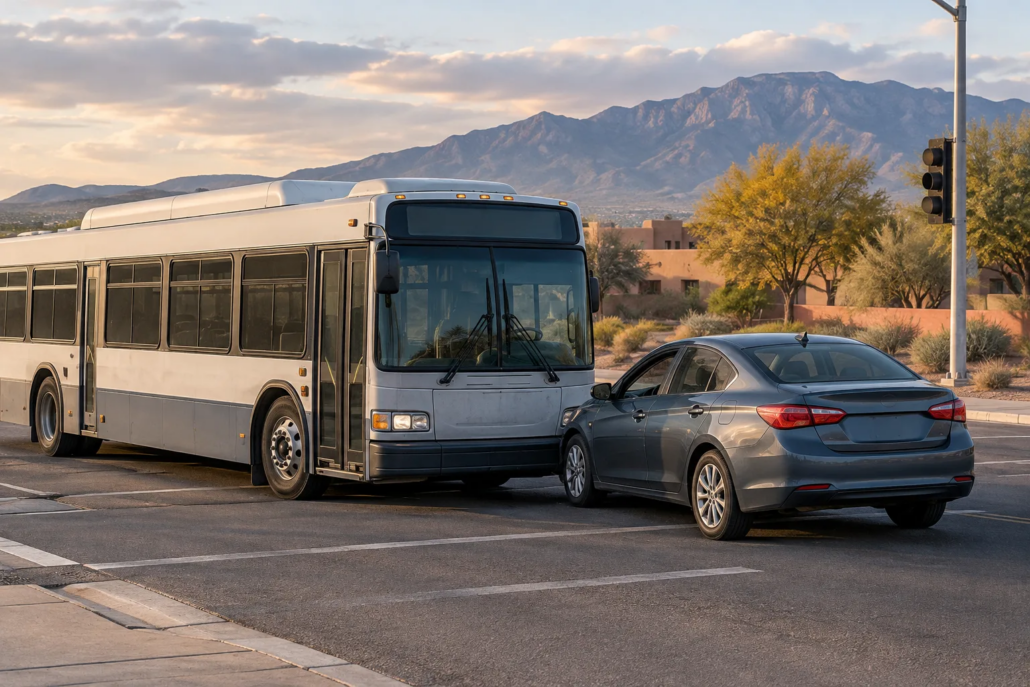
Who Handles an Albuquerque City Vehicle Crash Claim?
A collision with a city bus, maintenance truck, or other public vehicle can leave an injured person with questions beyond the usual exchange of insurance information. If you are considering an Albuquerque accident involving a city vehicle claim, the vehicle’s owner and its use at the time may affect who needs to be identified and which procedures apply. A city vehicle does not automatically mean the City of Albuquerque is responsible, and the rules can depend on the facts and the parties involved.
The Crecca Law Firm helps people understand the issues that can arise after an Albuquerque car crash. This article explains how ownership and use can shape the claim inquiry, what records may help clarify what happened, and why it is important to promptly ask about notice requirements and deadlines. New Mexico law applies to claims arising here, but the correct process depends on the specific circumstances.
What Makes an Albuquerque City Vehicle Crash Claim Different?
The word “city” on a vehicle—or its public-service appearance—does not by itself identify the legally responsible party. A vehicle may belong to a municipal department, another public entity, a contractor, or a private company. The driver may be a public employee or someone working for a separate operator. Those distinctions can affect where a claim is directed, what insurance may apply, and which procedures need to be considered.
The vehicle’s purpose matters, too. A city vehicle being used for official work may raise different questions from a privately owned vehicle, even if both are driven by workers. A public transit vehicle may be owned or operated under arrangements that require a closer look. By comparison, a delivery van or other employer-owned vehicle may call for a different investigation into the company, driver, and applicable coverage. Read about how an Albuquerque company-vehicle claim can differ for that distinction.
Identify the owner, operator, and purpose
Useful starting points may include the vehicle’s identifying number or description, the department or service it appeared to represent, and what it was doing when the collision occurred. A bus serving Albuquerque, for example, may prompt questions about the transit operator as well as the vehicle’s ownership. Do not assume that a public-facing vehicle is owned by the City or that a city employee was driving it.
A claim involving a public entity can also raise questions under New Mexico’s Tort Claims Act. The Act governs certain claims involving public entities and employees, but public-entity status alone does not establish liability. Whether a claim may proceed depends on the facts and applicable law, including whether a legal basis for liability exists.
Why Can Public-Vehicle Claims Involve Different Procedures?
When a public entity may be involved, identifying the right entity and checking claim procedures can be especially important. New Mexico law includes rules that can affect claims against public entities, and notice requirements may be separate from the deadline for filing a lawsuit. The applicable requirements can depend on who was involved, what happened, and the legal basis for the claim. It is risky to assume that an ordinary insurance claim process answers every deadline question.
For an Albuquerque collision, potentially relevant parties could include the City, another public body, a transit operator, or a private contractor. Sorting that out may require more than the vehicle’s appearance or a driver’s initial account. Ask promptly how to identify the responsible entity and whether a notice procedure applies. This resource discusses records and deadlines in an Albuquerque government-vehicle claim.
Ask separately about notice and lawsuit deadlines
A notice requirement and a deadline to file a lawsuit are not necessarily the same thing. A claim may involve more than one time limit, and the facts can affect how a rule applies. New Mexico public-entity claims may have notice provisions that require attention before a lawsuit-filing deadline becomes the immediate concern. An attorney can assess which rules may apply rather than treating every crash as an ordinary private-insurance matter.
The New Mexico rules that can set an Albuquerque crash claim’s cutoff provide broader context about deadlines. Because laws and procedures may change and may vary by claim, prompt review is useful for understanding the specific questions—not because every public-vehicle claim follows one fixed timeline.
What Information Should You Preserve After the Crash?
Clear, early records can help establish what vehicle was involved, who may have operated it, and what happened at the scene. If it is safe and practical, available information may include:
- The vehicle’s type, color, identifying number, route, or other distinctive features.
- The date, approximate time, location, direction of travel, and conditions at the scene.
- Photographs of vehicle positions, visible damage, road conditions, and relevant surroundings.
- Names and contact information for witnesses, if they are willing to provide them.
- Any incident or exchange information provided by a driver, agency, transit operator, or responding officer.
- Records of communications about the event, including the date and identity of the person contacted.
Preserve original photos and messages where possible, and keep notes about when and how information was collected. A public entity or operator may have its own incident materials, but their existence and availability should not be assumed. A lawyer may be able to evaluate what records could be relevant and whether additional steps to request or preserve them are appropriate. For more detail, see evidence to preserve after an Albuquerque public-vehicle crash.
Avoid assumptions about what the records prove
A photograph, incident report, or witness account can be useful, but no single item necessarily resolves fault or legal responsibility. Keep the information in context and avoid altering original files. If the vehicle’s ownership or operator is unclear, record what you observed without guessing. That may help an attorney investigate the responsible parties and consider which procedures apply.
Frequently Asked Questions
Is the City of Albuquerque automatically responsible when a city vehicle is involved?
No. A city vehicle’s involvement does not automatically establish the City’s responsibility. Ownership, operation, the employee’s role, the vehicle’s use, and the facts of the collision can all matter. A claim against a public entity may also require a legal basis under New Mexico law. Identifying the right party and evaluating responsibility are separate questions that depend on the circumstances.
Can I make a claim if a city bus or public transit vehicle was involved?
Possibly. A collision involving a transit vehicle may raise questions about the vehicle owner, transit operator, driver, and any applicable public-entity procedures. The facts and the relationship between those parties matter. Preserving identifying details and asking promptly about notice requirements can help clarify what process may apply. An attorney can review the circumstances and explain potential options without assuming that every transit vehicle has the same operator or claim route.
What if I do not know which public agency owned the vehicle?
The responsible agency may not be clear from a vehicle’s appearance alone. Details such as its identifying number, service or department, location, and activity at the time may help narrow the inquiry. Other records or witness information may also be relevant. Avoid guessing at ownership; an attorney may be able to help investigate which public entity, contractor, or insurer should be contacted.
Does contacting an insurer preserve every deadline for a public-entity claim?
Not necessarily. An insurance conversation and a notice requirement under New Mexico law may be different processes, and one should not be assumed to satisfy the other. Deadlines can depend on the parties and facts involved. Because notice and lawsuit-filing periods may be distinct, it is sensible to ask a qualified New Mexico attorney promptly which deadlines could apply to the particular situation.
How The Crecca Law Firm Can Help
The Crecca Law Firm is dedicated to helping Albuquerque injury claimants understand the questions that can arise when a public vehicle is involved. The firm can evaluate the available facts, help identify potentially responsible parties, and discuss whether public-entity procedures or deadlines may be relevant. Each situation is different, and an evaluation is not a promise of a particular outcome.
If you were injured in a crash involving a city vehicle, contact The Crecca Law Firm to request a free consultation or case evaluation. A conversation can help you understand what information may matter and what questions to ask next.
Disclaimer: The information in this article is for educational purposes only and does not constitute legal advice. New Mexico laws and procedures may vary by situation and may change. Contact a qualified attorney licensed to practice in New Mexico for advice specific to your circumstances.



Leave a Reply
Want to join the discussion?Feel free to contribute!