
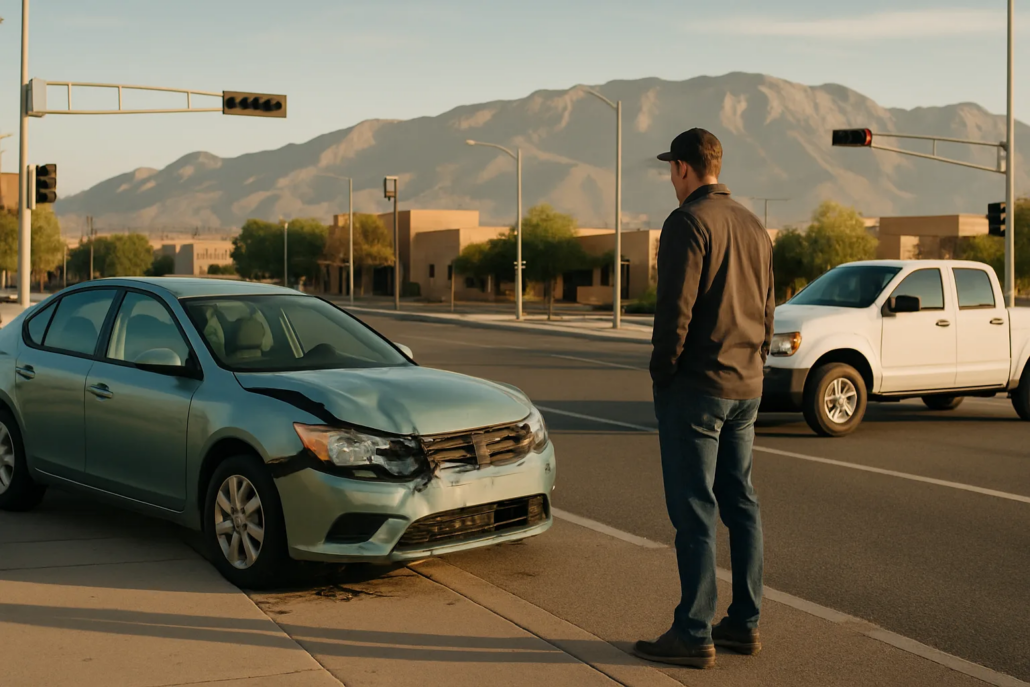
Which Evidence Helps an Albuquerque Public-Vehicle Lawyer?
A collision with a government vehicle can look like an ordinary Albuquerque car accident at the scene. However, identifying the public entity, preserving agency records, and understanding special notice requirements may become important much earlier than an injured person expects. If you are considering an Albuquerque government vehicle accident lawyer, the first priority is gathering reliable facts without assuming the process will match a private-insurance claim.
A vehicle may belong to the City of Albuquerque, Bernalillo County, the State of New Mexico, a public school system, or another governmental body. The driver’s employer, vehicle owner, and insurer may not be the same entity. The Crecca Law Firm’s guide to Albuquerque government vehicle crash claims and records explains why identifying the correct entity and preserving information can matter.
This article covers what to record after the crash, how reports and medical documentation may support a claim, why public-entity procedures can differ, and when prompt legal review may help protect options. It is general information for Albuquerque and New Mexico readers, not advice about any particular collision.
What Makes a New Mexico Government Vehicle Accident Claim Different?
New Mexico governmental entities may have legal protections and procedural requirements that do not apply in the same way to a private driver. The New Mexico Tort Claims Act is one source of rules that may affect claims against certain public entities and employees. Whether it applies, and how it applies, can depend on the entity, the employee’s conduct, the vehicle’s use, and the facts of the crash. Laws and procedures can change, so a current review is important.
Identify the vehicle and public entity
Do not rely only on the fact that the vehicle appeared official. Record, if safely possible:
- The agency or department name
- The vehicle number, unit number, or other identifying mark
- The driver’s name and job title, if provided
- The crash location, date, and approximate time
- Whether the vehicle was owned, leased, or operated for a public agency
A city vehicle crash injury claim in Albuquerque may involve different records and decision-makers than a collision with a private motorist. A county vehicle, state vehicle, public-transit vehicle, or school-related vehicle may raise different questions about the responsible entity and available insurance or governmental coverage.
Preserve more than photographs
Photographs of vehicle positions, damage, traffic controls, weather, and roadway conditions may help establish what happened. Keep tow records, property-damage estimates, electronic messages, and your own written account while the details are fresh. Do not alter or discard damaged parts before the evidence has been considered.
Which Records and Deadlines Matter After a Government Vehicle Crash in Albuquerque?
An incident report is an important starting point, but it is not necessarily the complete record. Depending on the agency and circumstances, potentially relevant materials may include dispatch information, vehicle assignment records, onboard video, traffic-camera footage, maintenance records, training materials, photographs, witness statements, and internal communications. Availability and disclosure can depend on New Mexico law and the particular public entity.
Request and review the crash or incident report when it becomes available. Check the agency name, vehicle or unit number, driver information, witnesses, diagram, road conditions, citations, and the report’s account of fault. If it contains factual errors, correcting errors in an Albuquerque crash report may require a careful process; do not assume an inaccurate report automatically decides liability.
Why deadlines require attention
Government-related injury claims may involve a notice requirement or other shortened deadline in addition to a general lawsuit filing period. The applicable rules may depend on the public entity, the type of claim, where the crash occurred, and the legal basis for responsibility. A person should not assume that waiting for an agency investigation or an insurer’s response preserves every claim.
For broader context, review the rules that set an Albuquerque crash claim deadline. Depending on the circumstances, an attorney may evaluate which entity must receive notice, what information the notice should contain, and which deadlines control. These issues are specific to New Mexico and may change over time.
How Should Injured People Document Medical Care, Witnesses, and Fault?
Medical documentation can connect the crash to reported injuries and show how the event affected daily activities. Seek appropriate medical attention based on your circumstances, follow providers’ instructions, and tell providers about symptoms accurately. Keep discharge papers, bills, appointment information, work records, and notes about changes in ordinary activities. Do not delay necessary care while waiting for a government agency or insurer to respond.
The guide to handling medical bills after an Albuquerque car accident discusses documentation and payment concerns that may arise while an injury claim is unresolved. Medical records should be handled carefully because privacy, causation, and prior-condition questions may become relevant.
Build an independent account of the crash
A government driver’s report is only one account. If possible, collect witness names and contact information, photographs of the roadway and vehicles, nearby-business or traffic-camera details, and information about traffic signals or signs. Write down what you personally observed, avoiding guesses about speed, intent, or fault.
New Mexico’s comparative-fault rules may affect how competing accounts are evaluated. The discussion of New Mexico comparative fault after an Albuquerque crash provides related background. Avoid posting detailed accusations online or giving a recorded statement before understanding what is being requested and why.
Common complications to avoid
Common problems include overlooking the public entity, failing to save photographs, assuming the incident report is complete, signing a release too early, or treating a settlement conversation as an extension of every legal deadline. Prompt legal review may help organize records, identify the proper defendant, evaluate notice issues, and preserve evidence before it is lost or overwritten.
Frequently Asked Questions
Is every crash involving a government employee treated as a government vehicle claim?
Not necessarily. The employee may have been driving a personally owned vehicle, a rented vehicle, or a public vehicle outside the scope of assigned duties. Ownership, agency employment, permission to drive, and the purpose of the trip may all matter. In New Mexico, an attorney may review these facts before identifying the potentially responsible parties and the procedures that apply.
Can I make a claim if the public vehicle driver received no ticket?
A citation is not required for every civil claim, and the absence of a ticket does not by itself resolve fault. Civil responsibility may depend on evidence such as witness accounts, photographs, vehicle data, roadway conditions, agency records, and medical documentation. The available evidence and applicable New Mexico rules should be evaluated based on the specific crash.
What if I do not know which agency owned the vehicle?
Preserve every identifying detail you have, including vehicle markings, unit numbers, location, time, photographs, and the responding agency’s report information. Witnesses or nearby video may also help. Because the responsible entity can affect notice and record requests, an Albuquerque attorney may assist with identifying the agency rather than relying on an assumption about ownership.
Does speaking with a government insurer end my claim?
No single conversation necessarily resolves a claim, but statements, documents, or releases can affect how a dispute develops. An insurer or agency representative may ask about the crash, injuries, treatment, or damages before all information is available. Depending on the circumstances, a lawyer may review requested statements or proposed releases and explain potential implications.
How The Crecca Law Firm Can Help
The Crecca Law Firm is dedicated to helping injured people understand the documentation and procedural issues that may arise after a public-vehicle collision. The firm can evaluate available crash information, help identify the potentially responsible government entity, review incident and medical records, and consider notice, deadline, causation, and comparative-fault questions under New Mexico law.
If you are looking for Albuquerque accident lawyers for a public-vehicle injury claim, the firm is committed to fighting for your rights while providing a clear assessment of your legal options. Contact The Crecca Law Firm for a free consultation or case evaluation.
Disclaimer: The information in this article is for educational purposes only and does not constitute legal advice. Contact a qualified attorney licensed in Albuquerque for advice specific to your situation.



Leave a Reply
Want to join the discussion?Feel free to contribute!