
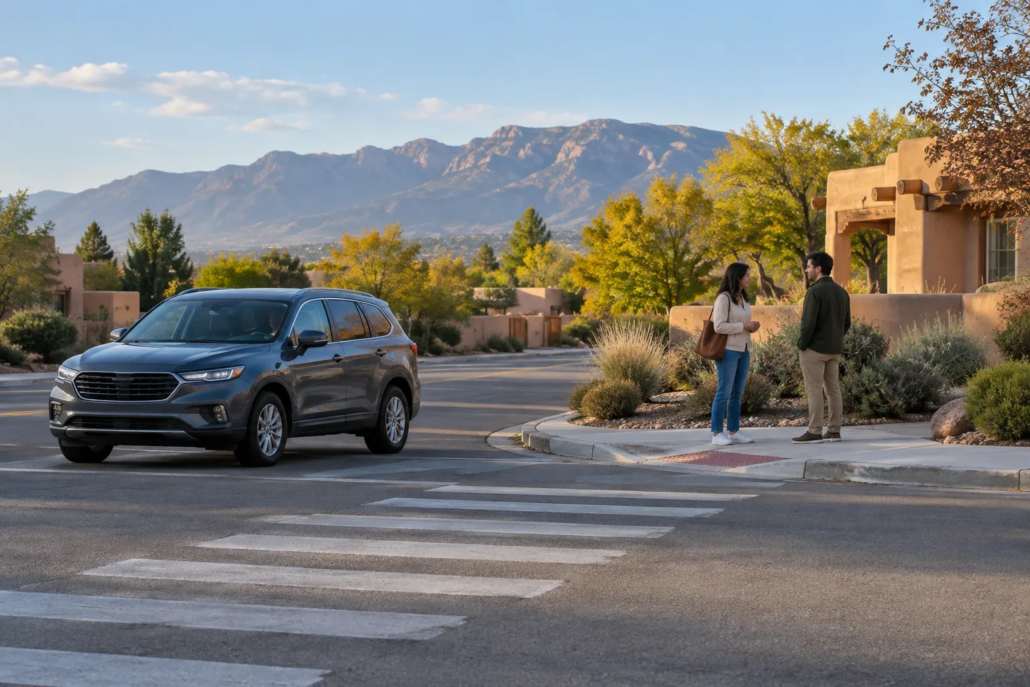
Which Evidence Helps an Albuquerque Pedestrian Injury Claim?
A pedestrian collision can leave you with immediate questions: Was the driver identified? Should the crash be reported? Which insurer may cover the harm? An Albuquerque pedestrian accident injury claim may involve more than one possible source of recovery, and the answer depends on the circumstances, available evidence, and insurance terms. For an overview of evidence that may help establish fault in an Albuquerque pedestrian collision, consider how scene details and witness accounts can help clarify what happened.
Even if you feel able to leave the scene, injuries or symptoms may become clearer later. The Crecca Law Firm helps people understand the issues that can arise after a crash. This guide covers reporting, medical follow-up, preserving evidence, identifying insurance, and questions that can affect a claim in Albuquerque. It is general information, not a determination of who is legally responsible in any particular collision.
What to document after an Albuquerque pedestrian accident injury claim
The first useful information often comes from the scene. If it is safe, note the vehicle’s make, model, color, and license plate, along with the driver’s name and contact and insurance details. If the driver leaves, even a partial plate, vehicle description, or direction of travel may help investigators. Do not put yourself in danger to collect details; safety and getting appropriate help come first.
Contact law enforcement to report the collision. In Albuquerque, the Albuquerque Police Department may respond to and document a crash within its jurisdiction. The report can provide a record of basic information, but it is not necessarily a final decision on fault. Ask how to obtain the report or incident number, and write down what you remember while the details are fresh.
Preserve witness and scene details
If possible, get names and contact information for witnesses. Record the location, time, weather, lighting, crosswalk or intersection details, traffic signals, and any obstructions to visibility. Photographs may help preserve the position of vehicles, roadway conditions, and visible damage, if taking them is safe. Nearby businesses or residences may have cameras, but footage may not be kept indefinitely.
These details can help explain more than the vehicle’s path: they may also bear on visibility, signals, and the actions of other people or organizations. The relevant evidence that may help establish fault in an Albuquerque pedestrian collision can vary with the setting and available records.
If the driver cannot be identified, reporting and preserving what you know are still important. Keep notes about the vehicle and possible witnesses, and ask whether nearby cameras may have captured the area. You can also review steps to take after an Albuquerque hit-and-run collision for further general guidance.
Which insurance may apply to a pedestrian injury claim?
A claim may involve the driver’s auto liability insurance if the driver’s conduct caused or contributed to the collision. Obtain the insurer’s name and policy information if available, but do not assume that a policy will cover every loss or that the driver is the only potentially responsible party. Depending on the facts, questions may arise about a vehicle owner, an employer, or another party. Each potential claim requires its own factual and legal analysis.
A pedestrian’s own auto policy, or a policy in their household, may also be relevant. Depending on the policy language and circumstances, uninsured or underinsured motorist coverage or medical payments coverage may be available. Health insurance may be another source for medical bills. Coverage, exclusions, coordination, and claim procedures vary, so the policy documents matter. A useful starting point is learning about possible insurance sources after an Albuquerque pedestrian crash.
Make a simple record of each insurer contacted, the representative’s name, the date, and what was requested. Keep copies of letters, claim numbers, and policy information. If the driver left or has no insurance information, tell the appropriate insurer what you know and ask what documentation it needs. Do not guess about coverage or fault; an attorney can help assess how the available policies may fit the facts.
Medical follow-up, insurer contact, and claim timing
A collision can cause symptoms that are not obvious at the scene. If symptoms appear or change, note when they began and share accurate information with a qualified medical professional. This is not a substitute for medical advice. Keeping a record of appointments, bills, prescriptions, and time missed from work can help you understand the practical effects of the incident. Read more about why pain or other symptoms can appear after an Albuquerque crash.
Bills may arrive before an insurance claim is resolved. Keep invoices and explanation-of-benefits documents, and track which amounts have been paid or remain outstanding. Understanding how medical bills may be handled after an Albuquerque collision can help you organize questions about payment sources without assuming a particular insurer will pay a specific bill.
An adjuster may request a recorded statement or other information. Before responding, identify which company is calling and what it is asking for. Be factual, avoid guessing about details you do not remember, and consider what to consider before giving an insurer a recorded statement. A request for information is not the same as a decision on responsibility or the value of a claim.
New Mexico comparative-fault principles may affect a claim when more than one person’s conduct contributed to a collision. Deadlines also depend on the parties and circumstances. Claims involving a public entity can have different notice requirements, so it is prudent to identify potentially responsible parties and verify applicable timing early. Review New Mexico deadlines that may affect an Albuquerque crash claim. Laws and procedures can change, and the applicable rules depend on the specific claim.
Frequently Asked Questions
Do I need a police report after a pedestrian crash in Albuquerque?
A report can create a useful record of the collision and may help identify people involved, but it does not automatically determine legal fault. Reporting options can depend on the circumstances and whether officers responded at the scene. Keep any incident number or instructions you receive. If you are unsure how to report a crash in Albuquerque, contact the appropriate law enforcement agency for current guidance.
What if the driver left before I got their information?
Report the collision and share any details you remember, such as the vehicle’s color, type, partial plate, or direction of travel. Preserve witness contact information and ask about nearby cameras if it is safe and practical. A driver’s identity may be unknown at first, but that does not by itself answer whether other insurance could apply. Coverage depends on policy terms and the facts.
Can I make a claim if I was not in a crosswalk?
Possibly. The location of the pedestrian, traffic signals, visibility, and each person’s actions may all matter. New Mexico comparative-fault principles may also be relevant if responsibility is disputed. Being outside a crosswalk does not, by itself, resolve every legal or insurance question. A lawyer can review the specific facts and explain how applicable New Mexico law may affect a potential claim.
What information should I have before talking with an insurer?
It may help to know which insurer is contacting you, the claim number, and what information it is requesting. Keep your own notes and avoid guessing about facts or symptoms. You can ask what the statement will be used for and whether the request is voluntary. What to provide may depend on the policy and claim, so consider getting legal guidance for advice specific to your situation.
How The Crecca Law Firm Can Help
The Crecca Law Firm is dedicated to helping injured pedestrians understand the questions that may shape a claim, from identifying potentially responsible parties to reviewing available insurance and organizing evidence. The firm can evaluate the circumstances, explain relevant New Mexico legal issues, and help you understand possible next steps without promising a particular result. If you were struck while walking in Albuquerque, contact The Crecca Law Firm to discuss your situation and request a free consultation or case evaluation.
The information in this article is for educational purposes only and does not constitute legal advice. Laws vary by location and may change; contact an attorney licensed to practice in New Mexico for advice specific to your situation.


Leave a Reply
Want to join the discussion?Feel free to contribute!