
Best Evidence After Car Accident Claims
The first version of a car crash case is usually written before anyone files a claim. It starts at the scene, in the hours after impact, and in the records that follow. If you are wondering about the best evidence after car accident claims, the answer is not one single document. It is the proof that shows what happened, who caused it, how badly you were hurt, and how the crash changed your life.
Insurance companies know this. That is why they move fast. They look for gaps, inconsistencies, delayed treatment, missing photos, and anything else they can use to shrink your case. Strong evidence closes those openings and puts pressure where it belongs – on the driver and insurer that caused the harm.
What counts as the best evidence after car accident cases?
The best evidence is evidence that is timely, credible, and hard to argue with. In most injury claims, that means photos from the scene, police reports, witness accounts, medical records, vehicle damage documentation, and proof of lost income. But not every case rises or falls on the same evidence.
A rear-end crash at a stoplight may be proven largely through damage photos, the police investigation, and treatment records. A disputed intersection wreck may depend more heavily on eyewitnesses, surveillance footage, black box data, and precise scene documentation. In a serious injury case, the medical evidence often becomes the center of the fight because the insurer may stop arguing about fault and start attacking the value of your damages.
That is why evidence is not just about volume. It is about fit. The right proof for your case is the proof that answers the defense before the defense can ask the question.
Photos and video often become the best evidence after car accident scenes
If you are physically able, visual evidence from the scene can be some of the most powerful proof in the entire case. Skid marks fade. Debris gets cleared. Vehicles are repaired or sold. A dangerous roadway condition can disappear overnight. What seems obvious in the moment can become disputed later.
Good photos do more than show that a crash happened. They can show lane positions, traffic signs, weather, lighting, impact angles, broken glass, deployed airbags, visible injuries, and the severity of the vehicle damage. Video can be even stronger because it captures context that a single still image may miss.
It depends, of course, on the facts. Minor visible damage does not always mean minor injury, especially in neck, back, or brain injury cases. Insurance companies love to wave around photos of a car and say, “That does not look serious.” But the body is not a bumper. A low-speed collision can still cause painful and expensive harm. Photos help, but they should never be the only evidence supporting an injury claim.
What to capture if you can
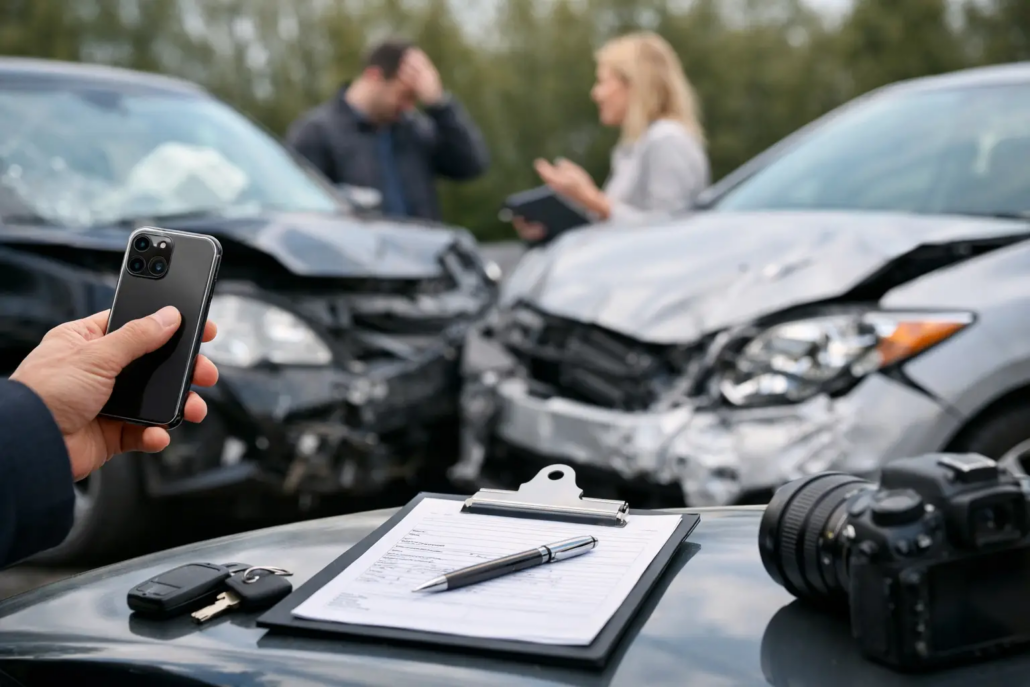
If your condition allows, photograph all vehicles, license plates, the roadway, traffic signals, nearby businesses or homes with cameras, your injuries, and anything unusual at the scene. Take wide shots first, then close-ups. If someone admits fault, do not rely on memory alone. Note exactly what was said.
Medical records can make or break the case
In many serious claims, medical evidence becomes the backbone of the demand. Records show when you sought care, what symptoms you reported, what doctors found, what treatment you needed, and whether your injuries were tied to the crash.
Timing matters here. If you wait too long to get medical care, the insurer may argue you were not really hurt or that something else caused your condition. That does not mean every delay destroys a case. Some people are shaken up, think the pain will pass, or cannot get immediate care. But gaps in treatment are exactly the kind of opening insurance adjusters exploit.
Consistency matters too. Tell your doctors where you hurt, how the crash happened, and how your symptoms affect your daily life. If you leave out major complaints early on, the defense may later say those injuries were invented after the fact. Honest, prompt, and consistent reporting is powerful because it creates a clear timeline.
Medical imaging, specialist evaluations, physical therapy notes, surgical recommendations, prescriptions, and prognosis opinions all add weight. In a high-value case, future treatment needs and long-term impairment can matter just as much as the first emergency room visit.
The police report matters, but it is not the whole case
People often assume the police report decides fault. It does not. It is important, and it often helps, but it is only one piece of the file.
A strong report can identify drivers, witnesses, insurance information, road conditions, and the officer’s observations. It may also note statements made at the scene, traffic violations, or signs of impairment. That can give your claim early credibility.
Still, police officers are not always eyewitnesses. Reports can contain mistakes. Some are detailed and useful. Others are brief and incomplete. If the report favors the other side, that does not automatically end your case. It may just mean your lawyer needs to build around it with better evidence.
Witness statements can stop the blame game
When drivers point fingers at each other, neutral witnesses can be the difference between a denied claim and a strong recovery. Independent third parties usually have no stake in the outcome, which makes them harder for the insurance company to dismiss.
The problem is that witnesses disappear fast. Phone numbers get lost. Memories fade. People move on. That is why early witness identification matters. A short recorded statement taken while the facts are fresh is often far more valuable than a vague recollection months later.
Not all witnesses are equal. The best witness is not always the loudest one. It is the person with a clear view, a solid memory, and no obvious bias.
Electronic evidence is more important than many people realize
Modern crash cases often involve digital proof. Nearby businesses may have surveillance footage. Homes may have doorbell cameras. Commercial trucks may carry event data recorders or GPS logs. Some passenger vehicles store crash data about speed, braking, seatbelt use, and steering inputs.
Cell phone evidence can matter too, especially if distracted driving is suspected. A driver who says they were paying attention may tell a different story through phone records or app activity. In drunk driving or commercial vehicle cases, electronic evidence can become especially important.
This kind of proof is powerful because it can cut through spin. But it is also fragile. Video gets overwritten. Data gets lost. Companies may not preserve records unless they receive a prompt request. Waiting too long can cost you evidence you only get one chance to secure.
Your own documentation has real value
One mistake injured people make is assuming only official documents count. Your own records matter. A daily pain journal, photos of bruising as it develops, notes about missed work, and records of how the injury affects sleep, parenting, driving, or basic movement can all support damages.
This is especially true when the defense tries to minimize suffering that does not show up neatly on an X-ray. Pain, limitations, anxiety, headaches, and disruption to normal life are real. They need support. Your documentation helps tell that story in a grounded, believable way.
Just keep it honest. Exaggeration hurts credibility. Specific details help. Saying “my shoulder hurt” is weaker than saying “I could not lift a gallon of milk with my right arm for two weeks.”
Employment and wage evidence proves financial damage
If the crash caused you to miss work, lose overtime, use sick time, or fall behind in your business, you need records that show it. Pay stubs, tax returns, employer letters, attendance records, and disability paperwork can all help establish economic loss.
For salaried workers, gig workers, business owners, and people with irregular income, proving loss can get more complicated. That does not mean it cannot be done. It just requires more careful documentation and often a more aggressive presentation of the numbers.
Insurance companies tend to fight hard when wage loss claims are less straightforward. That is another reason strong records matter.
What not to do with evidence
Good evidence can be undermined by bad decisions. Do not repair your vehicle before it is properly documented if the damage may matter to the case. Do not throw away damaged personal items. Do not guess about injuries or mechanics if you do not know. And be very careful on social media.
A single out-of-context post can be twisted into an argument that you were not really hurt. Even innocent photos can be used against you. The insurer is not looking for fairness. It is looking for ammunition.
Why early legal help changes the evidence picture
The strongest cases are usually built early, before records disappear and before the insurance company settles on its defense strategy. A trial-ready law firm can move to preserve video, gather statements, obtain records, and frame the evidence in a way that supports full compensation instead of a quick discount.
That matters because evidence does not speak for itself. It has to be collected, protected, and used with purpose. At The Crecca Law Firm, that is exactly how serious injury cases should be handled – with urgency, discipline, and a willingness to fight when the other side refuses to do the right thing.
If you have been hurt in a crash, do not assume the truth will automatically win. Preserve what you can, get medical care, and treat every piece of proof like it may one day need to stand up in court.


Leave a Reply
Want to join the discussion?Feel free to contribute!