
The Crecca Law Firm
  • Home
  • About Us
  • Practice Areas
    • Asbestos Cases
    • Bad Faith Insurance
    • Bicycle Accidents
    • Brain and Head Injuries
    • Burn Injuries
    • Business Litigation
    • Car Accident
    • Medication & Drug Liability
    • Dog Bite
    • Drunk Driving Accidents
    • Motorcycle Accidents
    • Nursing Home Negligence
    • Pedestrian Injuries
    • Personal Injury
    • Slip & Fall Accidents
    • Trucking Accidents
    • Uninsured Motorist
    • Wrongful Death
  • Blog
  • News
  • Contact Us
  • (505) 766-9999
  • Menu Menu
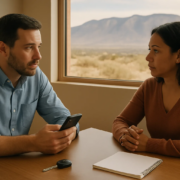
Recorded statement after a car accident in Albuquerque during an insurance discussion

When Do Albuquerque Crash Questions Need Clarification?

September 2, 2026

After a collision, the other driver’s insurance adjuster may call before you have finished medical appointments, reviewed the crash report, or understood how your injuries are developing. If you are searching for a recorded statement after a car accident in Albuquerque, it is important to understand what the request is—and what it is not—before answering questions.

A recorded statement is an interview preserved in audio or written form for use in an insurance investigation. The adjuster may be trying to gather basic facts, evaluate coverage, and compare your account with the police report, vehicle damage, medical records, and the other driver’s version of events. A statement can provide useful information, but unclear wording, guesses, or incomplete answers may later create disputes.

The Crecca Law Firm helps Albuquerque injury victims understand the claims process and the difference between cooperating with their own insurance carrier and communicating with an opposing insurer. This article explains the purpose of a recorded statement, the subjects an adjuster may raise, how to prepare accurate factual information, and when a question may need clarification.

Why Is an Insurer Requesting a Recorded Statement After a Car Accident in Albuquerque?

The other driver’s insurer is usually investigating a potential claim against its policyholder. An adjuster may want your account while the collision is still being evaluated. That does not necessarily mean the insurer has decided who was responsible or how much a claim may be worth.

In Albuquerque, NM, an adjuster may compare your statement with an Albuquerque Police Department crash report, photographs, vehicle damage, witness information, and available medical documentation. The insurer may also be checking whether its policy applies, whether other vehicles or drivers were involved, and whether the reported injuries are consistent with the collision.

What the adjuster may ask

Questions can include:

  • Where and when did the crash occur?
  • Which direction were the vehicles traveling?
  • What did you see, hear, or do immediately before impact?
  • What parts of the vehicles were damaged?
  • Did anyone report an injury at the scene?
  • What medical care have you received since the collision?
  • Were there earlier injuries or symptoms affecting the same body area?

These questions may sound routine, but they can involve issues of fault, causation, damages, and credibility. An adjuster may also ask for your version of events in a way that assumes a fact you do not know. You can distinguish what you personally observed from what another person told you.

A request is not the same as a court order

Generally speaking, a third-party insurer does not have the same contractual relationship with you that it has with its insured. A request for a recorded statement is not automatically a subpoena or a court order. However, insurance policies can contain cooperation provisions, and your own policy may impose duties that differ from the other driver’s policy. The consequences of not cooperating with your own carrier can depend on the policy and circumstances.

How Should You Prepare for an Insurance Recorded Statement?

Preparation should focus on accuracy, not on developing a persuasive script. Before speaking with an Albuquerque accident insurance adjuster, many people find it useful to gather documents and organize what they actually remember. Depending on the circumstances, an attorney may help identify topics that require care without telling you to alter or withhold truthful facts.

Consider reviewing:

  1. The date, approximate time, and location of the collision.
  2. Your direction of travel, traffic controls, lane position, and weather or lighting conditions.
  3. Photographs, videos, witness contact information, and the crash report, if available.
  4. Medical visits, symptoms reported to providers, and work or daily activities affected after the crash.
  5. Insurance information for your vehicle and any correspondence from an insurer.

Do not guess at speed, distance, timing, or medical conclusions. It is acceptable to say that you do not remember, do not know, or need clarification. If you later learn that an answer was incomplete, promptly noting the correction may be preferable to allowing an avoidable misunderstanding to remain unaddressed.

Clarify the scope before recording begins

You may ask who is calling, which insurer they represent, whether the call concerns the other driver’s policy, and which topics the adjuster wants to cover. You can also ask whether the interview is being recorded and request that unclear or compound questions be restated. A question about prior medical history, other accidents, or current treatment may require context rather than a quick yes-or-no response.

The adjuster may ask you to describe your injuries, but an adjuster is not a medical provider. Avoid diagnosing yourself or adopting a medical conclusion simply because a question suggests it. Your providers’ records and opinions generally address medical issues more reliably than a claimant’s speculation.

What Mistakes Can Affect a Recorded Statement Claim Investigation?

A recorded statement may become one item in a broader claim file. It is not necessarily the only evidence, but inconsistencies can invite additional questions. The risk is often less about using a particular word and more about answering beyond what you know or failing to distinguish facts from assumptions.

Common problems include:

  • Agreeing with a question that contains an inaccurate premise.
  • Minimizing pain or limitations because symptoms changed over time.
  • Saying that you are “fine” in a brief social exchange and later overlooking the statement.
  • Guessing about the other driver’s speed, phone use, intentions, or visibility.
  • Describing a diagnosis before a qualified provider has made one.
  • Confusing the other driver’s insurer with your own insurance company.
  • Discussing settlement value before the injury and claim information is complete.

If the statement concerns a claim against the other driver, the adjuster may be evaluating the policyholder’s potential liability and your claimed losses. Your own carrier may instead be handling first-party benefits or coverage questions under your policy, such as uninsured or underinsured motorist issues, depending on the facts and policy language. Those are separate relationships, even when the same collision is involved.

For a crash that may lead to litigation in Albuquerque, records and communications can later be reviewed in a civil case filed in the Second Judicial District Court serving Bernalillo County. That possibility does not mean every claim will become a lawsuit. It does mean that careful, truthful communication can matter beyond the initial phone call, while New Mexico procedures and insurance requirements may vary by situation and can change over time.

Frequently Asked Questions

Do I have to give the other driver’s insurer a recorded statement?

Generally, an injured claimant is not automatically required to give the at-fault driver’s insurer a recorded statement merely because an adjuster requests one. Your own policy may contain different cooperation terms, however. The answer can depend on coverage, the claim’s posture, and whether formal legal process is involved. An attorney licensed in New Mexico can review the request and applicable policy language with you.

Can I provide a written statement instead of a recorded one?

You may ask whether the insurer will accept a written account, but the adjuster is not necessarily required to agree. A written statement can still become part of the claim file and should be accurate, limited to facts you know, and carefully reviewed. Depending on the circumstances, an attorney may discuss the advantages and risks of different forms of communication before you respond.

What if I already gave a recorded statement after my Albuquerque crash?

Do not assume that one uncertain answer determines the entire claim. Preserve any emails or letters about the call and write down what you recall about the questions and answers while the conversation is fresh. If you later recognize an error, an attorney may help evaluate whether and how to clarify it. Other evidence, including reports and medical records, may also provide important context.

Can an adjuster ask about my prior accidents or injuries?

An adjuster may ask about prior accidents, symptoms, or treatment when evaluating causation and damages. That does not establish that an earlier condition caused your current complaints. Answering accurately may require explaining dates, body areas, treatment, and how your condition changed, without guessing about medical cause. New Mexico-specific guidance is best obtained from a qualified attorney familiar with the facts.

How The Crecca Law Firm Can Help

The Crecca Law Firm is dedicated to helping Albuquerque car accident victims understand insurance communications and make informed decisions during the claims process. The firm is committed to fighting for clients’ rights while examining available evidence, coverage issues, reported injuries, and communications with each insurer.

If an adjuster has requested a recorded statement, the team is ready to evaluate your situation and explain potential next steps based on the facts. Contact The Crecca Law Firm for a free consultation or case evaluation.

The information in this article is for educational purposes only and does not constitute legal advice. Contact a qualified attorney licensed in Albuquerque, NM for advice specific to your situation.


https://thecreccalawfirm.com/wp-content/uploads/2026/09/albuquerque-crash-questions-need-clarification-1758-featured-publisher.webp 1024 1536 publisher https://thecreccalawfirm.com/wp-content/uploads/2023/03/logo-300x87.png publisher2026-09-02 09:23:252026-09-02 09:30:22When Do Albuquerque Crash Questions Need Clarification?
Albuquerque car accident claim deadline timeline near a New Mexico roadway

Which Rules Set an Albuquerque Crash Claim’s Cutoff?

September 2, 2026

A crash can leave you focused on medical appointments, vehicle repairs, transportation, and work. The filing deadline may be easy to overlook. So, when does the New Mexico deadline for an Albuquerque car accident claim expire? The answer depends on what you are claiming, whom you may be pursuing, and facts that can affect when the legal clock starts or pauses.

For many ordinary injury claims, New Mexico law provides a general limitations period. But a property-damage claim, wrongful-death claim, minor’s claim, or case involving a public entity may follow a different analysis. Insurance policies can also contain separate notice or proof requirements.

This guide from The Crecca Law Firm explains the Albuquerque car accident claim deadline in plain English. It outlines what to calendar after a crash, identifies common facts that can change the analysis, and explains why contacting counsel early may help preserve evidence and evaluate deadlines. No exception or extension should be assumed without reviewing the specific circumstances.

What Is the Albuquerque Car Accident Claim Deadline for an Injury Case?

New Mexico generally gives a person three years to bring a lawsuit for a personal-injury claim. This is commonly associated with New Mexico’s personal-injury statute of limitations. The period is not a guaranteed answer for every case, however, and identifying the legally relevant starting date can require careful review.

When the injury clock generally starts

In a typical private-party collision, the deadline may be measured from the date of the crash. That makes the accident date an important calendar entry. A person may have an injury claim even when symptoms develop gradually, but delayed symptoms do not automatically move the filing deadline.

A claim may involve more than one legal theory or more than one potentially responsible party. Vehicle ownership, employment relationships, insurance coverage, and the facts surrounding fault can all affect the analysis. A lawyer evaluating an Albuquerque, NM accident may also examine medical records, crash reports, photographs, witness information, and communications with insurers.

A lawsuit deadline is not the same as an insurance deadline

The time to file a court case is different from the time an insurance policy may require notice of a collision, cooperation, medical documentation, or a written demand. Waiting to notify an insurer can create avoidable coverage questions, even when the statute of limitations has not expired. Policy language matters, particularly for uninsured- or underinsured-motorist coverage.

How Do Property, Death, Minor, and Government Claims Change the Timeline?

The phrase “car accident claim deadline” can describe several different claims. They do not always share the same period. In New Mexico, general statutory rules often discussed include:

  • Bodily injury: A private personal-injury lawsuit is generally subject to a three-year limitations period.
  • Property damage: A claim for damage to a vehicle or other property may generally have a four-year period, although the facts and legal theory matter.
  • Wrongful death: A wrongful-death action generally has a three-year period measured from the date of death, rather than necessarily from the crash date.
  • Public entities: Claims involving a city, county, state agency, or other public entity may trigger notice requirements under New Mexico’s Tort Claims Act. A commonly referenced deadline is written notice within 90 days, subject to statutory qualifications, with a separate two-year period for filing suit.

These are general New Mexico rules, not a deadline calculation for a particular reader. Public-entity claims require special caution. For example, a collision involving an Albuquerque city vehicle, a New Mexico agency vehicle, or a public employee may need to be evaluated under the Tort Claims Act rather than ordinary private-party rules. Notice may need to identify the time, place, and circumstances of the occurrence, and actual notice or another statutory provision may affect the analysis.

Special considerations for children and other legal complications

New Mexico law can provide tolling rules for minors and people who lack legal capacity, but the details matter. The child’s age, the identity of the person who may bring the claim, and the type of damages can influence how the deadline is calculated. A minor’s claim should not be treated as automatically postponed until adulthood.

Other issues can also change the analysis, including a defendant’s absence from New Mexico, a delayed discovery theory, bankruptcy, a prior lawsuit, or an agreement affecting limitations. These issues are fact-specific and should not be used as a reason to wait.

What Should an Albuquerque Crash Victim Calendar and Preserve?

A practical timeline can help keep deadline issues visible while a claim is investigated. It should be treated as an organizational tool, not a substitute for legal analysis.

  1. The crash date: Record the date, approximate time, location, vehicles, and known parties. Preserve the crash report and insurance information.
  2. The first medical visit: Keep records of treatment, referrals, restrictions, and bills. Do not assume that a gap in treatment automatically defeats a claim, but understand that insurers may ask about it.
  3. The date of death, if applicable: In a fatal crash, record the date of death separately because wrongful-death timing may be measured from that date.
  4. Any government connection: Identify whether a public vehicle, roadway agency, or public employee may be involved. Flag the matter promptly because notice periods can be much shorter than ordinary lawsuit deadlines.
  5. Insurance notice dates: Review each potentially relevant policy for notice, cooperation, proof-of-loss, and claim-submission provisions.
  6. The estimated lawsuit deadline: Have a qualified New Mexico attorney assess the applicable period and place a reminder well before it expires.

Do not rely only on an insurer’s claim number, a pending negotiation, or an adjuster’s statement that a file remains open. Settlement discussions do not necessarily extend a statutory deadline. Similarly, sending a demand letter does not automatically preserve a lawsuit.

In Albuquerque, NM, early counsel may also help identify surveillance footage, vehicle data, witness contact information, employment records, and roadway evidence before those sources become harder to obtain. That does not guarantee a claim will succeed; it can support a more informed evaluation of available options.

Common Mistakes That Can Put a New Mexico Claim at Risk

One frequent mistake is using the wrong event as the starting point. A person may count from the first insurance conversation instead of the crash, or use the crash date when a wrongful-death rule may focus on the date of death. Another mistake is treating injury and property damage as one claim with one deadline.

Other avoidable problems include:

  • Assuming an insurer’s investigation pauses the statute of limitations.
  • Overlooking a possible public-entity defendant or roadway responsibility.
  • Waiting until the final month to locate witnesses, records, or photographs.
  • Signing a release without understanding which claims and parties it covers.
  • Failing to preserve messages, repair estimates, medical records, and income documentation.
  • Assuming a minor’s claim or delayed symptoms automatically receives extra time.

A lawyer may begin by identifying every potentially applicable deadline, then separating injury, property, wrongful-death, and property-damage issues. Counsel may also examine whether a notice must be directed to a public entity, whether multiple insurers are involved, and whether a filing must occur in an appropriate New Mexico court. Albuquerque cases may involve state district court or other forums depending on the parties and claim, so the proper procedure should be evaluated rather than assumed.

Early contact does not require a person to file a lawsuit or accept a settlement. It gives the reader an opportunity to understand the calendar, preserve information, and consider options before a deadline becomes urgent.

Frequently Asked Questions

How long do I have to report an Albuquerque crash to an insurance company?

There is no single reporting period for every policy. Insurance contracts may require prompt notice or impose conditions involving cooperation, recorded statements, medical documentation, or proof of loss. New Mexico law may also affect coverage questions, but a policy’s language is important. Review the applicable policy and consider obtaining advice about the timing and scope of notice rather than assuming the lawsuit deadline controls.

Can I still pursue a claim if I did not feel injured right away?

Possibly, depending on the facts. Some injuries or symptoms may become apparent after a crash, but delayed symptoms do not automatically extend New Mexico’s limitations period. Medical documentation, causation, and the timing of treatment may become important issues. A lawyer may evaluate how the symptoms developed and which deadline applies without assuming that delayed discovery creates an exception.

Does settling my vehicle damage claim end my injury claim?

Not necessarily, but a written release can affect claims against one or more parties. Settlement documents may contain broad language covering known and unknown claims, so signing them can have significant consequences. Property damage and bodily injury may be evaluated separately, yet the agreement’s exact terms control the risk. Consider legal review before signing a release involving an Albuquerque collision.

What if the other driver left New Mexico after the crash?

A defendant’s absence from the state can raise questions about service, jurisdiction, or tolling, but it does not automatically extend every deadline. The facts may include where the person lived, where the claim arose, and whether a lawsuit was filed or served. Because these issues are technical and fact-dependent, prompt review by a New Mexico attorney may help clarify the applicable timeline.

How The Crecca Law Firm Can Help

The Crecca Law Firm is dedicated to helping Albuquerque-area crash victims understand the issues that can shape a personal injury claim. The firm can review the collision timeline, distinguish injury from property-damage and wrongful-death claims, and consider whether a public entity or special notice requirement may be involved.

The team is committed to fighting for clients’ rights while providing clear information about deadlines, evidence, insurance communications, and available legal options. Contact The Crecca Law Firm for a free consultation or case evaluation so your situation can be reviewed before a potentially important deadline approaches.

The information in this article is for educational purposes only and does not constitute legal advice. Contact a qualified attorney licensed in Albuquerque, NM for advice specific to your situation.
https://thecreccalawfirm.com/wp-content/uploads/2026/09/which-rules-set-an-albuquerque-crash-claims-cutoff-1728-featured-publisher.webp 1024 1536 publisher https://thecreccalawfirm.com/wp-content/uploads/2023/03/logo-300x87.png publisher2026-09-02 08:15:252026-09-02 08:18:14Which Rules Set an Albuquerque Crash Claim’s Cutoff?
Page 3 of 3123

Recent Posts

  • How Can an Underinsured Motorist Claim Work in Albuquerque?
  • Who Else May Be Liable in an Albuquerque Truck Accident?
  • Why Give a Full Account in New Mexico Shared-Fault Crashes?
  • What Should You Keep for Albuquerque Rental-Cost Claims?
  • What Might Discovery Ask in an Albuquerque Lawsuit?

Contact Us

ADDRESS

3200 Monte Vista Blvd NE,
Albuquerque, NM 87106

PHONE

505-766-9999

EMAIL

info@thecreccalawfirm.com

Contact Us


    Please prove you are human by selecting the house.


    Popular Links

    • Home
    • About Us
    • Blog

    Practice Areas

    • Asbestos Cases
    • Nursing Home Negligence
    • Wrongful Death
    • Phone

      505-766-9999

    • Email

      info@thecreccalawfirm.com

    • Address

      3200 Monte Vista Blvd NE,
      Albuquerque, NM 87106

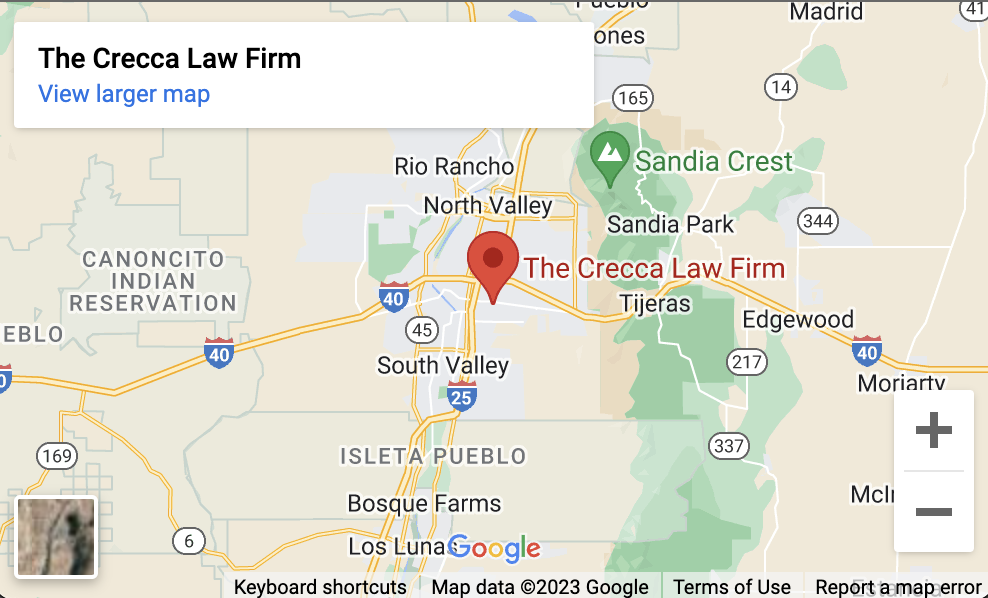
    The Crecca Law Firm is located in Albuquerque and represents clients and takes injury claim cases throughout the entire state of New Mexico.
    The information on this Law Firm website is for general information purposes only. Nothing on this or associated pages, documents, comments, answers, emails, or other communications should be taken as legal advice for any individual case or situation. This information on this website is not intended to create, and receipt or viewing of this information does not constitute, an attorney-client relationship.
    Copyright 2023 The Crecca Law Firm | All Rights Reserved |
    Legal Marketing Solutions by USAttorneys.com
    • Facebook
    • Areas Served
    • Sitemap
    Scroll to top