
The Crecca Law Firm
  • Home
  • About Us
  • Practice Areas
    • Asbestos Cases
    • Bad Faith Insurance
    • Bicycle Accidents
    • Brain and Head Injuries
    • Burn Injuries
    • Business Litigation
    • Car Accident
    • Medication & Drug Liability
    • Dog Bite
    • Drunk Driving Accidents
    • Motorcycle Accidents
    • Nursing Home Negligence
    • Pedestrian Injuries
    • Personal Injury
    • Slip & Fall Accidents
    • Trucking Accidents
    • Uninsured Motorist
    • Wrongful Death
  • Blog
  • News
  • Contact Us
  • (505) 766-9999
  • Menu Menu
Truck Accident Attorney New Mexico: What Matters

Truck Accident Attorney New Mexico: What Matters

June 18, 2026

A crash with a commercial truck changes the math instantly. The injuries are often worse, the insurance fight is tougher, and the company behind the truck usually starts protecting itself before you have even left the hospital. If you are looking for a truck accident attorney New Mexico injury victims can rely on, you are not just hiring someone to file paperwork. You are hiring someone to take on a trucking company, its insurer, and every defense they will use to cut the value of your claim.

That fight is rarely simple. Truck wreck cases are different from ordinary car accident claims because there are more rules, more records, more money at stake, and more people trying to avoid blame. The right legal strategy early on can make the difference between a weak settlement and a case built to demand full compensation.

Why a truck accident attorney in New Mexico matters early

After a serious truck crash, the evidence does not sit still. Driver logs, maintenance records, dispatch communications, onboard data, cell phone records, dash camera footage, and cargo documents can all shape the case. Some of that evidence may disappear under routine retention policies unless someone moves quickly to preserve it.

Insurance companies know this. They also know that injured people are overwhelmed. You may be dealing with surgeries, pain, missed work, vehicle loss, and nonstop calls from adjusters. While you are trying to stabilize your life, the other side is already building its defense.

A strong attorney steps in to stop that imbalance from getting worse. That means protecting you from insurance tactics, identifying every liable party, and pushing for records before they vanish. It also means evaluating the crash as a trial case from day one. Companies pay more attention when they know the lawyer on the other side is prepared to prove fault in court.

Truck accident claims are not just bigger car wreck cases

A commercial truck collision can involve the driver, the trucking company, a trailer owner, a maintenance contractor, a cargo loader, a manufacturer, or even another business that pressured unsafe scheduling. That makes liability more complicated, but it also matters because more than one insurance policy may be in play.

In New Mexico, fault can be contested from several angles. The defense may blame weather, road conditions, another driver, equipment failure, or even the person who was injured. They may admit the crash happened but argue that your injuries were preexisting or not as serious as you say. This is where case preparation matters. A claim is only as strong as the evidence behind it.

What usually causes serious truck crashes

Some collisions come down to reckless driving, but many are rooted in systemic failures. Fatigue is a major issue when drivers are pushed too hard or cut corners on required rest. Speeding, distraction, unsafe lane changes, and following too closely are common problems too. In other cases, poor maintenance, bad brakes, tire failure, overloaded cargo, or improperly secured loads play a central role.

That is why truck cases require a broader investigation. The question is not only what the driver did in the seconds before impact. The question is what the company allowed, ignored, or encouraged before the crash ever happened.

The evidence that often wins or loses the case

In a truck wreck claim, the paper trail and electronic trail matter. Driver qualification files can show whether the company hired someone it should not have trusted on the road. Hours-of-service records may reveal fatigue or log violations. Inspection and maintenance records can expose corner-cutting. Black box data may help show speed, braking, steering input, and other details from the crash sequence.

Witness statements still matter, of course. So do photographs, medical records, and accident reconstruction. But in a trucking case, corporate records often tell the real story. They can show whether this was an isolated mistake or the predictable result of unsafe business practices.

What compensation should cover after a truck wreck

A fair claim is not limited to the first stack of medical bills. Serious truck crashes often leave people with long recoveries, permanent limitations, future treatment needs, and financial disruption that lasts far beyond the emergency room.

Your damages may include current and future medical care, lost wages, reduced earning ability, pain, emotional distress, disability, disfigurement, and property loss. In fatal cases, surviving family members may have a wrongful death claim tied to lost income, loss of guidance, funeral expenses, and the human cost of what was taken from the family.

This is one reason quick settlement offers are so dangerous. Early money can look tempting when bills are due, but once a case is settled, you usually do not get a second chance. If your condition worsens or you need additional treatment later, the insurance company will not reopen the claim because it turns out the injury was more serious than they first suggested.

How insurance companies try to shrink truck accident claims

Trucking insurers do not hand out top-dollar settlements because a claim is serious. They pay when they believe they will lose more by refusing. That is the hard truth.

They may ask for a recorded statement early, hoping you say something incomplete or inaccurate while still shaken up. They may argue that your treatment was delayed, that your doctor is overstating the injury, or that a prior condition is the real reason you are hurting now. Sometimes they stretch the process out, betting that financial stress will force you to accept less.

A truck accident attorney New Mexico families choose for serious injury work should expect these tactics, not be surprised by them. Strong representation means controlling communication, documenting damages aggressively, and building pressure through evidence, experts, and trial readiness.

What to do after a truck accident in New Mexico

The first priority is your health. Get medical care right away and follow through with treatment. Gaps in treatment can hurt both your recovery and your case.

If you are able, preserve what you can. Photographs of the scene, vehicle damage, visible injuries, road conditions, and debris can help later. Keep records of your medical visits, prescriptions, work absences, and out-of-pocket costs. Avoid casual conversations with the trucking insurer, and be careful about what you post on social media while the claim is pending.

Then get legal advice sooner rather than later. Timing matters in truck cases because key evidence may need to be preserved quickly, and strategic mistakes made in the first days or weeks can be hard to undo.

When the crash caused a death

Wrongful death truck cases carry a different weight. Families are grieving while also facing sudden financial and legal pressure. Those claims still require proof, investigation, and aggressive action, but they also require care. Good representation does not treat a family like a file. It gives them answers, protects them from insurance pressure, and pursues accountability with purpose.

Choosing the right truck accident attorney in New Mexico

Not every injury lawyer is built for trucking litigation. You want someone who is comfortable with high-stakes cases, serious injuries, and corporate defendants who fight hard. You also want responsiveness. If you cannot reach your lawyer when your case begins, that problem usually does not improve later.

Ask practical questions. Will the lawyer handle the case personally or pass it off? Are they prepared to take the case to trial if the insurer refuses to be fair? Do they understand how trucking records, company policies, and federal safety rules affect value? Those answers matter more than polished marketing language.

For many injured people, contingency fees matter too. Being able to hire a lawyer without upfront payment gives families access to legal firepower when they need it most. That only works, though, if the firm is willing to invest real resources into the case and push it aggressively.

The Crecca Law Firm built its reputation on standing up to powerful defendants, and that mindset matters in truck cases. These claims are not won by being polite with insurers who are trying to protect profits over people.

A truck wreck can leave you with pain, debt, uncertainty, and a future that no longer feels predictable. The right lawyer cannot erase what happened, but they can force the people responsible to answer for it and fight for the money you need to move forward with strength.


https://thecreccalawfirm.com/wp-content/uploads/2026/06/truck-accident-attorney-new-mexico-what-matters-featured.webp 1024 1536 damg https://thecreccalawfirm.com/wp-content/uploads/2023/03/logo-300x87.png damg2026-06-18 00:18:472026-06-18 00:18:48Truck Accident Attorney New Mexico: What Matters
Car Accident Lawyer Albuquerque: What Matters

Car Accident Lawyer Albuquerque: What Matters

June 17, 2026

A crash in Albuquerque can turn an ordinary day into a financial and physical mess in seconds. One minute you are heading down I-25 or Coors, and the next you are dealing with pain, a damaged vehicle, missed work, and an insurance company already looking for a way to pay less. If you are searching for a car accident lawyer Albuquerque injury victims can rely on, what matters most is not flashy advertising. It is whether that lawyer can protect your claim, push back hard, and be ready to take the fight further if the insurer refuses to act fairly.

Most people do not hire a lawyer because they enjoy lawsuits. They hire one because the system gets hostile fast. The adjuster may sound polite on the phone, but the goal is simple: close the claim for as little as possible. That means questioning your injuries, downplaying your treatment, blaming you for the wreck, or acting as if your losses are smaller than they really are.

Why a car accident lawyer in Albuquerque can change the outcome

After a serious collision, the legal issue is not just who hit whom. It is about evidence, timing, insurance coverage, and leverage. A good case can still be undervalued if it is not built correctly from the start. Photos disappear. Witnesses forget details. Medical records need context. Insurance companies watch for gaps and use them against injured people.

That is where a strong lawyer makes a real difference. Not by filing paperwork and waiting, but by taking control of the claim. That means gathering proof, documenting the full extent of the harm, identifying every available insurance policy, and putting pressure on the defense from day one. When the other side believes your lawyer is willing and able to try the case, settlement talks change.

That last part matters more than many people realize. Plenty of firms advertise aggressively but avoid the courtroom when pressure rises. Insurance carriers know which lawyers will fold and which ones will not. Trial strength is not a slogan. It is leverage.

What insurance companies do after a crash

Insurance companies are businesses. Their profits improve when they pay less on claims. That does not mean every adjuster is dishonest, but it does mean your interests and theirs are not aligned.

In a car accident case, the defense often starts by looking for weak points. They may argue that your injury came from a prior condition, not the wreck. They may suggest your treatment was excessive. They may claim your pain should have resolved sooner. If liability is disputed, they may try to assign part of the blame to you.

Sometimes they move in the opposite direction and act fast. A quick offer can look tempting when medical bills are arriving and paychecks have stopped. But fast money is often cheap money. Once a claim is settled, you usually cannot go back and demand more if your condition gets worse or treatment lasts longer than expected.

That is why patience and pressure often go together. You do not want to drag a case out without reason. You also do not want to settle before the damage is clear.

What a strong Albuquerque car accident claim should include

A car wreck case is not only about the ER bill or the body shop estimate. A full claim looks at the real impact on your life.

Medical expenses are the obvious starting point, but they are not the whole story. Lost wages matter. So does loss of future earning capacity if you cannot return to the same job or hours. Pain, physical limitations, emotional distress, and the way the injury disrupts daily life can be substantial. In severe cases, future care costs and permanent impairment become central issues.

It also depends on the type of crash. A rear-end collision with soft tissue injuries is different from a high-speed intersection crash involving surgery or a traumatic brain injury. A drunk driving wreck carries different proof and often stronger accountability themes. If a commercial vehicle is involved, there may be additional defendants and more complicated insurance questions.

The point is simple: no honest lawyer should treat every crash like a cookie-cutter claim. Serious cases require serious preparation.

When to call a car accident lawyer Albuquerque residents can trust

The safest answer is early. Not because every fender bender needs legal action, but because early mistakes can cost you. If you have significant injuries, disputed fault, pressure from the insurer, or any sign that the case may become complicated, getting legal advice quickly is smart.

This is especially true if you were hospitalized, needed imaging, missed work, or are still in pain days after the collision. It is also important if the other driver was uninsured or underinsured, if multiple vehicles were involved, or if a family member was killed.

Waiting can hurt a case in ways people do not expect. Surveillance footage may be lost. Vehicle damage may not be documented properly. Statements get taken out of context. Medical gaps invite attack. By the time some people call a lawyer, they have already handed the insurer arguments it never should have had.

What to look for in a car accident lawyer in Albuquerque

Start with access. If you cannot reach your lawyer, you do not really have one. Injured people deserve direct communication, honest answers, and updates that do not require chasing the office for weeks.

Next, look at how the firm approaches conflict. Some firms are built to process volume. They sign up lots of cases, settle fast, and move on. That can work for minor claims, but it is dangerous in serious injury cases. You want a lawyer who is comfortable being aggressive, who knows how to build pressure, and who is not afraid of litigation when that is what justice requires.

Experience matters, but not in a vague way. The question is whether the lawyer has actually handled injury cases against tough insurers and defense lawyers. Local knowledge helps too. Albuquerque roads, local crash patterns, medical providers, and court expectations can all affect strategy.

And then there is the fee issue. Most injury victims cannot afford hourly legal bills while they are trying to recover. Contingency-fee representation matters because it gives people access to serious legal help without upfront cost. If the case does not recover money, the client should not be left carrying a legal bill.

The hard truth about “fair” offers

Many clients ask one reasonable question: How much is my case worth? The honest answer is that it depends on liability, medical proof, insurance limits, long-term impact, and how credible the defense thinks your lawyer is.

That uncertainty frustrates people, especially when bills are piling up. But anyone who promises a number too early is usually selling confidence, not truth. Good lawyers do not guess for sport. They investigate, document, and then fight for a figure backed by evidence.

Sometimes the policy limits are low, and that changes the practical value of a claim unless there is additional coverage. Sometimes liability is crystal clear, but the injury proof is contested. Sometimes a client wants speed, while a stronger result may require more time and litigation. These are real trade-offs. The right lawyer explains them clearly and lets you make informed decisions from a position of strength.

Why injured people choose fighters, not middlemen

After a serious wreck, people are not looking for a mascot. They are looking for someone who will stand between them and the pressure. Someone who will not be intimidated by an insurance carrier, a corporate defendant, or a defense firm trying to grind the claim down.

That is why firms like The Crecca Law Firm speak so directly about fighting for injured people. It is not theater. It reflects what clients actually need when they are hurt, overwhelmed, and being treated like a claim number instead of a person.

If your injuries are serious, the stakes are serious. The right lawyer helps level the field. The wrong one can leave value on the table that your family may never get back.

A crash takes enough from you already. The next step should put control back in your hands, protect your future, and make it clear to the other side that you are not here to be pushed around.

https://thecreccalawfirm.com/wp-content/uploads/2026/06/car-accident-lawyer-albuquerque-what-matters-featured.webp 1024 1536 damg https://thecreccalawfirm.com/wp-content/uploads/2023/03/logo-300x87.png damg2026-06-17 00:24:322026-06-17 00:24:33Car Accident Lawyer Albuquerque: What Matters
What Does a Trial Lawyer Do?

What Does a Trial Lawyer Do?

June 16, 2026

When the insurance company keeps stalling, downplaying your injuries, or acting like your case is worth pennies, one question starts to matter fast: what does a trial lawyer do? The short answer is this – a trial lawyer builds pressure. A good one investigates the facts, proves who caused the harm, documents the full damage, and gets ready to put the case in front of a jury if the other side refuses to be fair.

That trial-ready posture changes everything. Insurance companies do not treat every lawyer the same. They know which attorneys push paper, and they know which ones are prepared to walk into court, present evidence, and ask a jury for real money. If your injuries are serious, that difference can affect the outcome of your case in a very real way.

What does a trial lawyer do in a personal injury case?

A trial lawyer represents people in disputes that may end up in court. In a personal injury case, that usually means standing up for someone hurt by another person, company, or insurer’s negligence. The job is not just arguing in front of a jury. In fact, much of the work happens long before trial.

A trial lawyer starts by learning the story from the client’s point of view. What happened, when did it happen, who was involved, what injuries followed, and how has life changed since then? Those details matter because personal injury claims are not only about a crash report or a medical bill. They are about pain, lost work, future treatment, permanent limitations, and the ways an injury reaches into every part of daily life.

From there, the lawyer gathers evidence. That can include photos, video, witness statements, medical records, employment records, police reports, black box data, cell phone records, and expert analysis. In a truck wreck, for example, the evidence may point to a tired driver, poor maintenance, a careless company, or all three. In a nursing home negligence case, the truth may be buried in staffing logs, chart notes, and internal records the facility does not want to hand over.

Then comes the legal strategy. A trial lawyer identifies the strongest claims, the responsible parties, the likely defenses, and the damages that need to be proven. That strategy shapes every next step, from settlement demands to depositions to courtroom presentation.

A trial lawyer is not just a courtroom speaker

People often picture a trial lawyer giving a dramatic closing argument. That is part of the job, but it is not the whole job. A strong trial lawyer is also an investigator, strategist, negotiator, and storyteller backed by facts.

The investigator side matters because bad cases are often defended with half-truths. The insurance company may say your treatment was excessive, your injuries were preexisting, or their insured was not fully at fault. Those arguments do not disappear on their own. They have to be answered with evidence.

The strategist side matters because timing and pressure matter. Sometimes early settlement discussions make sense. Sometimes they do not. If the defense is pretending not to understand the value of the case, filing suit and moving aggressively through litigation may be the only language they respect.

The storyteller side matters because juries do not award damages based on spreadsheets alone. A trial lawyer has to explain what happened in a clear, persuasive way that connects the facts to the human loss. That means showing not only that the defendant was wrong, but that the harm is real, serious, and deserving of accountability.

How trial lawyers deal with insurance companies

This is where many injury victims feel the most frustration. Insurance adjusters may sound polite, but their job is to protect the company’s money. They look for reasons to deny, delay, or discount claims. A trial lawyer pushes back.

That starts with controlling communication. Once a lawyer steps in, the insurer usually has to stop pressuring the injured person directly. That alone can bring relief. More importantly, the lawyer frames the claim around evidence and legal exposure, not the insurer’s preferred version of events.

A trial lawyer prepares a demand package that shows liability, damages, and risk. If the insurer still refuses to be reasonable, the lawyer can file suit, conduct discovery, depose witnesses, challenge weak defenses, and force the other side to commit to its story under oath. That process often exposes holes the insurer hoped would never see daylight.

Not every case should go to trial. That is the truth. Trials take time, cost money, and carry risk. But the willingness to try the right case is often what drives meaningful settlement value. Defendants pay more attention when they know the lawyer on the other side is not bluffing.

What happens if the case actually goes to trial?

If settlement does not happen, the trial lawyer presents the case to a judge or jury. That means selecting the jury, questioning witnesses, introducing exhibits, cross-examining defense experts, and arguing for compensation.

At trial, details matter. Jurors want to know who caused the harm, what the evidence really shows, and whether the injured person is being truthful. The defense may try to blame the victim, minimize the medical condition, or suggest the losses are exaggerated. A trial lawyer’s job is to dismantle those arguments piece by piece.

That can involve using treating doctors to explain an injury, economists to explain lost earning capacity, accident reconstruction experts to explain fault, or family testimony to show how life changed after the incident. Good trial work is disciplined. It is not about theatrics for their own sake. It is about clarity, credibility, and pressure.

When hiring a trial lawyer matters most

Some cases need trial-level representation more than others. If you suffered a catastrophic injury, lost a family member, were hit by a commercial vehicle, or are dealing with a bad faith insurance fight, the stakes are too high for a lawyer who only settles easy claims.

The same is true when fault is disputed or damages are substantial. The more money at risk, the harder the defense usually fights. Serious brain injuries, spinal injuries, burn injuries, and permanent disability claims often require deep evidence, expert support, and a lawyer who can handle a courtroom battle if necessary.

It also matters when there are multiple defendants or complicated facts. A chain-reaction crash, a dangerous property case, or a nursing home negligence claim may involve overlapping blame and aggressive defense tactics. In those cases, trial skills are not a luxury. They are part of how the truth gets uncovered.

What to look for in a trial lawyer

If you are asking what does a trial lawyer do, you may also be asking whether the lawyer you hire can really fight for you. That is the right question.

Look for a lawyer who has actual courtroom experience, not just settlement experience. Ask whether they prepare cases for trial from day one. Ask who will handle your case, whether you will have direct attorney access, and how they deal with lowball offers. You want someone who welcomes pressure, not someone who folds when the defense gets aggressive.

You also want honesty. A real trial lawyer should not promise fantasy results or pretend every case is worth millions. Case value depends on the injury, the evidence, the available insurance, the venue, and the credibility of the witnesses. What a strong lawyer can promise is effort, preparation, and the willingness to fight for full value.

That combination matters. At The Crecca Law Firm, that trial-first mindset is part of how serious injury cases are built – not to look busy, but to put real pressure on the people and companies trying to avoid accountability.

The real job is forcing accountability

So what does a trial lawyer do? At the highest level, a trial lawyer forces accountability when the other side refuses to do the right thing voluntarily.

That means protecting injured people from insurance company games. It means building a case strong enough to survive attack. It means being ready to negotiate hard when settlement is possible and ready to go to court when it is not. And it means understanding that for a client, this is never just a file. It is medical treatment, lost income, stress at home, and fear about the future.

If you are dealing with a serious injury case, the right lawyer is not there to make things sound nice. The right lawyer is there to make sure your voice is heard, your losses are proven, and the defendant feels the full weight of what they caused. That is where real leverage starts, and it is often where justice begins.

https://thecreccalawfirm.com/wp-content/uploads/2026/06/what-does-a-trial-lawyer-do-featured.webp 1024 1536 damg https://thecreccalawfirm.com/wp-content/uploads/2023/03/logo-300x87.png damg2026-06-16 00:33:322026-06-16 00:33:33What Does a Trial Lawyer Do?
When to Hire a Personal Injury Lawyer

When to Hire a Personal Injury Lawyer

June 15, 2026

The insurance adjuster sounds friendly on day one. By day ten, they want a recorded statement, your medical records, and a fast settlement before you even know how badly you are hurt. That is usually when people start asking the right question: when to hire a personal injury lawyer.

The short answer is this: if your injuries are serious, fault is disputed, the insurance company is pushing hard, or your life has been thrown off course, do not wait. The longer you try to handle a significant injury claim alone, the more room the other side has to protect itself at your expense.

Some cases really are small enough to resolve without hiring counsel. But many are not. And the problem is that injured people often do not know which kind of case they have until it is too late.

When to hire a personal injury lawyer after an accident

If you were treated in the ER, need follow-up care, missed work, or are still in pain days later, that is a strong sign you should speak with a lawyer right away. Serious claims get complicated fast. Medical bills pile up. Evidence disappears. Witnesses stop answering their phones. Meanwhile, the insurance company has already started building its defense.

This is especially true in cases involving car crashes, truck wrecks, motorcycle collisions, pedestrian injuries, bicycle accidents, drunk driving, wrongful death, dog bites, nursing home neglect, and head or burn injuries. These are not paperwork problems. They are life problems. A lawyer’s job is not just to file forms. It is to protect the value of the case before the insurer can chip away at it.

Timing matters because early mistakes can be expensive. A casual comment to an adjuster can be twisted into an admission. A gap in treatment can be used to argue you were not really hurt. Photos, surveillance footage, black box data, and incident reports can vanish if no one moves quickly to preserve them.

Signs you should not handle the claim alone

A lot of people wait too long because they think hiring a lawyer makes the case hostile. The truth is, the case is already hostile if the other side is looking for a way to pay less. You do not create conflict by hiring counsel. You protect yourself from being outmatched.

One major sign is any injury that goes beyond a minor bump or bruise. If you have broken bones, surgery, a concussion, back or neck injuries, nerve damage, scarring, or ongoing pain, the stakes are too high to guess your way through the process. The same goes for injuries that may worsen over time. What looks manageable in the first week can become months of treatment, missed wages, and lasting limitations.

Another clear sign is disputed fault. If the other driver says you caused the crash, if a business denies responsibility for a fall, or if an insurer starts talking about your comparative negligence, you need someone ready to fight over liability. Insurance companies love gray areas because gray areas create discounts. A strong lawyer works to turn those gray areas into facts.

You should also be concerned if the adjuster is moving unusually fast. Quick settlement offers are rarely about fairness. They are about closing the file before the full damage is known. Once you sign, you usually do not get a second chance. That matters even more if your future treatment, lost earnings, or long-term impairment are still uncertain.

Cases where hiring a lawyer early is almost always smart

Some injury claims are too serious to leave to chance. Wrongful death cases are one example. Families are grieving, overwhelmed, and often in no position to battle insurers or corporate defendants. But those cases demand immediate attention because evidence, legal deadlines, and damages issues can become complicated quickly.

Commercial truck accidents are another. Trucking companies and their insurers often respond aggressively from the start. They may have investigators and defense lawyers involved within hours. If the other side is mobilizing that fast, you should not be trying to negotiate alone from your kitchen table.

Brain injuries, spinal injuries, severe burns, and permanent disabilities also fall in this category. These claims can involve future care, vocational losses, pain and suffering, and major expert issues. The numbers are bigger, which means the defense fights harder.

The same logic applies when a nursing home, corporation, or insurance company is involved. Institutional defendants know how to delay, deny, and deflect. They count on the injured person getting tired, confused, or desperate enough to take less than the claim is worth.

When to hire a personal injury lawyer for an insurance dispute

Sometimes the injury itself is obvious, but the real fight is with the insurance company. That is another point when to hire a personal injury lawyer becomes urgent.

If the insurer is denying coverage, claiming your treatment is excessive, refusing to return calls, delaying payment, or blaming a preexisting condition for everything, you are not dealing with a simple claim anymore. You are dealing with a strategy. Insurance companies do not make money by paying full value quickly. They make money by minimizing payouts and pressuring injured people into bad decisions.

Uninsured and underinsured motorist claims can be especially frustrating because you may be dealing with your own carrier while it treats you like the enemy. Bad faith issues can also arise when an insurer refuses to act reasonably. In those situations, a lawyer changes the balance of power. The company knows it may have to explain its conduct in court instead of behind a claims desk.

Waiting can hurt your case

There is a common belief that you should wait until treatment is finished before talking to a lawyer. Sometimes people hear that from friends. Sometimes from the adjuster. It is bad advice in many serious cases.

You do not need to have every answer before getting legal help. In fact, a good lawyer often helps clients avoid damaging delays, document treatment properly, and make sure the claim develops the right way from the beginning. Waiting too long can mean lost evidence, missed deadlines, avoidable statement problems, and settlement pressure at the worst possible moment.

That does not mean every case must become a lawsuit immediately. It means early legal guidance gives you options. It lets you make decisions from a position of strength instead of fear.

What a lawyer actually does for you

People sometimes think a personal injury lawyer just negotiates a number. In a serious case, the work is much broader than that. A strong lawyer investigates liability, gathers records, preserves evidence, works with experts when needed, calculates the real value of losses, handles insurer communications, and prepares the case as if trial may be necessary.

That last part matters. Insurance companies pay attention when they believe the lawyer on the other side is willing and able to take the fight into the courtroom. Trial readiness is not marketing fluff. It is leverage.

It also matters on a human level. After a major injury, you should be focused on getting medical care and holding your life together. You should not be stuck arguing with an adjuster about whether your pain is real or whether your missed work counts. The right lawyer takes that pressure off your shoulders and puts it where it belongs – on the party that caused the harm and the insurer trying to cheap out.

The right time is usually sooner than people think

If you are asking yourself whether the case is serious enough, that question alone is often a sign that you should at least get a consultation. Most reputable personal injury firms offer them for free, and contingency fees mean you do not pay upfront to get experienced help.

For injured people in New Mexico, that early conversation can bring immediate clarity. You can learn whether the claim is likely minor, whether fault issues are developing, what evidence should be protected, and whether the insurance company is already steering the case in the wrong direction. Firms like The Crecca Law Firm build their reputation on stepping in early, dealing directly with clients, and putting insurers on notice that lowball tactics will not go unanswered.

If your injuries are significant, your bills are growing, your income has taken a hit, or the insurance company is giving you the runaround, do not wait for the situation to get worse before you act. The right time to get legal help is often the moment you realize the other side is protecting its money instead of your future.

You only get one shot at many injury claims. Make sure you do not spend it trusting the people on the other side to be fair.

https://thecreccalawfirm.com/wp-content/uploads/2026/06/when-to-hire-a-personal-injury-lawyer-featured.webp 1024 1536 damg https://thecreccalawfirm.com/wp-content/uploads/2023/03/logo-300x87.png damg2026-06-15 00:39:322026-06-15 14:22:35When to Hire a Personal Injury Lawyer
No Win No Fee Accident Lawyer Explained

No Win No Fee Accident Lawyer Explained

June 14, 2026

The phone rings a few days after the crash. It is the insurance adjuster, sounding polite, asking for a statement, hinting that they can move things along quickly. Meanwhile, your car is damaged, your body hurts, your paycheck is shrinking, and you are supposed to make smart legal decisions while running on stress. That is exactly why many injured people look for a no win no fee accident lawyer. They need real legal help now, not another bill.

A no win no fee arrangement means you do not pay attorney fees up front for your injury case. The lawyer gets paid only if they recover money for you through a settlement or verdict. If there is no recovery, there is no attorney fee. For people dealing with medical bills, lost wages, and pressure from the insurance company, that is not just convenient. It can be the difference between getting strong representation and going without it.

How a no win no fee accident lawyer actually works

The basic idea is simple, but the details matter. In a contingency fee case, your lawyer agrees to take on the financial risk of pursuing your claim. Instead of billing by the hour, the lawyer’s fee comes out of the recovery at the end of the case.

That changes the balance of power right away. Insurance companies know that many injured people cannot afford to pay a lawyer hourly while also paying for treatment, repairs, and daily life. A contingency arrangement removes that barrier. It lets regular people put a trained advocate in their corner without having to fund the fight out of pocket.

It also aligns incentives, at least in a broad sense. Your lawyer has a direct reason to build a strong case, prove the full extent of your losses, and push back when the insurer tries to undervalue your claim. A weak offer does not help you, and it does not help a lawyer whose fee depends on the result.

Still, no fee up front does not mean no questions asked. A good accident lawyer will evaluate liability, damages, insurance coverage, and the practical value of the claim before agreeing to take it on contingency. That is not a red flag. It is a sign they understand what it takes to win.

What no win no fee does and does not cover

This is where people get tripped up. When lawyers say no win no fee, they are usually talking about attorney fees. That is not always the same thing as case costs.

Case costs can include filing fees, medical record charges, deposition expenses, expert witness fees, and investigation costs. Some firms advance these expenses and recover them from the settlement or verdict later. Others may handle costs differently. The only safe move is to ask for the fee agreement in plain English and make sure you understand who pays what, when, and under what circumstances.

That does not make contingency representation risky by default. It means you should know the terms before signing. A trustworthy lawyer will explain the agreement clearly, answer your questions directly, and not bury key details in legal jargon.

Why accident victims choose this model

After a serious wreck, most families are not worried about abstract legal theory. They are worried about rent, treatment, missed work, childcare, and whether the insurance company is setting them up to settle cheap. A contingency fee model speaks to that reality.

First, it opens the courthouse doors to people who otherwise might not have legal representation. Second, it gives injured victims a chance to resist lowball tactics. Third, it signals that the lawyer is willing to invest time and resources into the case before getting paid.

That said, the model is not magic. It does not guarantee a fast settlement or a huge payout. It simply means your lawyer is not charging you attorney fees up front. The value of your case still depends on the facts, the severity of your injuries, the available insurance, the quality of the evidence, and whether the defense believes your lawyer is ready to go to trial.

That last point matters more than many people realize. Some firms advertise hard but settle soft. Insurance companies notice. If a law firm is known for folding early, the defense has less reason to pay full value. Trial readiness changes the conversation.

When a no win no fee accident lawyer is especially important

Minor fender benders with no real injuries usually do not require a legal war. But many cases are not minor, even when the insurer tries to label them that way.

You should take contingency representation seriously if your injuries are significant, if liability is disputed, if multiple vehicles are involved, if a commercial truck or company driver caused the crash, if there is a drunk driver, or if the insurer is delaying, denying, or pressuring you. The same is true if you are dealing with a wrongful death claim or long-term injuries such as brain trauma, burns, spinal damage, or chronic pain.

In those situations, the stakes are too high to trust the process to the insurance company. Their business model is built around paying as little as possible. They may sound helpful while gathering statements, looking for inconsistencies, or pushing you toward a number that does not come close to covering what the case is worth.

What to ask before hiring a lawyer

Not every contingency fee lawyer brings the same strength to the table. You want more than a free consultation and a friendly intake process. You want to know who will actually handle your case and whether they are prepared to fight when the insurer gets difficult.

Ask whether you will have direct access to an attorney. Ask how often you will get updates. Ask whether the firm actually tries cases. Ask how they handle costs. Ask what kinds of accident claims they handle most often. Ask what they see as the strongest and weakest parts of your case.

Pay attention to how they answer. Vague reassurance is easy. Clear, confident answers are harder. A strong lawyer will not promise a result they cannot guarantee, but they should be able to explain a strategy, identify pressure points, and tell you what needs to happen next.

For injured people in New Mexico, that combination of accessibility and courtroom strength matters. Firms such as The Crecca Law Firm build their reputation on exactly that mix – direct attorney access, aggressive advocacy, and a willingness to take on insurers and corporate defendants without asking clients to fund the fight up front.

Common myths about no win no fee cases

One myth is that contingency fee lawyers only want easy cases. The truth is more complicated. Good lawyers want strong cases, but strong does not always mean easy. Some of the most serious claims involve contested liability, difficult medical issues, or stubborn insurance carriers. A firm may still take those cases if the facts, damages, and proof support the risk.

Another myth is that you will always keep more money by handling the case yourself. Sometimes that is false. A person without legal counsel may accept a low offer, miss future damages, overlook additional insurance coverage, or make statements that hurt the claim. Even after fees and costs, a better recovery can leave the client in a stronger position.

A third myth is that filing a claim means filing a lawsuit immediately. Often, it does not. Many claims begin with investigation, treatment review, evidence gathering, and settlement negotiations. But if the insurer refuses to act reasonably, a lawyer who is prepared to sue and try the case has real leverage.

The real question is not cost – it is value

When people search for a no win no fee accident lawyer, they are often asking two questions at once. Can I afford legal help, and will this lawyer actually protect me?

The first question matters, but the second one matters more. The cheapest lawyer is not a bargain if they miss evidence, ignore calls, push a quick settlement, or treat your case like a file number. In personal injury law, value comes from pressure, preparation, communication, and the ability to make the other side take your claim seriously.

If you have been hurt because someone else acted carelessly, you should not have to choose between paying your bills and getting legal help. A contingency fee arrangement exists to level that field. It gives injured people a path to justice when the defense has money, lawyers, and a plan to minimize the damage.

Take your time before signing anything with the insurance company. Ask hard questions. Read the fee agreement. Choose a lawyer who treats your case like it matters because it does. The right advocate does more than remove the upfront cost. They help you push back when powerful companies think your pain is just another number.

https://thecreccalawfirm.com/wp-content/uploads/2026/06/no-win-no-fee-accident-lawyer-explained-featured.webp 1024 1536 damg https://thecreccalawfirm.com/wp-content/uploads/2023/03/logo-300x87.png damg2026-06-14 00:45:312026-06-15 14:22:37No Win No Fee Accident Lawyer Explained
Free Consultation Injury Lawyer: What to Ask

Free Consultation Injury Lawyer: What to Ask

June 13, 2026

The first call after a serious accident can change the entire direction of your case. If you are searching for a free consultation injury lawyer, you are probably dealing with more than pain. You may be missing work, getting buried in medical bills, and hearing from an insurance adjuster who suddenly sounds very friendly. That is exactly when mistakes get made. A consultation is not just a courtesy. It is your chance to find out whether the lawyer in front of you is actually prepared to protect you when the pressure starts.

Why a free consultation injury lawyer matters

Insurance companies move fast for a reason. The earlier they can shape the story, the better it is for them. They want recorded statements, quick settlements, and language they can use later to argue your injuries were minor, unrelated, or partly your fault.

A free consultation levels the field. It gives injured people a chance to speak with a lawyer before signing anything, saying too much, or accepting an amount that will not come close to covering the real cost of the harm. That matters in any injury claim, but especially in cases involving surgery, long recovery times, permanent impairment, wrongful death, or disputed liability.

Free does not mean low value. It means you get access to legal advice without having to pay just to learn where you stand. For many families, that is the difference between getting help now and waiting too long.

What should happen during the consultation

A real consultation should feel focused, not rushed. You should be able to explain what happened, what injuries you have suffered, what treatment you are receiving, and how the accident has affected your work and daily life. The lawyer should listen carefully and ask direct questions that test the strength of the claim.

You should also get clear answers about the next steps. That includes whether the case appears viable, what evidence will matter most, how medical records and bills are handled, whether there are deadlines approaching, and how the fee structure works. In most personal injury cases, the representation is on contingency. That means the firm gets paid only if it recovers money for you.

Just as important, the consultation should tell you something about how the firm operates. Will you actually have access to an attorney? Will your calls be returned? Will the firm take the case seriously enough to prepare it for trial if the insurance company refuses to be fair? Those questions are not secondary. They often determine the outcome.

What to ask a free consultation injury lawyer

The right questions can expose the difference between a settlement mill and a firm built to fight.

Start with experience that matches your case. A lawyer who handles minor fender benders is not automatically the right fit for a trucking crash, brain injury, nursing home negligence claim, or wrongful death case. Ask whether the firm has handled claims involving similar injuries, similar defendants, and similar levels of damage.

Then ask who will actually work on your case. Some firms advertise heavily, sign up a large volume of clients, and then pass people along with little attorney involvement. If you want direct access to a lawyer, ask that question plainly.

You should also ask whether the firm goes to trial. Not every case should be tried, but every strong case should be prepared as if trial is possible. Insurance companies know the difference. A lawyer with a real courtroom reputation has leverage that a quick-settlement practice does not.

Finally, ask for a candid assessment. No honest attorney can promise a dollar amount at the first meeting. Too much depends on liability, medical evidence, insurance coverage, and how your recovery unfolds. But a serious lawyer should be willing to tell you where the strengths are, where the risks are, and what could affect value.

Red flags to watch for

Some warning signs show up immediately.

If the consultation feels like a sales script instead of a legal evaluation, be careful. If someone pressures you to sign before answering basic questions, be careful. If the firm cannot explain how fees and costs work in plain English, be careful.

Another red flag is false certainty. Injury cases are fact-driven. They can involve disputed fault, limited insurance coverage, prior medical issues, or aggressive defense tactics. A lawyer who guarantees a giant result before reviewing records may be telling you what you want to hear, not what you need to know.

Pay attention to responsiveness too. If communication is poor when the firm is trying to earn your business, it usually does not improve after you sign.

Why timing matters more than people think

Many injured people wait because they assume they should finish treatment first or see whether the insurance company will “do the right thing.” That delay can hurt a case.

Evidence disappears. Vehicles get repaired. Surveillance footage gets erased. Witnesses become harder to find. In some cases, there are also legal notice requirements and strict filing deadlines. Miss them, and the claim may be damaged or barred entirely.

Early representation can also protect you from common traps. A lawyer can deal with insurer contact, help preserve evidence, guide you on documentation, and make sure the value of the case is not judged before the medical picture is clear. That does not mean every case must be filed right away. It means early legal advice gives you options instead of taking them away.

The consultation is about fit, not just credentials

Awards and recognition can matter, but they are not the whole story. You need a lawyer who sees the full impact of what happened to you. A serious injury case is not just a stack of bills. It may involve pain, disability, lost earning power, future treatment, family strain, and a future that no longer looks the same.

The lawyer you choose should understand that and be ready to fight for the full value of the loss. That includes the parts the insurance company will try hardest to minimize.

Fit also means trust. You should leave the conversation feeling that your case was heard, that your questions were taken seriously, and that the firm is prepared to take action rather than wait for the insurer to dictate the pace. At The Crecca Law Firm, that is exactly how injury representation should work.

It depends on the case, and that is not a bad answer

People often want immediate certainty after an accident. That is understandable. But good legal advice is not built on slogans. It is built on facts.

Some cases are strong on liability but complicated on damages. Others involve catastrophic injuries but difficult proof on fault. Some have clear negligence and weak insurance limits. Others may open the door to additional claims against a business, employer, property owner, or insurer acting in bad faith. The consultation should help identify those issues early.

That is why an honest lawyer may say, “it depends.” Not to avoid the question, but to tell the truth. The amount a case is worth depends on evidence, treatment, prognosis, coverage, and whether the defense believes your lawyer is truly ready for a fight. Straight answers like that are a sign of professionalism, not hesitation.

What to bring to the consultation

You do not need a perfect file to get meaningful advice, but whatever you have can help. Bring the crash report or incident report if you have it. Bring photos, names of witnesses, insurance information, medical paperwork, and any letters, emails, or texts from adjusters. If you have missed work, bring proof of lost income if possible.

If you do not have those things yet, do not let that stop you from calling. A strong injury firm can help gather records and investigate. The most important thing is getting the right legal guidance before the other side gains more control.

The right lawyer changes the pressure in the case

When an insurance company believes it is dealing with a passive lawyer, the offers tend to reflect that. When it knows the injured person has counsel who prepares cases aggressively, documents damages thoroughly, and is willing to go to trial, the conversation changes.

That does not mean every case turns into a courtroom battle. Often, the opposite is true. Trial readiness is what forces more serious negotiations. Defendants and insurers pay attention when they know delay tactics and lowball offers will be met with pressure.

A free consultation is where you begin to find out whether the lawyer across from you has that kind of posture. Not just a polished website or a rehearsed pitch, but the willingness to stand between you and people who would rather protect profits than make things right.

If you are hurt, overwhelmed, and unsure what comes next, start there. Ask hard questions. Expect real answers. The right consultation should leave you with something rare after an accident – a clearer path forward and someone ready to fight for it.

https://thecreccalawfirm.com/wp-content/uploads/2026/06/free-consultation-injury-lawyer-what-to-ask-featured.webp 1024 1536 damg https://thecreccalawfirm.com/wp-content/uploads/2023/03/logo-300x87.png damg2026-06-13 00:51:452026-06-15 14:22:37Free Consultation Injury Lawyer: What to Ask
Albuquerque Personal Injury Attorney: What Matters

Albuquerque Personal Injury Attorney: What Matters

June 12, 2026

The call from the insurance adjuster often comes fast. Sometimes it comes while you’re still in pain, missing work, trying to figure out how to get your car replaced, or sitting beside a loved one in the hospital. That is exactly when having an Albuquerque personal injury attorney matters most – not after the damage is done, but before the insurance company frames the story in its favor.

A serious injury claim is not just paperwork. It is a fight over money, accountability, and your future. The other side knows that if they delay, confuse, or pressure you early, they can often pay less later. That is why choosing the right lawyer is not about finding someone with the nicest slogan. It is about finding someone who will protect you, build your case hard, and make the insurance company believe trial is a real possibility.

What an Albuquerque personal injury attorney should actually do

A lot of firms say they handle injury cases. That does not tell you much. The real question is what happens after you sign.

A strong attorney should take pressure off you immediately. That means dealing with adjusters, preserving evidence, identifying every possible defendant, and making sure your medical story is documented the right way. In a car wreck case, for example, the issue may look simple at first. Then you learn the at-fault driver was on the job, a commercial policy applies, a road design issue may be involved, or your own uninsured motorist coverage is in play. Cases get complicated quickly, and missed details cost real money.

Your lawyer should also be honest about value. Not every claim is worth millions, and any attorney who promises a huge payout at the first meeting is selling confidence, not judgment. Good lawyers explain what drives case value: the severity of the injury, whether liability is clear, the amount of available insurance, how treatment progresses, how credible the evidence is, and whether a jury would respond strongly to what happened.

Most of all, an injury attorney should be ready to fight. Insurance companies track law firms. They know who settles cheap and who prepares cases for court. That reputation affects what they offer.

Why insurance companies change their tone when trial is on the table

Insurance carriers are businesses. Their job is to collect premiums and reduce payouts. They are not neutral fact-finders, and they are not there to help you understand the full value of your claim. They are evaluating risk.

If they think your lawyer will fold, they act one way. If they think your lawyer will file suit, take depositions, hire experts, and present a credible case to a jury, they act another way. That does not mean every case should go to trial. It means the power to try the case is often what creates leverage in settlement.

This is where injured people get hurt a second time. They assume cooperation will be rewarded. Sometimes it is. Often it is not. A polite, organized claim can still be lowballed if the insurer believes there is no real threat behind it.

Cases are won or lost early

The first days and weeks after an injury matter more than most people realize. Evidence disappears. Vehicles get repaired or destroyed. Witnesses forget details. Surveillance footage is overwritten. Medical records start telling a story, and if there are gaps in treatment or vague descriptions of symptoms, the defense will use that later.

An Albuquerque personal injury attorney should move fast on the parts of the case that cannot be recreated. In truck crash cases, that may mean sending preservation demands for driver logs, electronic data, maintenance records, and company communications. In wrongful death or catastrophic injury cases, it may mean working with experts early to understand how the event happened and what future losses look like.

There is a balance here. Moving quickly does not mean rushing into a weak settlement. It means locking down proof while giving the medical picture time to develop. Some injuries look manageable in the first month and become life-changing by month six. A lawyer who settles too early may leave major money on the table.

What makes a personal injury claim worth more or less

People often ask for a formula. There is no honest one-size-fits-all formula.

Two clients can have the same kind of crash and end up with very different case values. One may recover fully in a few months. Another may need surgery, lose earning capacity, and live with pain for years. Liability can also change everything. If fault is disputed, the defense has more room to attack. If the misconduct was obvious – a drunk driver, a reckless truck company, a nursing home that ignored clear danger signs – the pressure on the defendant is higher.

Insurance limits matter too. This is frustrating but real. A devastating injury does not automatically create a collectible result if the available coverage is low and the defendant has few assets. That is one reason a thorough investigation matters. There may be additional policies, corporate defendants, third-party negligence, or uninsured and underinsured motorist coverage that a less aggressive lawyer misses.

The damages side matters just as much. Medical bills are part of the case, but they are not the whole case. Lost income, future care, pain, disability, loss of normal life, and the impact on your family can be substantial. In wrongful death claims, the human loss is central. A good lawyer does not reduce that story to a stack of bills.

Red flags when hiring an Albuquerque personal injury attorney

The biggest red flag is distance disguised as scale. If you cannot get a lawyer on the phone before hiring the firm, that problem usually gets worse after you sign. Many injury clients are already overwhelmed. They do not need to be routed through layers of staff while big decisions are being made behind the scenes.

Another red flag is pressure to settle before the case is ready. Quick money can sound tempting when bills are piling up, but a fast settlement often benefits the insurer more than the client. You should also be cautious if a firm talks more about advertising than courtroom results, or if it avoids clear answers about fees, costs, communication, and who will actually handle the case.

Trial strength is not a buzzword. It is a practical advantage. If a firm never files suit, defense lawyers know it. If a firm has a reputation for pushing hard and preparing thoroughly, that travels too.

The kinds of cases that demand real litigation muscle

Some injury claims can be resolved without a long court fight. Others need a lawyer who is ready for combat from day one.

Truck crashes, brain injuries, severe burns, wrongful death cases, nursing home negligence, bad faith insurance disputes, and claims involving corporate defendants usually do not resolve fairly because someone asks nicely. These are the cases where the defense often has money, counsel, experts, and a strategy built around minimizing your loss or shifting blame.

That is also true in drunk driving cases and catastrophic motor vehicle collisions. The facts may seem obvious, but damages are where the defense digs in. They may admit fault and still dispute treatment, future impairment, or whether your life changed as much as you say it did. That is why a lawyer has to prove not just what happened, but what it cost you.

For injured families in New Mexico, that process can feel personal because it is personal. The case is about your health, your work, your ability to care for your kids, and whether your household can stay financially stable after someone else caused harm.

What clients should expect from the right law firm

You should expect direct answers. You should expect updates without having to chase them. You should expect a clear explanation of where the case stands, what the next move is, and what risks are on the table.

You should also expect your lawyer to tell you when something is uncertain. Serious litigators do not pretend every issue is easy. They explain the hard parts and then go to work on them.

That mix of honesty and aggression is what many injured people need most. Compassion matters, because this process is stressful and often painful. But compassion without backbone is not enough when the other side is trying to save money at your expense.

The Crecca Law Firm speaks to that reality plainly: injured people need a lawyer who listens like a counselor and fights like a trial lawyer. That combination is not marketing fluff. It is often the difference between being managed through a claim and being fully represented.

If you are weighing whether to hire counsel, trust the part of you that knows this is bigger than forms and phone calls. When the stakes are your recovery, your income, and your family’s future, the right lawyer does more than file a case. The right lawyer changes the balance of power.

https://thecreccalawfirm.com/wp-content/uploads/2026/06/albuquerque-personal-injury-attorney-what-matters-featured.webp 1024 1536 damg https://thecreccalawfirm.com/wp-content/uploads/2023/03/logo-300x87.png damg2026-06-12 12:15:442026-06-15 14:22:38Albuquerque Personal Injury Attorney: What Matters

Recent Posts

  • Truck Accident Attorney New Mexico: What Matters
  • Car Accident Lawyer Albuquerque: What Matters
  • What Does a Trial Lawyer Do?
  • When to Hire a Personal Injury Lawyer
  • No Win No Fee Accident Lawyer Explained

Contact Us

ADDRESS

3200 Monte Vista Blvd NE,
Albuquerque, NM 87106

PHONE

505-766-9999

EMAIL

info@thecreccalawfirm.com

Contact Us


    Please prove you are human by selecting the heart.


    Popular Links

    • Home
    • About Us
    • Blog

    Practice Areas

    • Asbestos Cases
    • Nursing Home Negligence
    • Wrongful Death
    • Phone

      505-766-9999

    • Email

      info@thecreccalawfirm.com

    • Address

      3200 Monte Vista Blvd NE,
      Albuquerque, NM 87106

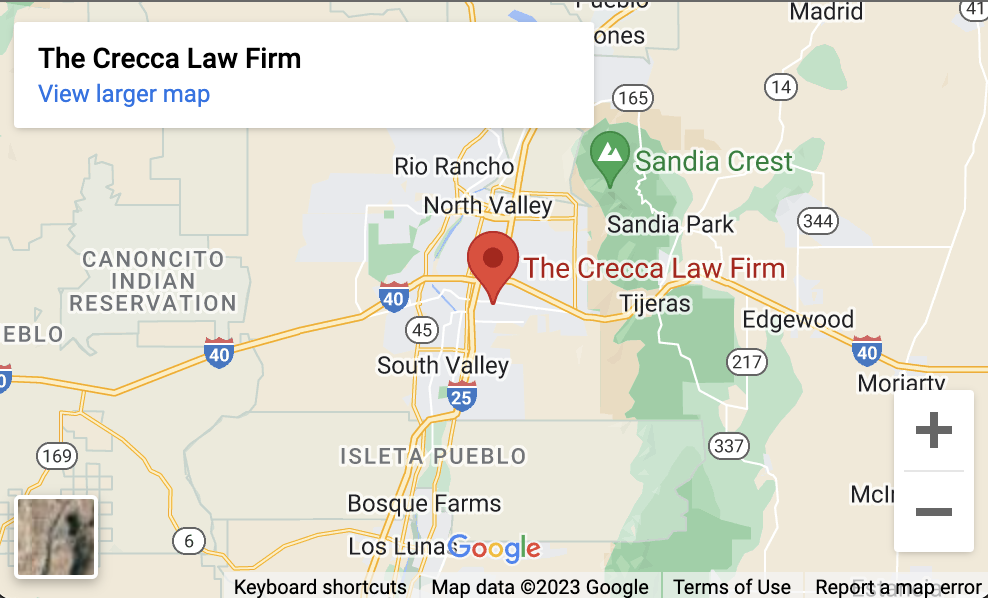
    The Crecca Law Firm is located in Albuquerque and represents clients and takes injury claim cases throughout the entire state of New Mexico.
    The information on this Law Firm website is for general information purposes only. Nothing on this or associated pages, documents, comments, answers, emails, or other communications should be taken as legal advice for any individual case or situation. This information on this website is not intended to create, and receipt or viewing of this information does not constitute, an attorney-client relationship.
    Copyright 2023 The Crecca Law Firm | All Rights Reserved |
    Legal Marketing Solutions by USAttorneys.com
    • Facebook
    • Areas Served
    • Sitemap
    Scroll to top