
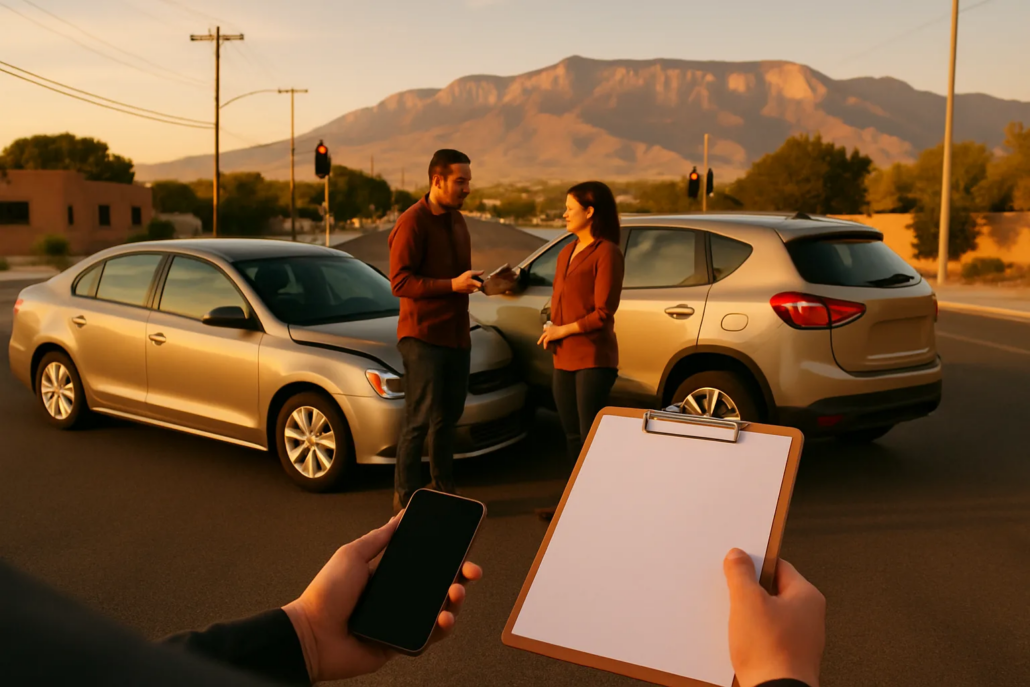
Which Questions Can an Albuquerque Adjuster Ask on Record?
An adjuster calls after your Albuquerque crash and asks to record a few questions. The request may sound routine, but a recorded statement can become part of the claim file and may later be compared with other evidence. The first question is not simply whether to answer—it is who is asking, and under what insurance policy relationship. The Crecca Law Firm provides documents and steps for an Albuquerque recorded statement to help readers understand the preparation process.
In general, a statement to your own insurer may involve cooperation duties in the policy, while a statement to the other driver’s insurer is usually part of that company’s investigation of a claim against its insured. Those situations are not identical. This guide explains what a recorded statement is, what an adjuster may ask, how to avoid guessing, and why people handling an Albuquerque accident claim may benefit from understanding the request before responding.
What Is a Recorded Statement to an Insurance Company After a Car Accident in Albuquerque?
A recorded statement is an interview preserved in an audio file, transcript, or written summary. An insurance adjuster may ask about the collision, the vehicles, road conditions, injuries, medical care, property damage, and events before or after impact. The adjuster may also ask whether you took photographs, spoke with witnesses, or reported the crash to law enforcement.
The purpose is generally to gather information for the insurer’s claim investigation. A recorded interview is not the same as a court deposition, and an adjuster is not a neutral decision-maker. The insurer may use the information to evaluate coverage, liability, damages, or consistency with other records. That does not mean every request is improper, but it does mean the scope and context deserve attention.
Identify the insurer and policy relationship
Before discussing the collision, a person may want to confirm the caller’s name, the insurance company, the claim number, and the insured person or vehicle involved. Ask whether the caller represents your own insurer, the other driver’s insurer, an employer, a vehicle owner, or another potentially involved party.
Policy relationships can become complicated. For example, the driver, vehicle owner, injured person, and policyholder may be different people. This can occur in a borrowed-vehicle crash, where understanding insurance coverage after a borrowed-car accident in Albuquerque may be especially important.
Your own insurer and the other driver’s insurer
A policy may require cooperation with your own carrier, depending on its terms and the circumstances. A request from the other driver’s insurer is different because that company may be evaluating a claim against its insured. Whether you have a legal duty to provide a statement can depend on the policy, the parties, and the facts. An attorney can review those issues when the answer is unclear.
What May an Adjuster Ask During a Car Accident Recorded Statement?
An insurance adjuster recorded interview may cover both simple facts and issues that require careful wording. Common topics include:
- Your name, contact information, and role in the crash.
- The date, time, location, direction of travel, and weather or road conditions.
- What you saw, heard, or did immediately before and after impact.
- Vehicle damage, photographs, witnesses, and any police or incident report.
- Symptoms, medical visits, prior injuries, work limitations, and treatment.
- Other insurance policies, household vehicles, or possible passengers.
The exact questions vary. A broad question about everything that happened before a collision may call for clarification. A question about whether you were “hurt” may also be unclear if symptoms developed later or if the person is still being evaluated. Readers can review guidance about Albuquerque crash questions that need clarification before responding to confusing, compound, or overly broad questions.
Answer from memory, not assumptions
Accuracy matters more than sounding certain. If you do not remember a speed, distance, timing detail, or sequence, it is generally better to say that you do not recall than to estimate. Avoid agreeing with a question merely because it seems to suggest an answer. You may ask the adjuster to repeat or narrow the question, request a pause, or explain that you need to check a record.
A person can also distinguish firsthand knowledge from information learned later. For example, “I saw the vehicle move into my lane” is different from “Someone told me the other driver was looking at a phone.” Do not present assumptions, conclusions, or another person’s account as something personally observed.
A recorded statement is not a medical authorization
An interview and a medical-record release are separate requests. An insurer may ask for a recorded account and separately present a form authorizing access to medical records. Those documents can have different effects and different scopes. Before signing, consider whether the authorization is limited to accident-related care or instead seeks a much broader history. The distinction is discussed further in Albuquerque car accident medical forms and authorizations.
How Should You Prepare Before Giving a Recorded Statement?
Preparation does not mean memorizing a script or shaping facts to fit a claim. It means understanding the request, organizing information you actually know, and identifying questions that may need clarification. In Albuquerque, available materials might include an APD crash report, photographs, vehicle-damage records, medical bills, appointment information, and communications with insurers. The relevance and availability of each item depend on the circumstances.
Before an interview, a person may consider the following general steps:
- Confirm the caller’s identity, insurer, claim number, and relationship to the claim.
- Ask what subjects the adjuster wants to cover and whether the conversation will be recorded.
- Review basic dates, locations, photographs, and reports without guessing beyond the records.
- Make a note of facts that remain uncertain, such as exact speed or timing.
- Avoid discussing unrelated medical history or making conclusions about legal fault.
- Consider whether legal guidance is appropriate before speaking with an opposing insurer.
The best evidence after a car accident claim may include photographs, witness information, reports, treatment records, and other materials. Those records can help a person give a careful account, but they do not replace personal knowledge. A person should not alter, discard, or manufacture evidence.
Common mistakes to avoid
People sometimes make avoidable errors by treating an adjuster’s call as an informal conversation. Potential problems include volunteering speculation, minimizing symptoms, exaggerating certainty, answering a different question than the one asked, or discussing settlement before the claim is understood. Another mistake is assuming that a friendly tone means the caller represents the injured person’s interests.
A person who realizes that an answer was inaccurate should not try to conceal the error. Depending on the circumstances, an attorney may help evaluate whether and how to correct the record. Serious injuries, disputed responsibility, multiple insurers, uncertain coverage, or a request from an opposing carrier are situations in which choosing Albuquerque accident lawyers after a crash may be worth considering.
Frequently Asked Questions
Can the other driver’s insurer record my statement without my permission?
A third-party insurer may ask for a recorded statement, but whether you must provide one depends on the circumstances, any applicable policy language, and the nature of the claim. A request is not necessarily the same as a legal requirement. You may ask why the statement is needed, who will receive it, and whether it will be recorded. When liability, injuries, or coverage are disputed, an attorney can help assess the request.
What if I do not remember an important detail about the crash?
It is generally safer to acknowledge uncertainty than to fill a memory gap with an estimate presented as fact. You can say that you do not recall, explain what you do remember, and identify records that may help confirm details. Avoid guessing about speed, distance, timing, or another person’s actions. If you later discover that an answer was inaccurate, consider obtaining legal guidance about the appropriate way to address it.
Should I discuss my prior medical history with the other insurer?
An adjuster may ask about prior conditions or treatment when evaluating an injury claim, but the relevance and scope of those questions can vary. A recorded statement is not the same as permission to obtain every medical record. Avoid volunteering unrelated details or making medical conclusions. Separate medical authorizations may also require careful review. A licensed attorney can explain how these issues may apply to the claim’s facts.
Does a recorded statement determine who was at fault in Albuquerque?
No single statement automatically determines fault. An insurer may compare the interview with photographs, crash reports, witness accounts, vehicle damage, medical records, and other evidence. New Mexico’s rules concerning responsibility and damages may apply differently depending on the facts, and laws can change. A statement can be considered as part of the investigation, but it is not the only source of information.
How The Crecca Law Firm Can Help
The Crecca Law Firm is dedicated to helping Albuquerque crash victims understand the claim process and the significance of insurer communications. The firm can evaluate questions about who is requesting a statement, what policy relationship may exist, what information is documented, and whether the circumstances call for additional guidance. Its approach is focused on careful fact review, clear communication, and protecting the client’s ability to make informed decisions.
If an insurer has requested a recorded interview after your car accident, contact The Crecca Law Firm for a free consultation or case evaluation. The team is committed to fighting for your rights and is ready to evaluate your situation without promising a particular outcome.
The information in this article is for educational purposes only and does not constitute legal advice. Contact a qualified attorney licensed in Albuquerque for advice specific to your situation.



Leave a Reply
Want to join the discussion?Feel free to contribute!