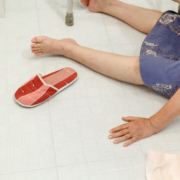
When Walking The Walk Leads To Slipping And Falling
The statistics by now are well known: accidents that involve falling down are the leading cause of emergency room visits each year in the United States. (Specifically, they lead to more than 8 million ER visits, representing 20% of all such visits.)
For individuals over the age of 65, these incidents are especially dangerous. According to the National Floor Safety Institute, more than 15,000 senior citizens perish as a result of falls in some years. For individuals between the ages of 65 and 84, falls are the second-leading cause of injury-related death; they are the leading cause of injury-related death for individuals over 85. This is significant, as one in three seniors experience a fall each year.
How to stay safe
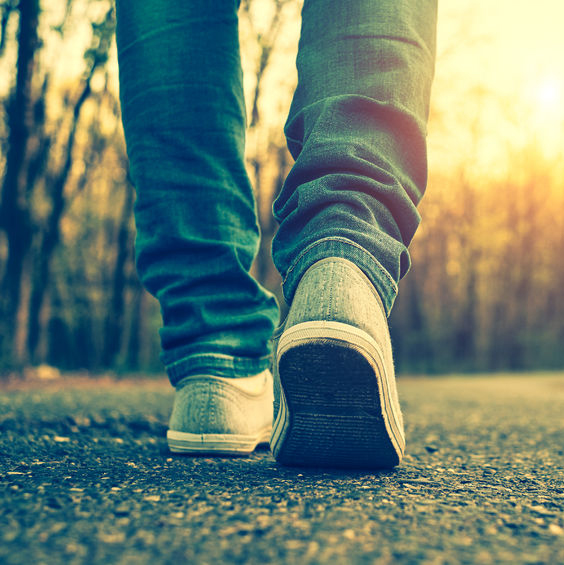 A recent article in the New York Times details some means by which individuals can practice walking more safely. The article is intuitive, just as walking itself is an intuitive activity, but nevertheless serves as a potent reminder of how easy it is to avoid harm.
The article emphasizes the importance of slip-resistant shoes. Rubber and neoprene soles are optimal, whereas shoes with plastic or leather soles tend to be highly linked with fall accidents. This is just as important indoors as it is outdoors. (“Always wear shoes or slippers with nonskid soles,” the article says, “never just socks unless they have nonslip grips.”)
It’s also suggested to take smaller steps, bent forward slightly so as to enhance your center of balance. Moving by leaps and bounds is the perambulatory equivalent of biting off more than you can chew. When it comes to staying safe while walking, incrementalism is key.
Falls occur most frequently in the home, and it’s important to remove as many trip hazards as possible from the floors of one’s domicile. Likewise, all spills should be cleaned immediately, so that surfaces don’t become permanently slippery or sticky. Equally crucial for the senior set is to use handrails whenever going up or down stairs, as well as in the shower. (And if no such handrails are in place, it may be time for some minor renovations.)
The article also details some rather complicated techniques for how to fall “the right way.” It’s suggested that, when falling forward, “you twist as you go down to land on a side and then roll over to your back.” Similarly, when falling backward, “tuck your chin to your chest to avoid hitting your head…and keep your arms in front of you.” This is nice advice for those who can keep it in mind, but many fail to remember such tips in the moments of one’s plummet.
Falling: More dangerous than guns
More than 30,000 people die each year as a result of falls. That’s more than three times as many as are killed by guns. Bone fractures are even more common. Given the prevalence of such accidents, it seems wise to have a refresher on safety from time to time before one walks one’s walk.


 Indeed, the statistics are staggering. A recently conducted survey revealed that two-thirds of drivers were comfortable talking on their phones while in a parking lot, and about half of all drivers would text, email, scan social media, or watch online videos. Grooming-while-parking also figured as a common (and commonly hazardous) behavior.

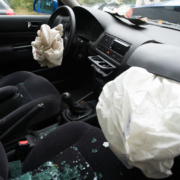


 Vicarious liability and negligent entrustment relate to the liability of one party for an accident that another party causes. These legal theories may come into play if someone loans a vehicle to a friend who is known to be a bad driver. They could also come into play if the employee of a company causes a car accident while on duty.
 Potholes can also cause serious tire and suspension damage that can cause a vehicle to lose control at an unexpected moment. Therefore, it’s best to avoid driving over leaves in the road if possible or at least slowing down if you can’t avoid them.
 How can you reduce the chance of a dog bite in your home?
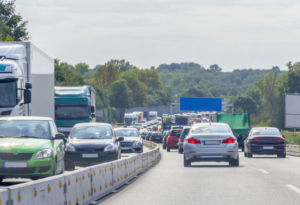 A study conducted by an engineering and consulting company proposed installing a cable or concrete median to better separate northbound and southbound vehicles. The estimated cost for a cable barrier is $16 million, while a concrete one would run about $92 million. The study suggested that the state may want to try less costly measures such as warning signs and lighting first.